
Last updated October 15, 2026
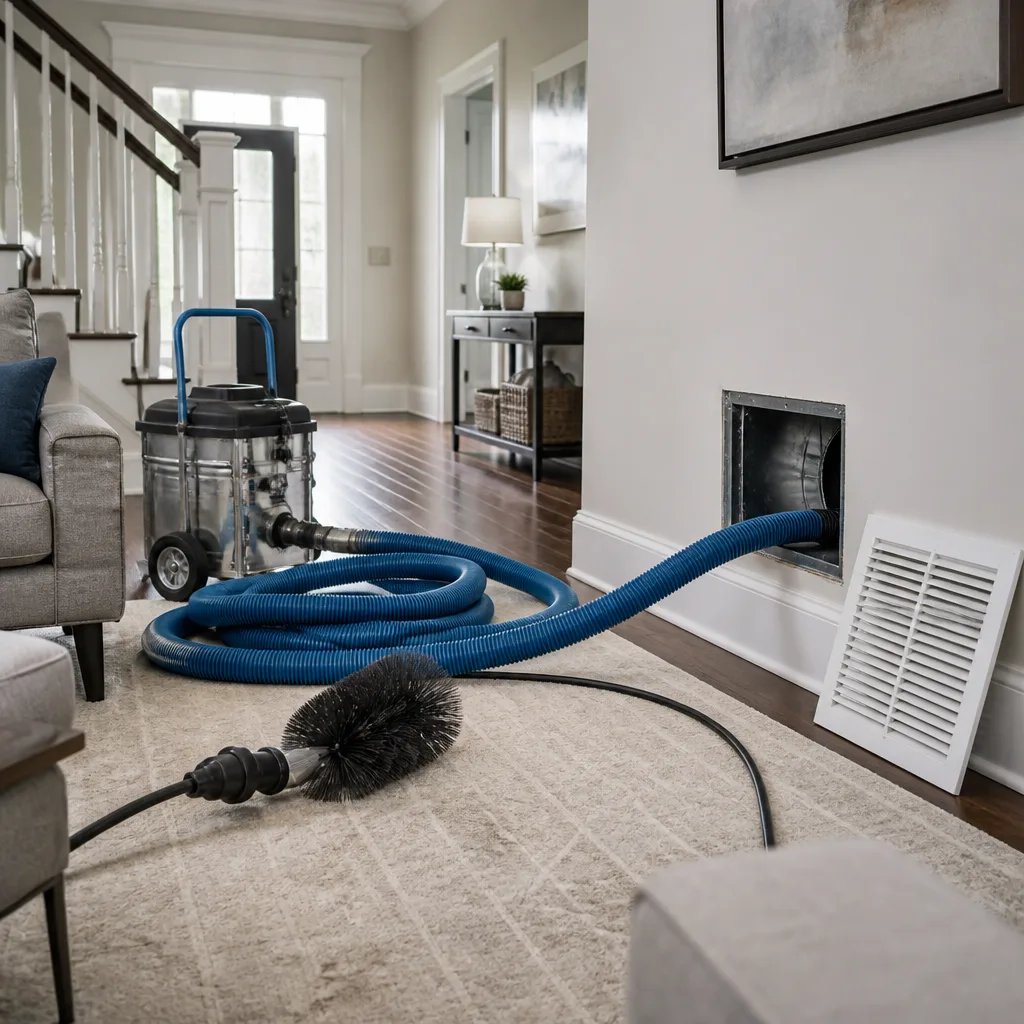 Whole-home duct cleaning
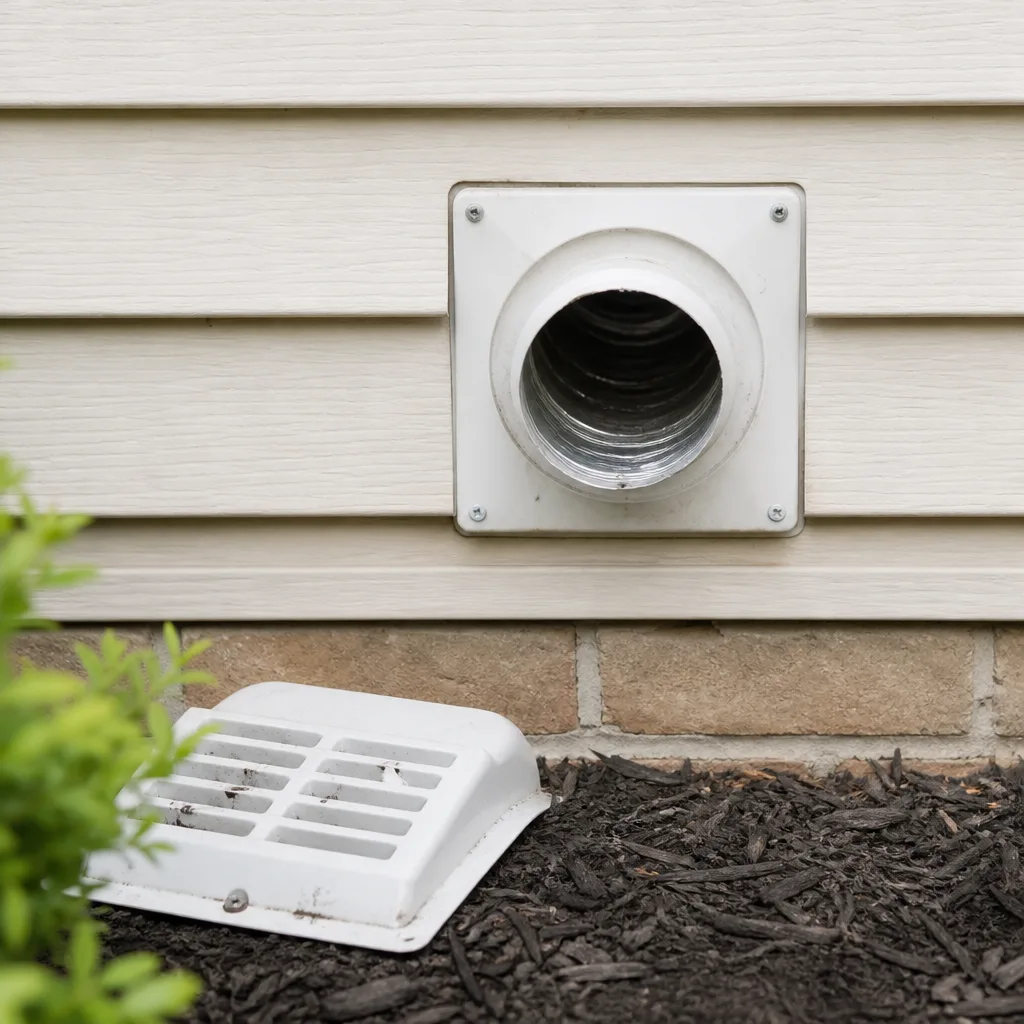 Dryer vent cleaning
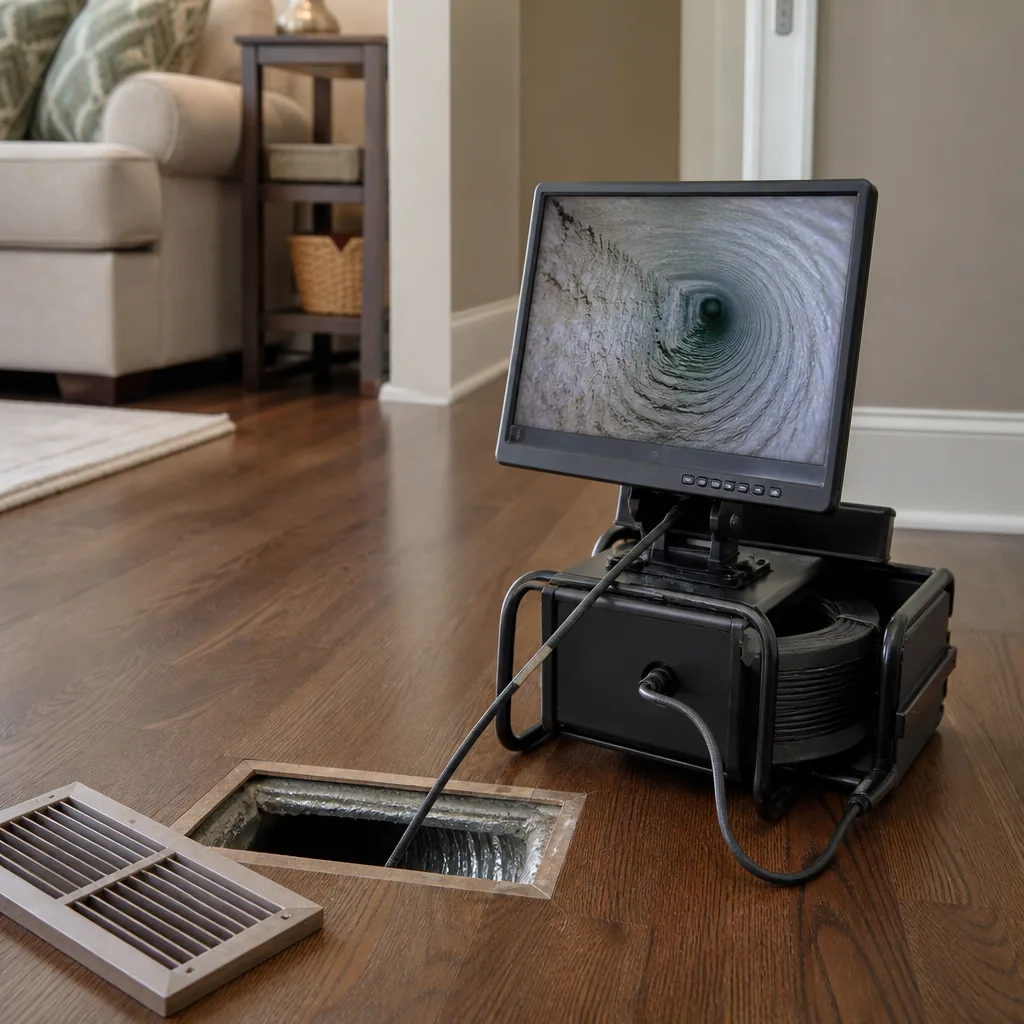 Camera inspection
 Sanitizing & deodorizing
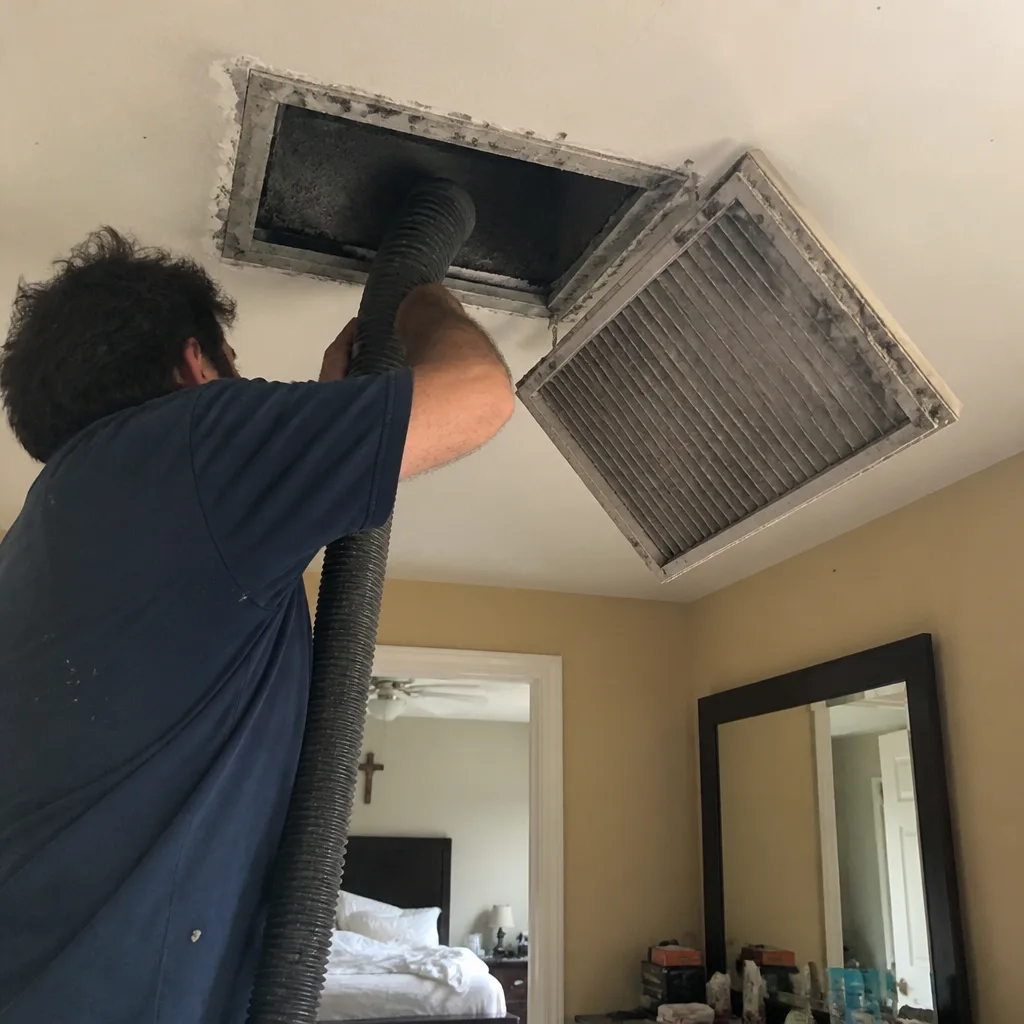
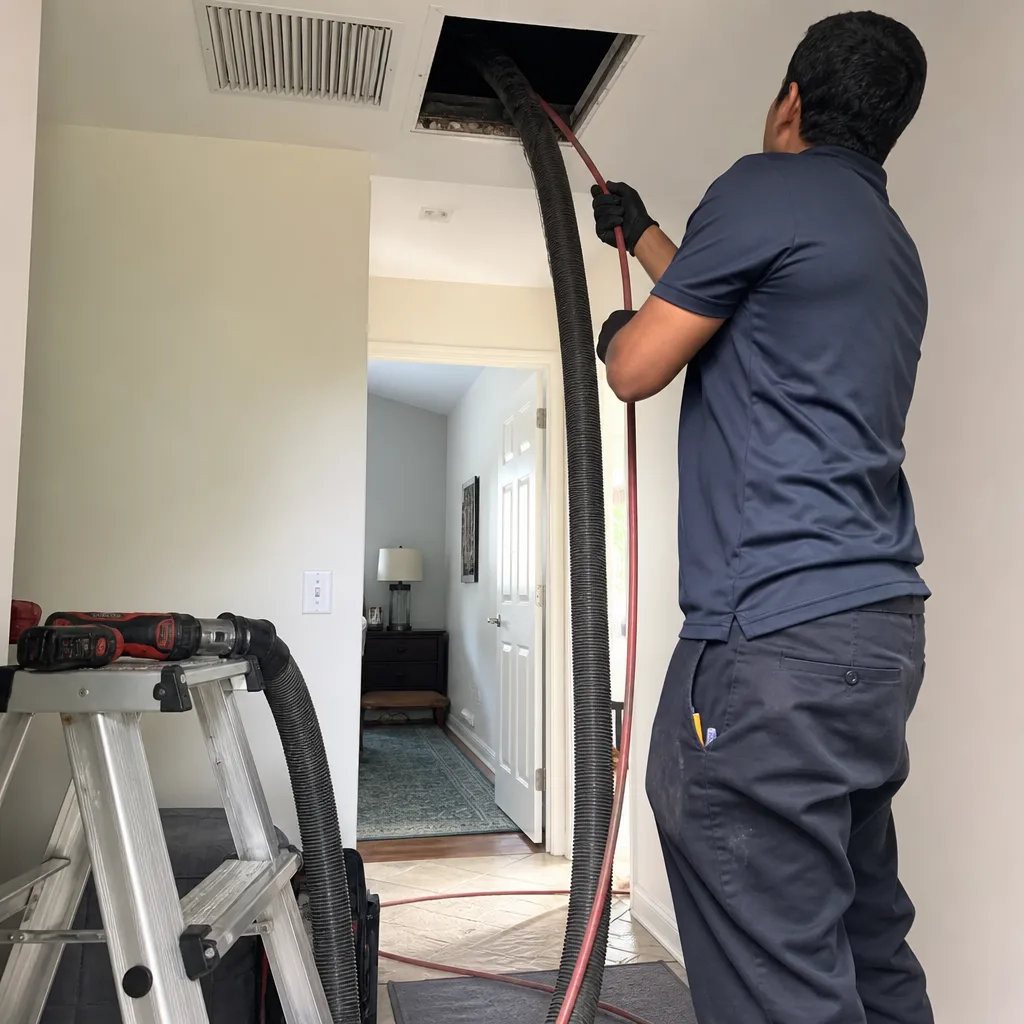
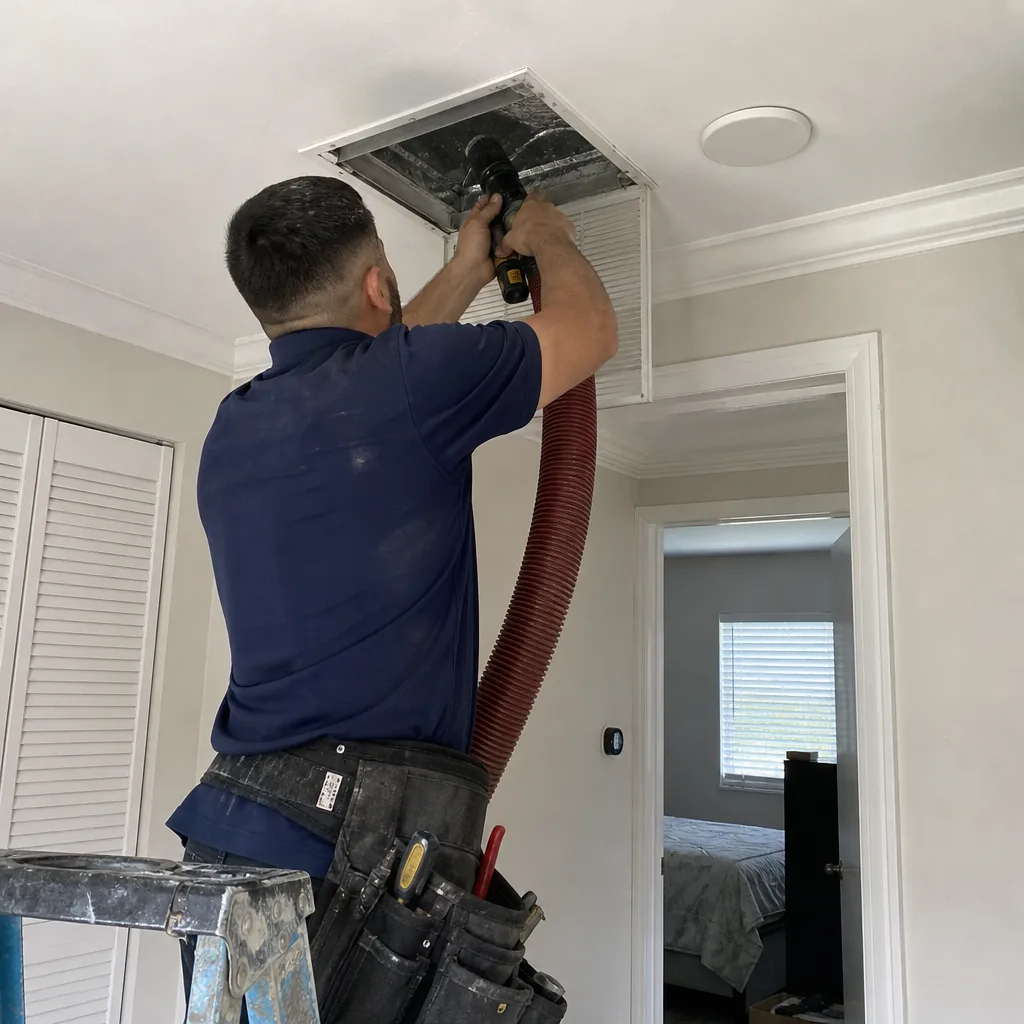
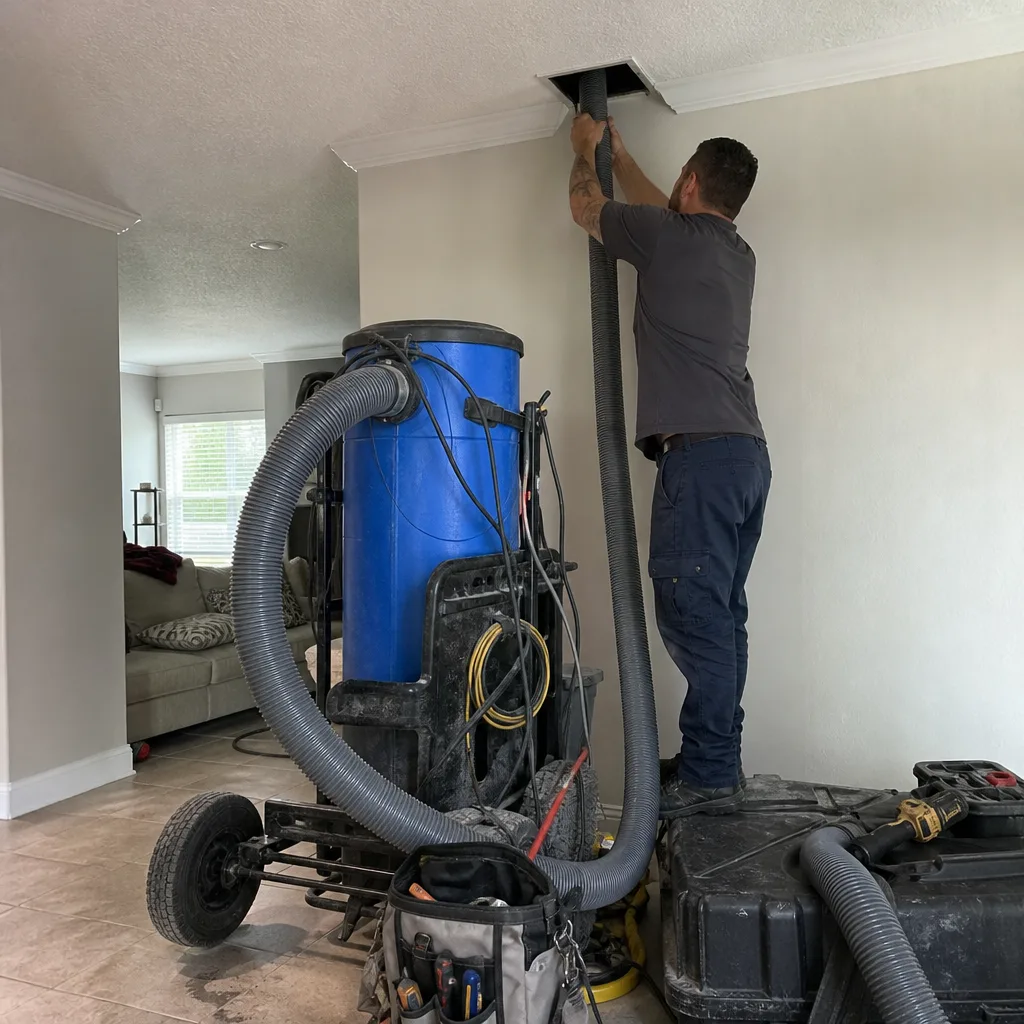
Whole-system duct and dryer vent check with before-and-after photos - you see exactly what came out of your vents
That "$99 whole-house special" is a bait ad - the real number appears once they are in your hallway, or the "clean" is a shop-vac at the register. We photograph the inside of your ducts before and after instead.
Air Duct Cleaning Warning Signs: A Miami Homeowner’s Reference Guide
A musty smell in a Miami home gets blamed on Florida humidity roughly 80% of the time, according to HVAC service call logs. But when that smell intensifies within 15 minutes of the AC turning on and fades when it shuts off, the source is the ductwork, not the ambient air. This guide walks through the warning signs Miami homeowners miss, why this climate produces them faster than almost anywhere else in the country, and how to document what you’re seeing so you can have an informed conversation with any contractor who stands in your living room. For more depth, see The Complete Guide to Air Duct Cleaning in Miami.
Styles & brands we work with
Quick Answer
The most reliable warning signs that your Miami home needs air duct cleaning are: musty or dusty odors that intensify only when the AC runs, visible debris around supply registers (especially dark dust rings or fibrous material), uneven cooling between rooms, rattling flex duct when the system cycles, and mold growth at register collars that looks fuzzy rather than like flat water staining. If you notice two or more of these, the ductwork is the likely culprit, not the equipment.
Table of Contents
- The Smell Test: Using Your AC Cycle as a Diagnostic Tool
- What Debris at Your Registers Actually Tells You
- Miami-Specific Warning Signs: Flex Duct, Uneven Cooling, and Rising Bills
- Mold at the Register Collar vs. Condensation Staining: Why the Distinction Matters
- How to Document Warning Signs Before You Call a Contractor
- What Air Duct Cleaning Costs in Miami (and Why Quotes Vary So Widely)
- Common Mistakes to Avoid
- When to Call a Professional
- Frequently Asked Questions
- The Bottom Line
The Smell Test: Using Your AC Cycle as a Diagnostic Tool
Here is the test we teach every Miami homeowner before they spend a dime on any service. Turn your AC on from a cold start, meaning it has been off for at least two hours. Leave the room. Walk back in after 15 minutes. If the air smells musty, sour, or like a damp crawlspace, and that smell fades within 10 minutes of the AC shutting off, the odor lives inside your ductwork. The fan pushes air across whatever is growing or accumulating in there, and you smell it only while air is moving. That is a controlled diagnostic you can run this afternoon, and it costs nothing.
If the smell is present all the time, regardless of whether the system runs, the problem is more likely ambient moisture, a leak, or something in the room itself. Miami’s baseline humidity hovers near 75% for much of the year, so some mustiness is environmental. The on/off cycle is what separates duct contamination from background dampness. We have walked into homes in Coral Gables where the homeowner had repainted twice to chase a smell that turned out to be a 20-foot run of flex duct lined with microbial growth.
Three Smell Profiles That Point to Ducts
- Acrid, burning dust: Accumulated debris sitting on the heat strip or blower motor. Common in Miami homes that go months without running heat, then fire it up on a January cold snap.
- Sour, musty, or wet-cardboard odor: Moisture inside the duct system supporting mold or mildew. In Miami, this often starts at a poorly sealed return pulling humid attic air into the system.
- Chemical or solvent smell: Less common but serious. It can indicate a breakdown of certain duct liners or sealants, or a refrigerant issue near the air handler. This one calls for a technician to investigate, not a duct cleaning crew.
One more note on the smell test: run it before you schedule anything, and run it again the morning after a cleaning. If the odor is gone when the fan runs, the ducts were the source. If it persists, the problem is elsewhere, and a disciplined contractor will tell you that plainly instead of selling you another service. That is the difference between a company that diagnoses and one that defaults to “more cleaning.”
What Debris at Your Registers Actually Tells You
Dark dust rings around a supply register are the single most misunderstood clue in the trade. Homeowners in Miami see them and think “dust accumulates everywhere.” But a supply register is the exit point for air that has already passed through your filter. If dark particulate is blowing out of that vent and settling on the ceiling or wall around it, the contamination is downstream of the filter, meaning it lives inside the ductwork itself. Filtered air should not be dropping that kind of material.
Debris Types and What They Signal
- Dark, greasy dust rings: This is a mix of fine particulate, cooking residue, and sometimes tobacco smoke pulled into the return side over years. It indicates substantial buildup within the runs, especially in the first 5 to 10 feet off the plenum, where air velocity drops and particles settle.
- White or gray powder: Often drywall dust from a renovation that predates your ownership, or breakdown of older internal duct insulation. In Miami homes built through the 1990s, fiberglass duct board was common, and aged duct board sheds fine particles as the binder degrades.
- Fibrous material, brown or yellow: This is degraded insulation. It can be fiberglass from flex duct lining or, in older Miami homes, material that has been chewed by rodents. Either way, what you’re breathing is not incidental dust. It is material from the inside of your system breaking apart.
Pop off a supply register with a butter knife and run a white paper towel along the interior lip. If it comes back with dark, greasy residue, the buildup inside the run is heavy. If the residue is chalky white, you’re looking at particulate that should have been stopped by filtration. Both findings point to the same conclusion: the ducts are holding material that re-enters your living space on every cycle. A professional air duct cleaning in Miami uses a negative-air machine to pull that material out under suction rather than brushing it around, and that distinction matters more than most homeowners realize.
Miami-Specific Warning Signs: Flex Duct, Uneven Cooling, and Rising Bills
Miami’s climate does two things to ductwork that colder markets never face. First, the AC runs 3,000-plus hours per year. Second, attic temperatures regularly exceed 130°F in August. That combination puts stress on flex duct that shortens its functional life considerably. We have seen flex duct in Doral and Cutler Bay lose its structural integrity after 12 years, where the same material in a cooler climate would last 20.
Here is what that deterioration looks like in practical, homeowner-visible terms.
Rattling Flex Duct When the System Cycles
When the blower kicks on, air pressure inside the duct rises suddenly. Healthy, properly hung flex duct absorbs that pressure change silently. Deteriorated flex duct, with its internal liner detached or its outer jacket torn, will flap or rattle as the material flexes against itself. That rattle is not a loose register screw. It is the sound of the duct physically moving, and it means the liner has separated enough to create a secondary airflow path between the inner core and outer jacket. Left alone, that separated liner can collapse and choke airflow entirely.
Uneven Room Cooling That Has Gotten Worse Over Time
Every Miami home has a warm room. That is normal. What is not normal is a room that was comfortable in 2018 and now runs 6 to 8 degrees warmer than the rest of the house, with the same thermostat setting. That gradual drift points to airflow loss, not an undersized unit. Common causes in Miami attics: flex duct crushed under stored boxes, duct runs sagging between supports and pinching at the bend, or separated duct joints leaking conditioned air into a 130-degree attic. None of these are equipment problems. All of them are duct problems.
Rising Electric Bills Without a Corresponding Lifestyle Change
FPL bills in Miami spike in summer, that is a given. But if your kilowatt-hour usage in March of this year is up 20% over March of last year, and the thermostat setting has not changed, something is forcing the system to work harder. Two duct-related causes dominate: leaking supply runs dumping cooled air into the attic, and restricted returns forcing the blower to run longer to satisfy the thermostat. Both are measurable. Both are correctable. Neither requires replacing your AC unit. Duct leakage in the average Miami home accounts for 10 to 30% of total system airflow, according to the Department of Energy, and that is conditioned air you paid to cool that never reaches a room.
If any of these three signs are present, duct inspection belongs on your list before equipment replacement. A proper duct sealing service in Miami can often resolve airflow loss for a fraction of what a new condenser costs.
Mold at the Register Collar vs. Condensation Staining: Why the Distinction Matters
Miami’s humidity makes condensation on registers and around ceiling penetrations routine. Cold air meeting a warm, humid room produces water. That water, over time, leaves a flat, brownish stain on the drywall or the register itself. It looks bad. It is usually cosmetic.
Mold is different. Mold at a register collar is raised, fuzzy, or speckled, often black, green, or gray, and it does not wipe off with a damp cloth. It grows when two conditions exist together: persistent moisture and an organic food source. In Miami ductwork, the food source is almost always accumulated dust, skin cells, and insect particulate that settled inside the system. The moisture comes from condensation, a humid-attic air leak at an unsealed joint, or a chronically clogged condensate drain.
How to Tell Them Apart in 30 Seconds
- Put on a pair of nitrile gloves.
- Wipe the suspect area firmly with a white paper towel dampened with warm water.
- If it smears and comes away clean with effort, it is surface staining from condensation or soil.
- If it does not wipe away, or the area has a raised texture you can feel with a gloved fingertip, it is likely microbial growth, and it extends into the register boot and likely into the duct run beyond it.
The distinction matters because the remediation scope is completely different. Condensation staining is a moisture-management issue: fix the leak, seal the joint, maybe replace a register boot. Mold in a duct system requires professional assessment, because the spores are distributed through the entire served zone every time the blower runs. A duct cleaning alone will not resolve an active moisture problem feeding that mold. The moisture source has to be identified and corrected, or the growth returns. Any contractor who quotes you a mold-cleaning price without first identifying where the water is coming from is selling activity, not a solution.
How to Document Warning Signs Before You Call a Contractor
Here is a practical discipline that changes the dynamic of every service call: write down what you observe, when you observe it, before you ever pick up the phone. A dated, specific record does two things. It gives the technician a timeline instead of a vague “it’s been like this for a while,” and it protects you from an assessment that does not match your lived experience in the home.
A Five-Step Documentation Routine
- Date and photograph the debris. Use your phone. Take a clear photo of the register in place, then one with the register removed showing the interior lip. Save both. A photo taken March 1 and one taken April 1 showing the same buildup tells a contractor whether the accumulation is active or legacy.
- Run the smell test and write down the result. “March 14, 4:00 PM, AC on from 3:45. Musty smell present at 4:05, gone by 4:25 after shutoff at 4:15.” That level of specificity eliminates the “it might have been the weather” conversation.
- Check the air filter and record its condition and install date. A filter you installed six weeks ago should not be black. If it is, that tells the story of heavy particulate load in the return side, and the timeline makes it irrefutable.
- Map your temperature variance. Same time of day, same thermostat setting, check each room. Write it down. “Master bedroom 76°F, hallway 72°F, thermostat set 72°F” says more than “the bedroom is warm.”
- Note any correlation with recent work. Did the smell begin after a roof replacement? After a remodel? After you blew in new attic insulation? Contractors create duct damage in Miami attics more often than homeowners suspect, and a work timeline is often the missing link in a diagnosis.
When the technician arrives, show your record. A good contractor will want to see it. It makes their diagnosis faster and more accurate. A bad contractor will dismiss it or ignore it, because specificity makes their upsell harder. Which kind you are dealing with becomes clear in the first ten minutes.
This documentation habit is exactly what our own technicians at Hollis Air Duct Miami ask for during the pre-visit conversation. A homeowner who knows their own home’s baseline is a homeowner we can serve honestly and efficiently, because half the diagnostic work is already done.
What Air Duct Cleaning Costs in Miami (and Why Quotes Vary So Widely)
Air Duct Cleaning services in Miami typically cost between $300 and $700 for a whole-system cleaning of an average single-family home, depending on the number of air handlers, the linear feet of ductwork, the level of contamination, and whether dryer vent cleaning is included. That is a real, honest range, not a teaser number designed to get a crew in your driveway.
The reason quotes vary so widely in this market is not mysterious. Some companies advertise a low per-vent price, then inflate the final invoice once they count vents, upsell sanitizer, or “discover” mold. Others quote a flat, whole-system price in writing before work begins and do not move from it. Ask any contractor one question before they leave your driveway: “Will you put the total price in writing before work starts?” If the answer is anything other than yes, you are not getting a quote. You are getting an opening bid.
What a Written, Whole-System Quote Should Cover
- Access to all supply and return ducts, including register removal and reinstallation
- Mechanical agitation of the duct interior, not just vacuuming from the register
- Negative-air containment during the cleaning, so debris is not redistributed through your home
- Post-cleaning inspection of the plenum and air handler cabinet
- Optional but recommended: dryer vent cleaning, which in Miami homes with rooftop terminations is often neglected for years
The low teaser price in this industry is not a discount. It is a down payment on a closing-room negotiation that happens after the van is already parked outside. The written price, agreed before work starts and held fast, is the only pricing model that protects a Miami homeowner from the bait-and-switch.
One more note on pricing, because it is the question every homeowner implicitly asks: a cheap cleaning that redistributes debris into your living space is worse than no cleaning at all. The whole point of the service is to remove material from the system under contained negative air. That requires equipment, and equipment costs money. When someone in Miami offers a $99 duct cleaning, they are planning to spend 45 minutes in your attic vacuuming what a shop vac can reach from the register opening. That is not duct cleaning. That is register vacuuming with theatrical equipment.
Common Mistakes to Avoid
- Assuming musty air is “just Miami humidity.” Humidity is constant. A smell that tracks the AC cycle is not. Run the test, and you will know which one you are dealing with.
- Treating dark register residue as normal housekeeping dust. Filtered air should not be depositing dark particulate on your walls. That residue is evidence of buildup downstream of the filter, inside the ducts.
- Buying a replacement AC unit when the problem is leaking ducts. A 20% airflow loss through deteriorated flex duct in a Miami attic will make a perfectly good system seem undersized. Seal the ducts first. Replace the equipment second, if at all.
- Hiring the lowest bid without asking what “cleaning” actually includes. “Air duct cleaning” is not a regulated term in Florida. One company’s $99 cleaning is a register wipe-down. Another’s $450 cleaning is full-system negative-air extraction. Ask what the service includes, mechanically, and get it in writing.
- Ignoring a deteriorated dryer vent because it is “just laundry.” In Miami, where rooftop dryer vent terminations are common, a clogged or separated vent is a fire hazard. It also forces the dryer to run longer, which in turn pulls more humid outside air into the home. Dryer vent cleaning in Miami should be on every homeowner’s every-two-years list.
- Skipping documentation and accepting a contractor’s verbal assessment blind. Your dated photos and temperature maps are the only evidence you have that cannot be disputed. Use them.
- Treating a cleaning as a substitute for fixing the moisture source. If humid attic air is entering the system through an unsealed joint, cleaning the ducts removes the current growth but does not stop the next cycle. Address the leak, then clean, then verify.
When to Call a Professional
If your smell test points to the ducts, if you have dark debris at multiple registers, if rooms are drifting warmer year over year, or if you have documented fuzzy growth at a register collar, it is time to bring in a crew that will give you a written price and stand behind the work. These are not conditions that improve with time or resolve with a better air filter. They are structural conditions inside the system that require access, agitation, and proper extraction. Hollis Air Duct Miami offers free estimates throughout the Miami area, with every price committed to writing before any work begins. Call (850) 660-3272 to schedule.
Frequently Asked Questions
Whole-system air duct cleaning in Miami typically runs between $300 and $700 for an average single-family home, depending on system size, number of air handlers, and contamination level. Get the total price in writing before work starts, and be suspicious of any per-vent pricing structure that can balloon once the crew is inside. Call (850) 660-3272 for an exact quote on your home, free of charge.
Cheaper quotes almost always mean less work. A $99 or $149 cleaning is a register-level vacuuming that does not access the full duct interior, does not use negative-air containment, and often becomes an aggressive upsell once the technician is in the home. A legitimate whole-system cleaning requires mechanical agitation and containment equipment, and the price reflects that. The lower the teaser price, the higher the closing-room pressure.
Request before-and-after photos of your duct interior. Any professional crew using proper equipment can capture images from inside the plenum and main runs. If a company refuses or cannot provide interior photos, assume the work was superficial. Combined with your own pre-cleaning documentation, the photo record makes verification straightforward.
Every 3 to 5 years for most Miami homes, with the shorter interval applying to homes with pets, recent renovations, smokers, or occupants with respiratory conditions. Miami’s continuous AC run cycle means the system processes more air per year than comparable homes in cooler climates, so particulate accumulation happens faster. If your home is new to you and you have no record of the last cleaning, assume it is due.
It can, when the ducts are actually contaminated. If the system holds years of accumulated dust, pet dander, and particulate, every AC cycle redistributes a portion of that material into the living space. Removing it reduces the total allergen load in the air you breathe. But duct cleaning is not a stand-alone allergy treatment. It works alongside regular filtration, humidity control, and source reduction.
Yes, and it is almost always tied to moisture intrusion rather than the ducts themselves being “mold-prone.” A common pattern is an unsealed return joint pulling humid attic air into the system during the summer, which condenses inside the duct and feeds microbial growth on accumulated dust. Cleaning removes the growth; sealing the leak prevents its return. Both steps are necessary.
The Bottom Line
Miami homeowners misdiagnose duct problems more than any group we serve, and the reason is simple: this climate gives every warning sign a plausible alibi. Musty smell? It is Miami. Warm bedroom? It is August. Dark dust? It is city air. But each of these signs has a testable, mechanical origin inside the ductwork, and the tests cost nothing but 15 minutes of attention. Learn what your system looks like at its baseline, document what changes, and insist on a written price before any work begins. For more guides & resources on keeping your Miami home’s air system healthy, explore our blog. The ducts that move air through your home are either clean, sealed, and doing their job, or they are not. Now you know how to tell the difference.
Written by Roy Castellanos, Owner at Hollis Air Duct Miami, serving Miami since 2004.
See the difference
 Before
 After
After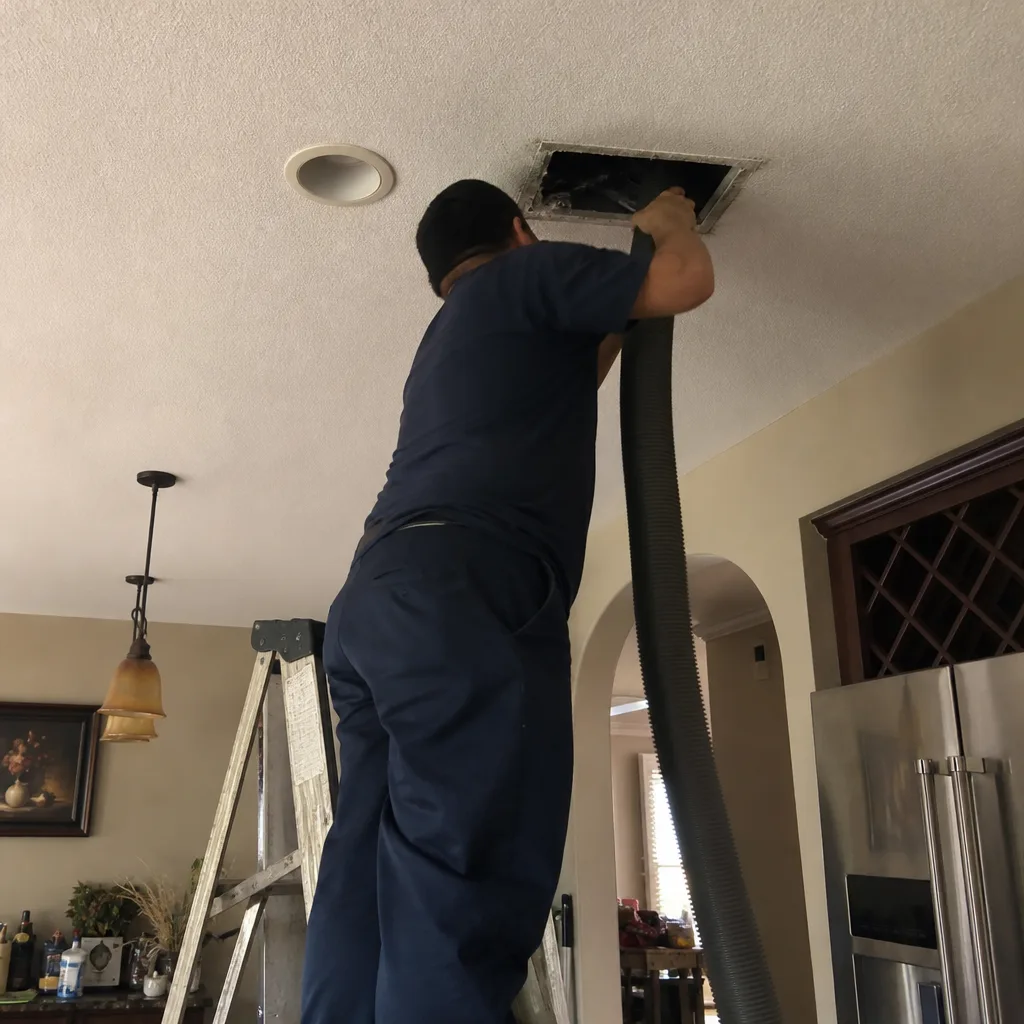 Before
 After
After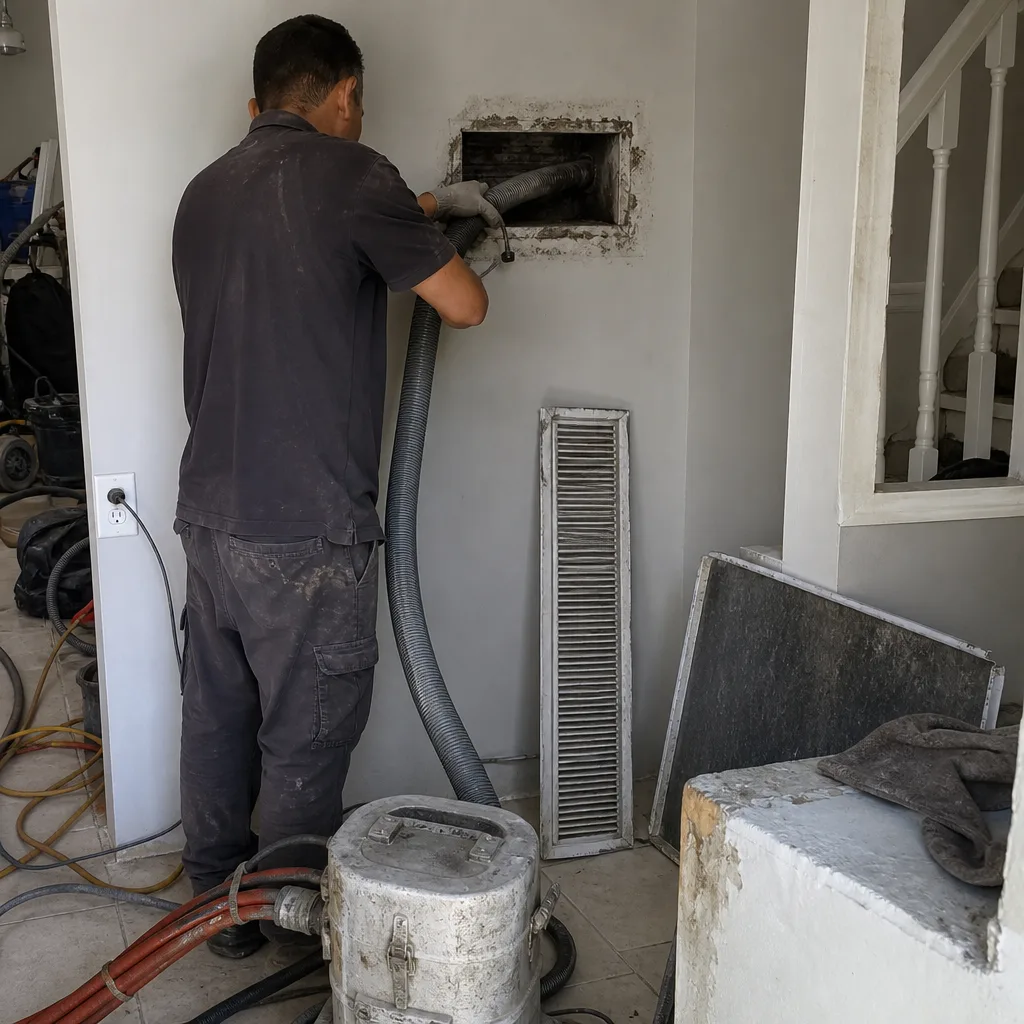 Before
 After
After