
Last updated October 15, 2026
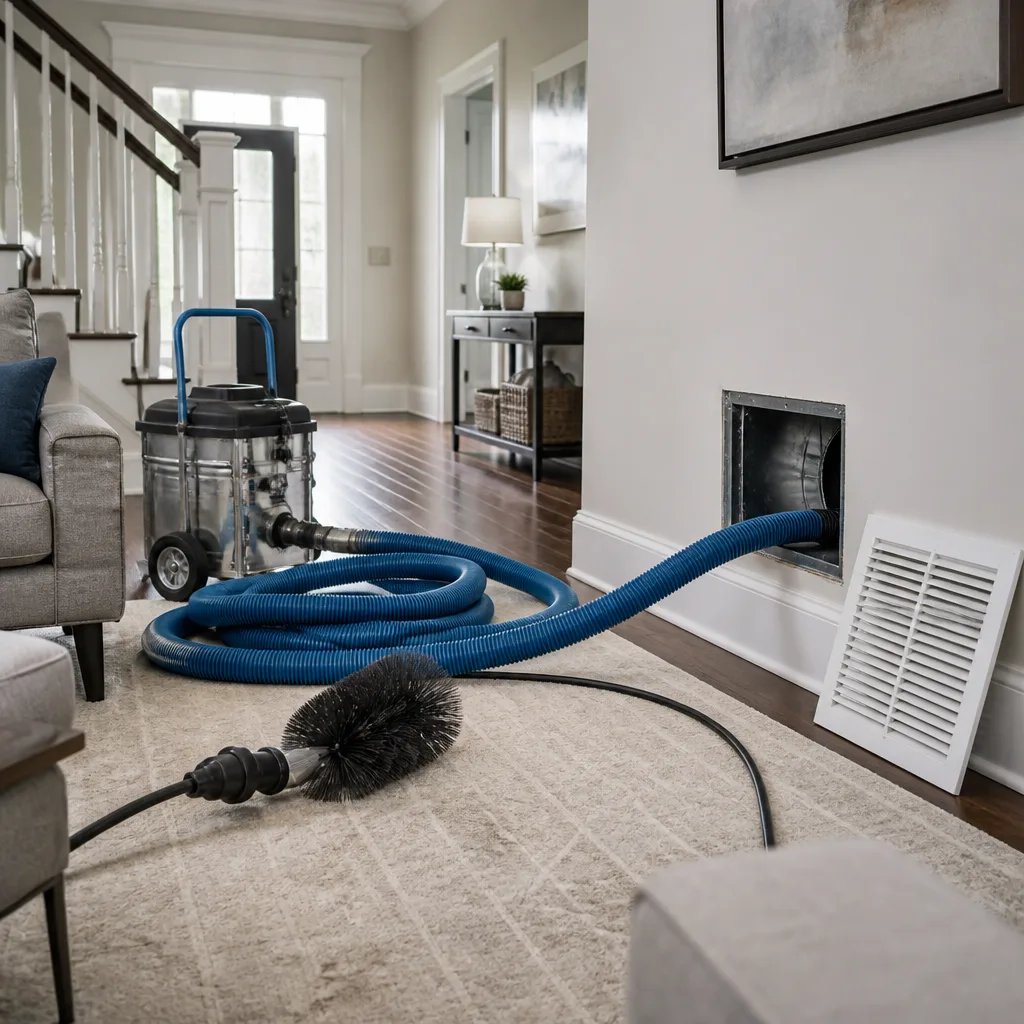 Whole-home duct cleaning
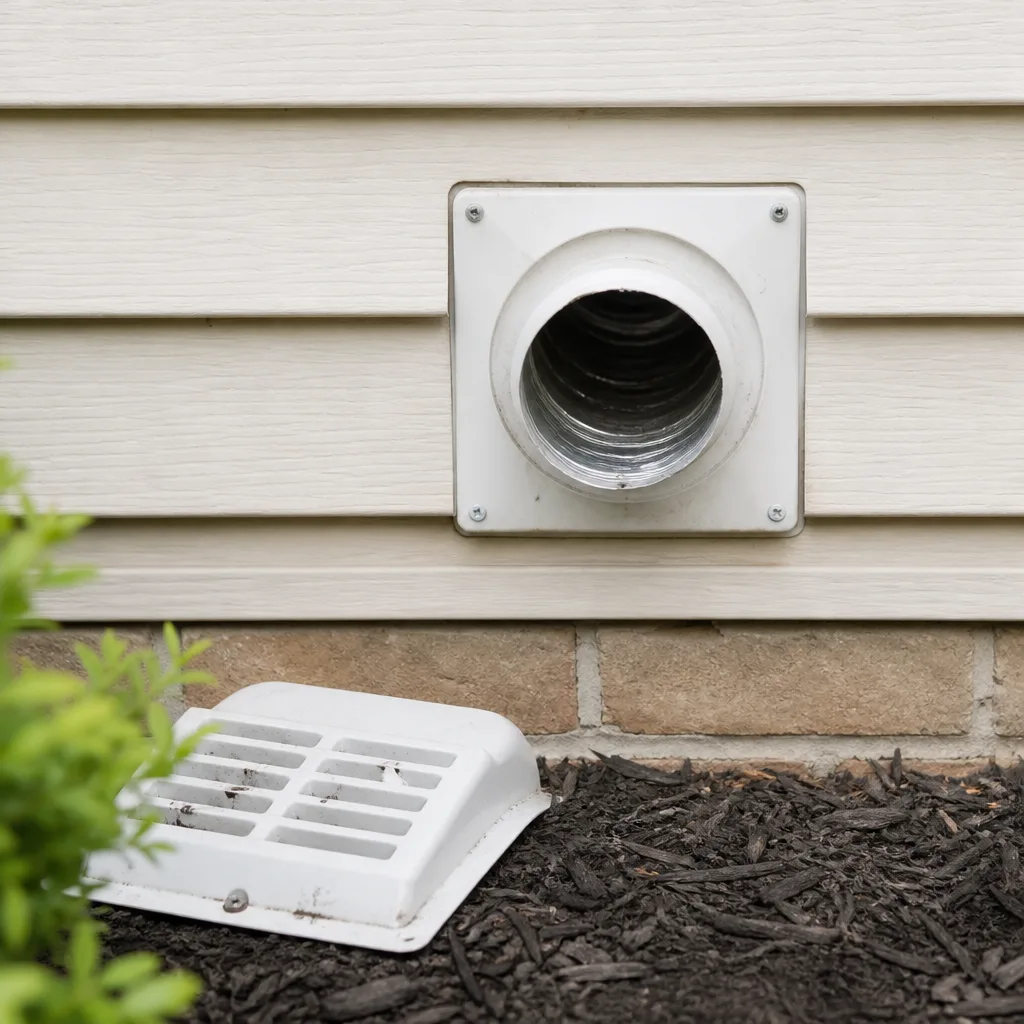 Dryer vent cleaning
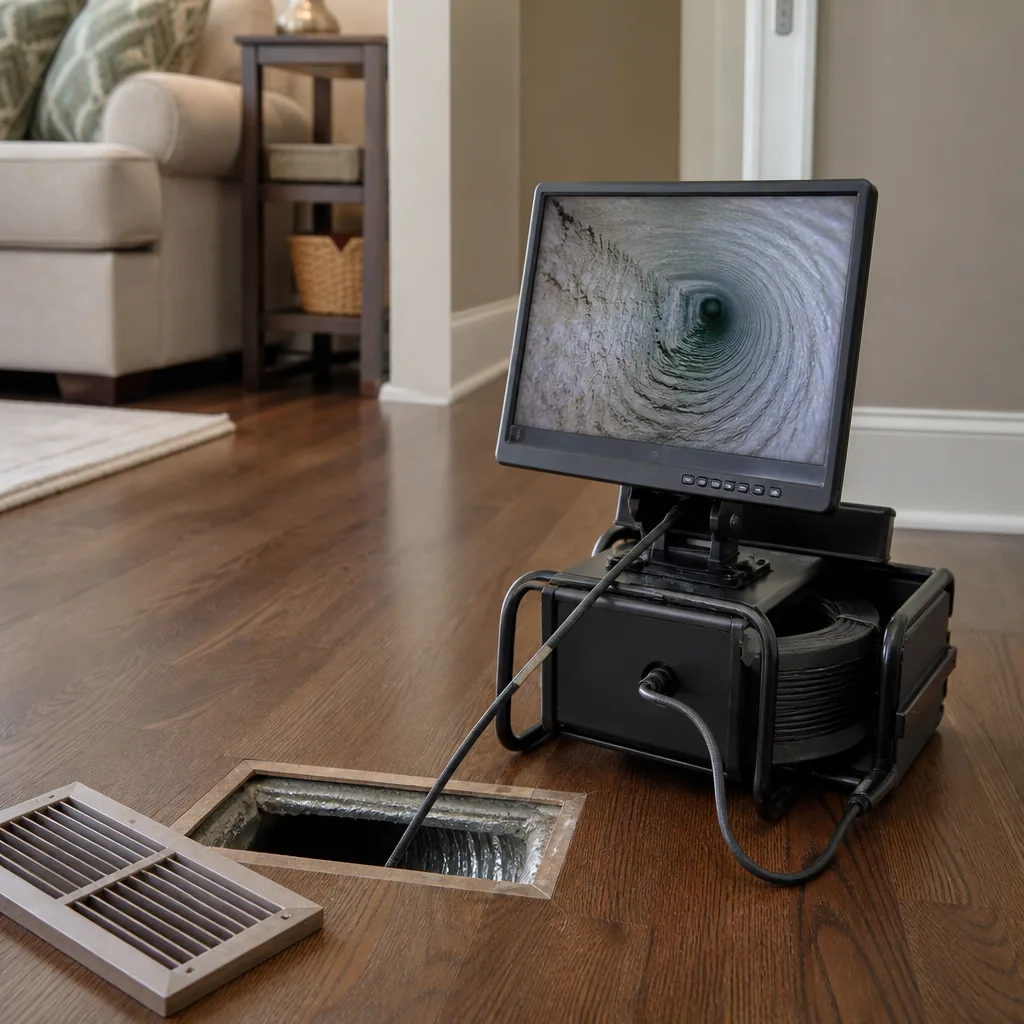 Camera inspection
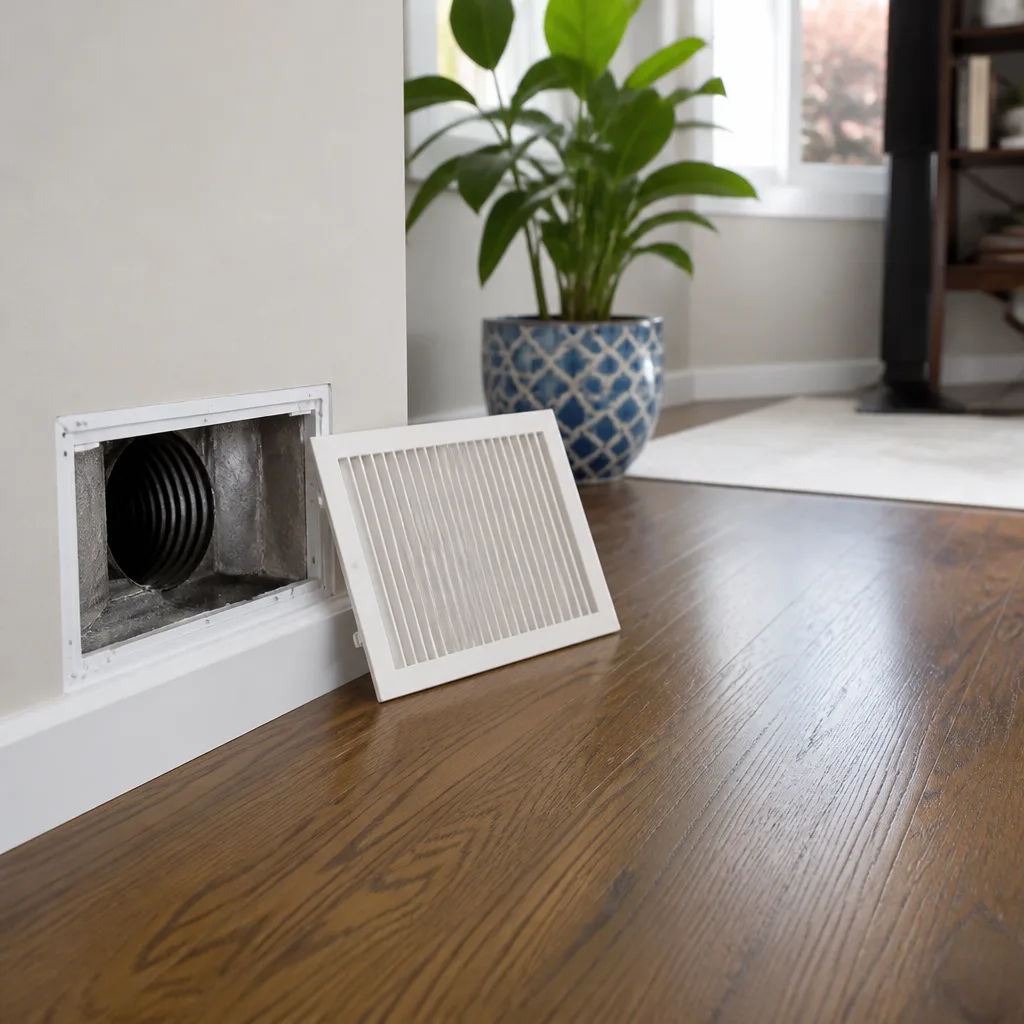 Sanitizing & deodorizing
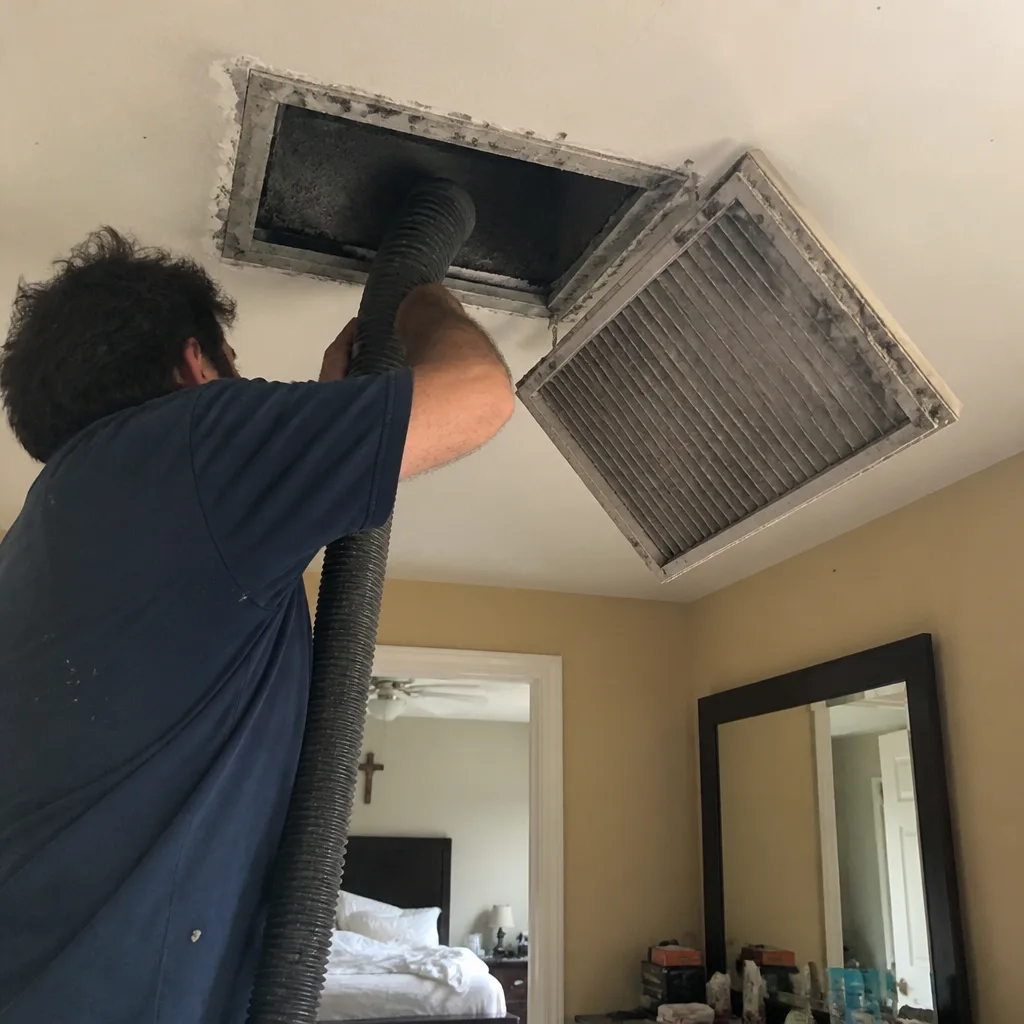
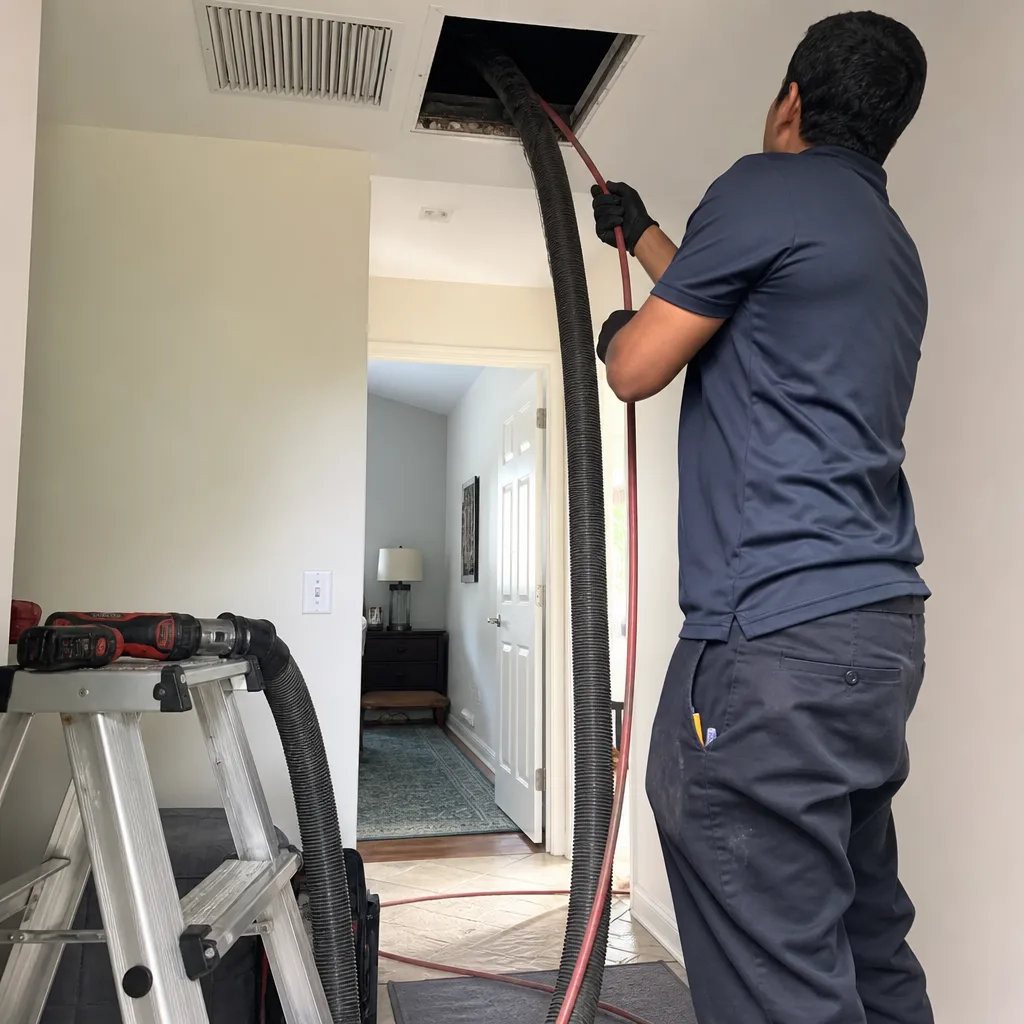
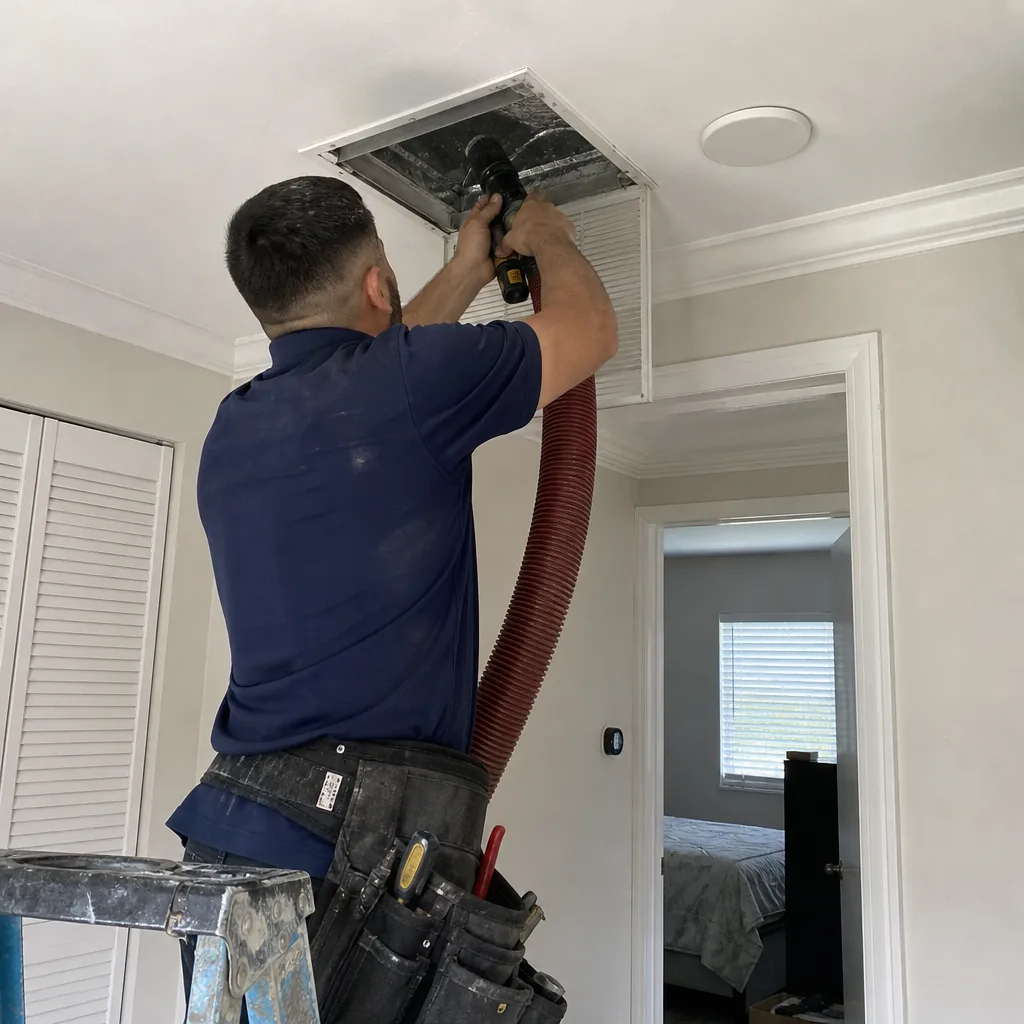
Whole-system duct and dryer vent check with before-and-after photos - you see exactly what came out of your vents
That "$99 whole-house special" is a bait ad - the real number appears once they are in your hallway, or the "clean" is a shop-vac at the register. We photograph the inside of your ducts before and after instead.
How to Hire a Air Duct Cleaning Contractor in Miami: A Step-by-Step Guide
The Florida Attorney General’s office has logged repeated complaints about air duct cleaning operations that advertise a $49 whole-house special and then present a four-figure invoice once the crew arrives. That teaser number isn’t a price. It’s a lead-generation tool, and it’s the reason most hiring advice about checking reviews or comparing three bids doesn’t actually protect you in Miami’s market. A company can have glowing reviews and still run a pricing model designed to expand at your front door. This guide walks through exactly which questions to ask before anyone steps inside your home, how to read a quote document line by line, and what a written guarantee needs to say to mean anything at all. For more on what to expect, see our Air Duct Cleaning services.
Quick Answer
To hire an air duct cleaning contractor in Miami without getting burned, require a written scope of work with a firm price ceiling before booking, verify the equipment they’ll use is professional-grade (negative-air machines, rotary brush systems, not a shop vac), ask whether the price is per system or per vent, and get a written guarantee that covers a full year. Pricing for legitimate whole-house duct cleaning in Miami runs roughly $450 to $900 for most homes, and any quote dramatically below that range should be treated as a teaser, not a bid. A refusal to put scope or price in writing is the single clearest signal to walk away.
Styles & brands we work with
Table of Contents
- The Five Questions That Expose a Bait-and-Switch Before You Book
- What Florida Contractor Licensing Actually Covers for Duct Cleaning
- How to Read a Quote Document: Line Items, Vague Language, and Enforceable Guarantees
- Why the Lowest Bid Is Structurally Incompatible with Proper Duct Cleaning in Miami
- What to Confirm in Writing Before the Technician Starts
- The Equipment That Matters: Negative-Air vs. Rotary Brush vs. Shop Vac
- Red Flags That Show Up Before the Crew Arrives
The Five Questions That Expose a Bait-and-Switch Before You Book
Every bait-and-switch operation in Miami relies on the same mechanism: getting you to say yes to something small, then redefining the job once the truck is in your driveway. The questions below break that mechanism. Ask them on the phone, before you hand over your address. Write down the answers. A legitimate contractor answers each one directly and without hesitation.
1. “Will you put the full scope and the total price in writing before work starts?”
This is the question that matters more than any other. The answer needs to be yes, without conditions. Not “we’ll give you a quote when we see the system.” Not “it depends on what we find.” A professional crew knows what a typical Miami home’s duct system looks like before they arrive. They’ve done it hundreds of times. The price should be written, it should be specific, and it should not move at the door. At Hollis Air Duct Miami, the price is written down before any work starts. That’s not a courtesy; it’s the only way a quote means anything.
2. “Is your price per system or per vent?”
Per-vent pricing is the bait-and-switch engine. A company quotes you $14 per vent, but your home has 28 vents. You did the math at $392, but they’re counting return vents, supply vents, main trunk lines, and plenums separately. Suddenly the “cheap” quote is $900 and climbing. A legitimate contractor prices the job as a whole system. One price per system, written down before work starts. If the answer is “per vent,” that’s a red flag the size of a supply register.
3. “What equipment are you bringing?”
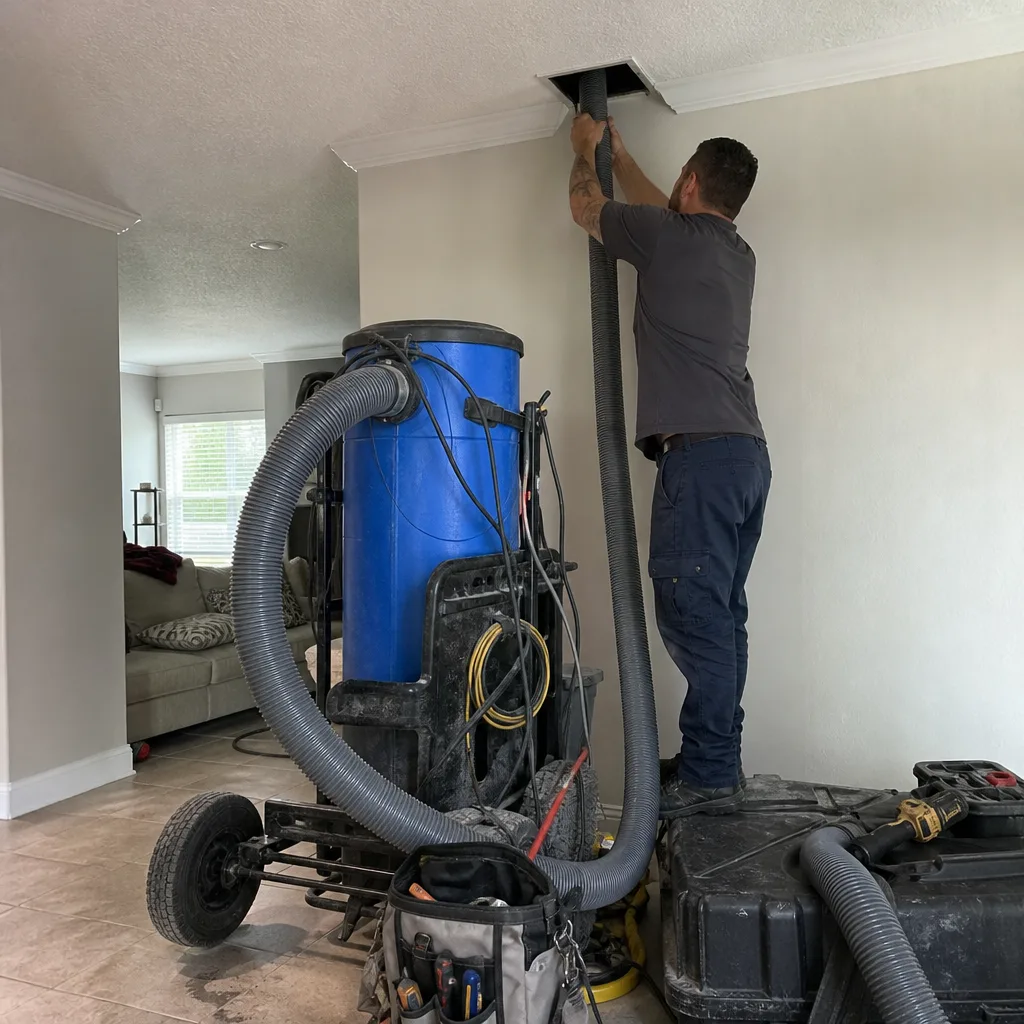
A professional air duct cleaning job in Miami requires a negative-air machine, which is a large HEPA-filtered vacuum that puts the duct system under negative pressure so dust and debris are pulled out rather than pushed into your living space. Many low-bid operations show up with a shop vac and a drill brush. That’s not duct cleaning. That’s a show. Ask the name of the equipment. Companies like ours run Rotobrush rotary brush systems and Nikro negative-air machines, the same class of tools commercial crews use on hospitals and office buildings. If the person on the phone can’t tell you what machine they’re bringing, they don’t have one.
4. “What exactly does your guarantee cover, and where is it written?”
“Satisfaction guaranteed” is not a guarantee. It’s a slogan with no enforcement mechanism. A real guarantee specifies what’s covered, for how long, and what happens if it fails. Ours is the 365-Day Done Right Promise: if the work fails within a year, we come back and make it right at no charge. That includes a free second visit. It’s written on every job. If a company cannot point to a document that says what happens when the work fails, assume the worst: nothing happens.
5. “Who is the person coming into my home?”
Background-checked and uniformed technicians are not a luxury in a city like Miami, where you’re inviting a stranger into your home for half a day. A legitimate company tells you who’s coming before they arrive. At Hollis Air Duct Miami, every technician is background-checked and shows up in uniform. You know the name on the work order before the doorbell rings.
One direct way to summarize all of this: if the person on the phone won’t answer these five questions in writing, the name on the van doesn’t matter. You’re hiring a moving target. For a deeper look at what proper Air Duct Cleaning in Miami involves from start to finish, see our full service overview.
What Florida Contractor Licensing Actually Covers for Duct Cleaning
Here’s a fact most Miami homeowners never hear: the State of Florida does not issue a specific “air duct cleaning license.” Duct cleaning companies are not required to hold a dedicated statewide license that certifies their technicians in the trade. What exists instead is a patchwork. Some companies operate under a general contractor’s license. Some carry HVAC contractor licenses through the Florida Department of Business and Professional Regulation. Others operate with no trade license at all and never break a state law doing it.
This is why “licensed and insured” shows up on every duct cleaning website and marketing flyer in Miami-Dade County. It costs nothing to type those three words. What matters is what the license actually covers and whether it’s relevant to the work being performed. A general contractor’s license allows a company to perform a wide range of work but says nothing about whether the crew has ever cleaned a duct system. An HVAC contractor license through Florida’s DBPR means the company has demonstrated competency in heating, ventilation, and air conditioning systems, which is far more relevant to the air moving through your home.
When you’re vetting a company, ask directly: “What license does your company hold, and which Florida agency issued it?” Then verify it. The DBPR maintains a searchable database. A company that immediately answers with a license number and issuing agency is operating transparently. A company that deflects with “we’re fully licensed” and changes the subject is answering your question without answering it.
The practical takeaway is this: a license is a floor, not a ceiling. It establishes that a company meets a baseline legal threshold. It doesn’t tell you whether the crew will do the job correctly, price it honestly, or stand behind the work. For that, you need the written scope, the written price, and the written guarantee. Those documents do what a license number can’t.
How to Read a Quote Document: Line Items, Vague Language, and Enforceable Guarantees
Most homeowners in Miami read a quote document the way they read a receipt: they look at the bottom number and stop. That’s the mistake every bait-and-switch operation counts on. A quote document is a contract-in-waiting, and the language it uses tells you exactly how the job will go once work begins.
A legitimate quote for air duct cleaning in Miami should contain these specific line items:
- Scope of work: A clear statement of what’s included. “Clean all supply ducts, return ducts, main trunk lines, and plenums.” If the document says “clean ducts” without specifying which ducts, the company has just given itself permission to claim your return lines weren’t included.
- Equipment specified: The quote should name the equipment that will be used. “Negative-air machine with HEPA filtration” is specific. “Professional equipment” is not.
- Total price, not an estimate: The word “estimate” is the bait-and-switch loophole. An estimate can change. A written price cannot. If the document says “estimate,” ask them to change it to “price.” Watch the reaction.
- Price ceiling language: “Total price will not exceed $X regardless of conditions found.” This is the single most important sentence on the document.
- Guarantee terms: What’s covered, for how long, and what happens if it fails. “365-Day Done Right Promise: if any part of the cleaning fails within one year, we return and re-clean at no charge, including a free second visit.” That’s enforceable language. “We stand behind our work” is not.
- Timeline and arrival window: When the crew arrives and how long the job takes. Not a vibe. A window.
Vague language to watch for: “as needed,” “where applicable,” “up to,” “starting at,” and “additional charges may apply.” Each of those phrases is a door left open. “Starting at $249” means nothing. “Cleaning as needed” means the technician decides what “needed” means once he’s in your attic. A written quote should read like an instruction manual, not a menu.
One more thing: the guarantee needs to specify what happens when the work fails, not if. Most companies write guarantees so the failure scenario is never addressed. Ours says it plainly: if it’s not done right, we make it right. Within 365 days. At no charge. That’s the difference between a guarantee and a marketing paragraph.
Why the Lowest Bid Is Structurally Incompatible with Proper Duct Cleaning in Miami
The math behind a proper air duct cleaning job in Miami doesn’t bend. It’s simple arithmetic: time, equipment, and labor. A legitimate whole-house duct cleaning on a typical Miami home takes between three and five hours. It requires a negative-air machine that costs tens of thousands of dollars, a rotary brush system, HEPA filters that are replaced on a schedule, and trained technicians who are paid to do the job correctly. That’s the cost floor for a real service.
Miami’s housing stock makes this math even more unforgiving. A large share of homes in neighborhoods from Kendall to Coral Gables to Pinecrest were built between the 1950s and 1980s. Their duct systems are aging, often stretched through tight attic spaces where heat and humidity have done years of work on the insulation and joints. Access points are not uniform. Some systems have never been cleaned in the life of the home. A $49 or $99 whole-house special cannot cover the cost of sending a trained crew with professional equipment to one of these homes. It can’t even cover the fuel and the technician’s hourly wage.
So how does the $49 special work? It’s a foot in the door. The company books the job at a loss. The technician arrives, takes a look, and announces that the system has mold, or a damaged return, or a duct that needs sealing, or “extra debris” that requires an add-on service. The add-on chases are where the money is. A National Air Duct Cleaners Association (NADCA) baseline job includes access, agitation, and extraction across the entire system. None of that can be delivered at $49. The people advertising those prices in Miami are not doing NADCA-standard work. They are doing invoice theater.
Here’s how to do the math yourself: a legitimate whole-house duct cleaning in Miami currently runs roughly $450 to $900, depending on home size, number of systems, and system condition. If a quote is dramatically below that range, ask what’s being cut. Equipment? Scope? Labor? The answer will tell you everything. For context on what full-system pricing looks like in our market, see the Hollis Air Duct Miami home page, which includes current service ranges.
What to Confirm in Writing Before the Technician Starts
The moment a technician arrives at a Miami home is the moment pricing power shifts. The homeowner wants the job done, the truck is in the driveway, and the sun is beating down. That’s precisely the moment a bait-and-switch operation applies pressure. The way to remove that pressure is to have everything confirmed in writing before the workday begins. Here’s the checklist:
- The scope is fixed. What’s being cleaned, in which systems, and in which parts of the home. If the document says “all supply and return ducts, main trunk lines, and plenums,” that’s the scope. Nothing gets added without your explicit written approval.
- The price ceiling is written. “Total price will not exceed $X.” Not “approximately.” Not “pending conditions.” A hard cap.
- The add-on protocol is defined. This is the one most homeowners never ask about, and it’s where most mid-job price increases happen. Ask: “If you find something during the job that you believe needs additional work, what’s the process?” The answer should be: you stop the job, you show me the issue, you give me a written price for the additional work, and you don’t do anything until I approve it in writing. If the company says “we’ll just take care of it,” you’ve just signed a blank check.
- The guarantee is in the document. Not mentioned verbally. Printed. With dates and terms.
- Site cleanliness is specified. “Site left clean” is vague. “All debris removed, floors swept, register covers vacuumed and reinstalled” is a baseline that means the crew won’t leave your Coral Gables living room looking like an attic.
- Payment terms are clear. When is payment due? What forms of payment? A legitimate company doesn’t need payment before the job is done, and doesn’t change the price after the job starts.
If any of those six items is missing from the document, your job has an open question. Open questions at the start of a job become disputes at the end of it.
The Equipment That Matters: Negative-Air vs. Rotary Brush vs. Shop Vac
The equipment a company brings to your Miami home determines whether you get a cleaning or a performance. Here’s the practical difference, in plain English.
Negative-air machines are the backbone of legitimate duct cleaning. They create a powerful vacuum that pulls air through a HEPA filter and puts the entire duct system under negative pressure. That matters because dust, dander, and debris get pulled out of the system rather than blown around inside it. Without negative-air extraction, a cleaning can actually loosen debris and distribute it back into your living spaces. Nikro negative-air machines are the standard on our trucks because they handle Miami’s older, longer duct runs without losing suction.
Rotary brush systems are agitators. They’re inserted into the ducts to break loose the debris that’s adhered to duct walls: dust, pet hair, construction debris, years of buildup. Rotobrush rotary brush systems are designed to work in tight residential ducts where a simple vacuum can’t reach. The brush loosens; the negative-air machine extracts. They work as a pair.
Shop vacs are the tell. A standard hardware-store shop vac has a fraction of the suction of a commercial negative-air machine and no HEPA filtration. It cannot put a duct system under negative pressure. It cannot reach more than a few feet into a return. A company that shows up at your Miami home with a shop vac and a drill attachment is not doing duct cleaning. They’re doing a visual inspection with extra steps. No amount of technician friendliness changes what the equipment can and can’t do. Ask the name of the machine before you book. If the answer is “a professional vacuum,” probe deeper.
This is not equipment snobbery. It’s the difference between paying for a process that actually removed the debris from your system and paying for a process that moved it around. The tools determine the outcome.
Red Flags That Show Up Before the Crew Arrives
Some red flags appear at the front door. The most useful ones appear earlier, on the phone or in the ad. Learn to spot them in Miami’s market and you’ll never need to worry about the doorstep pitch.
- Teaser pricing in the ad: “$49 whole-house duct cleaning.” “$79 duct special.” No legitimate company can deliver a real cleaning at those numbers in Miami’s market. The ad exists to get a phone number, not to sell a service.
- No address on the website: A real duct cleaning company has a real address. If the contact page shows only a phone number and a form, you’re dealing with a lead broker who will sell your information to a local operator. You have no idea who will actually arrive.
- Refuses to provide a written scope before booking: If they won’t write it down before the job, they won’t be held to it after the job. That’s not an oversight. That’s a strategy.
- Pressure to book quickly: “We have a truck in your area today.” “This price is only good if you book now.” Legitimate contractors are busy with scheduled work. Pressure closes are the hallmark of companies that need you to commit before you think.
- No written guarantee available on request: Ask for the guarantee document. If they can’t send it, they don’t have one.
- Unwilling to discuss equipment: Any professional knows exactly what machine will be rolling off the truck. If the person on the phone gets vague when you ask, the person on the truck will be vague about what they did.
- Reviews that mention upsells: Read the one-star and two-star reviews specifically. If a pattern shows up about the price changing at the door, that’s the company’s business model operating as designed.
Here’s the thing about Miami’s duct cleaning market: the bad actors are not hiding. They’re advertising. The $49 special is in the local coupon mailers, on social media, and in search ads. It works because a homeowner sees a low number and thinks “duct cleaning is duct cleaning.” It isn’t. The difference between a shop-vac show and a negative-air cleaning is the difference between spending $90 and spending $700, but also the difference between clean air and a system that’s still dirty. When in doubt, ask for the written scope and the written price. That single request eliminates most of the problem companies before they ever get your address.
Common Mistakes to Avoid
- Booking the lowest price without reading the scope. The $49 special is a lead-generation tool. The real price arrives with the technician. If the scope isn’t written, the price isn’t real.
- Trusting “licensed and insured” without verifying what the license covers. Those three words mean nothing in Florida unless you know which agency issued the license and what it actually authorizes. Ask for the license number.
- Hiring a company that can’t name its equipment. A professional knows exactly what machine will arrive. If the answer is vague, the machine is vague. That means a shop vac and a story.
- Skipping the guarantee review. “Satisfaction guaranteed” is not enforceable. You want written terms that specify what’s covered, for how long, and what happens if it fails. Our 365-Day Done Right Promise is an example of the language to look for.
- Not asking about add-on policy. This is where mid-job price increases happen. The protocol should be stop, show, written quote, approval required. Anything less is an open wallet.
- Ignoring Miami’s climate factor. Humidity in Miami means ducts accumulate a particular kind of buildup: moisture-attached dust, potential microbial growth, and debris from older insulation in homes built before modern standards. A cleaning that doesn’t account for humid-climate conditions is incomplete.
- Rushing the hire. Duct cleaning is not an emergency. You have time to ask the five questions, get the written quote, and verify the license. The companies that want you to skip those steps are the ones who benefit when you do.
See the difference
 Before
 After
After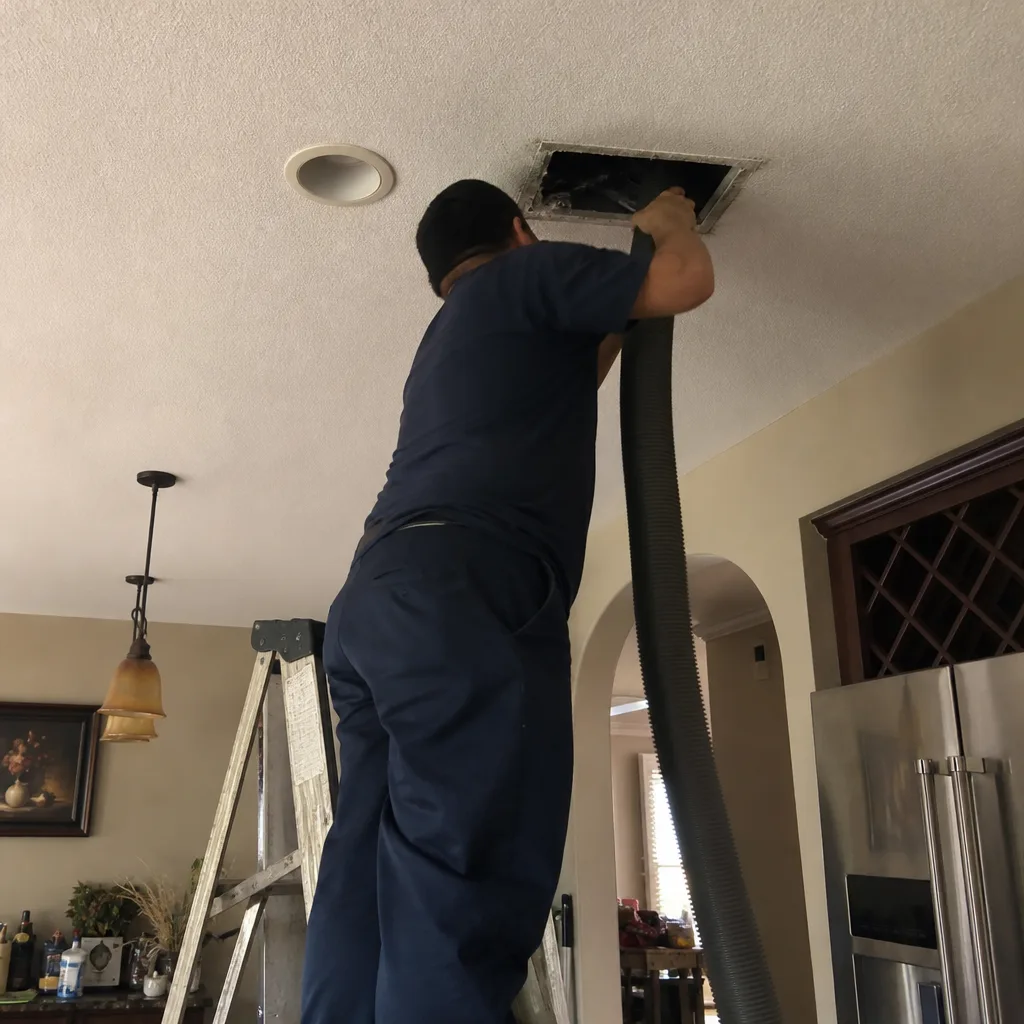 Before
 After
After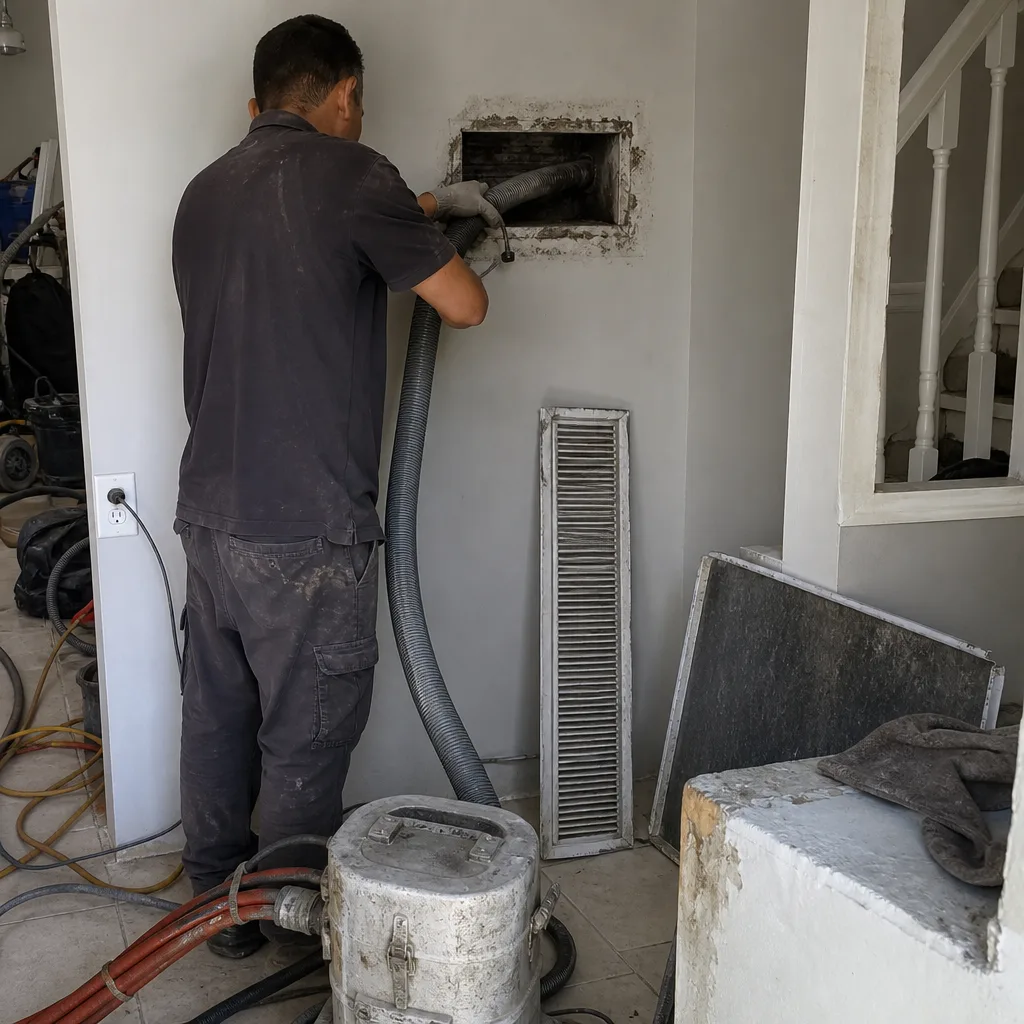 Before
 After
AfterWhen to Call a Professional
Some signs tell you the time for duct cleaning has arrived. If you’re seeing dust accumulate on furniture within days of cleaning the house, if airflow from your registers feels weak in some rooms, if the return grates are coated with a gray film, or if anyone in the home has unexplained allergy symptoms that worsen at night, your duct system is likely the culprit. Miami’s heat and humidity mean your AC runs for most of the year, pulling air through the same ducts thousands of times. That air deposits whatever it’s carrying. A professional duct cleaning with negative-air extraction removes what a vacuum can’t. If you’re unsure whether your system is due, dryer vent cleaning is another service that often gets overlooked in Miami homes and carries its own urgency.
Hollis Air Duct Miami offers free estimates in Miami. Call Roy and the team at (850) 660-3272 to get a written quote before you ever book a visit. If we can’t put it in writing, we won’t put you on the schedule.
Frequently Asked Questions
Legitimate whole-house duct cleaning in Miami typically runs between $450 and $900, depending on the size of the home, the number of HVAC systems, and the condition of the ducts. Quotes dramatically below that range are teaser prices designed to get a crew into your home, where the real invoice gets built. Call (850) 660-3272 for a written quote on your specific system.
Because they’re not quotes for the same job. A $49 or $99 special is a lead-generation tool, not a service price. The company cannot cover technician wages, equipment, and filters at that number. The profit comes from add-ons found once the technician is inside: mold treatment, duct sealing, sanitizer fogging. The low number gets the phone call. The add-ons are the business.
Ask for before-and-after photos of your own system. A professional crew can show you the interior of your ducts before cleaning and after. If a company cannot provide that documentation, you have no way to verify the work beyond their word. Before-and-after photos are the standard at Hollis Air Duct Miami, not a request we have to be asked about.
Most Miami homes benefit from duct cleaning every three to five years. The humidity and year-round AC use mean dust, dander, and debris accumulate faster than in dry climates. Homes with pets, recent renovations, or residents with allergies may need cleaning more frequently. If you’re seeing dust settle within days of cleaning, your interval has passed.
There is no state mandate for duct cleaning specifically, but the work intersects with other standards. The duct sealing work that often accompanies cleaning may require adherence to building codes, and HVAC contractors who hold licenses from Florida’s DBPR have met state competency requirements. Ask any contractor what license they hold and which agency issued it.
Walk away. A refusal to write down the scope and price is not an inconvenience; it’s an operational strategy. Without a written quote, you have no leverage when the price changes at the door. The companies that won’t write it down are the ones who benefit when it moves. Call (850) 660-3272 to see what a written quote looks like before you commit to anyone.
The Bottom Line
Hiring an air duct cleaning contractor in Miami is a test of documents, not of personalities. The legitimate companies put scope, price, and guarantee in writing because they’re not afraid of the terms. The bait-and-switch operations avoid the written quote because it exposes their model. Ask the five questions. Verify the license. Read the quote line by line. Confirm the add-on protocol in writing. For more guides & resources on protecting your home and budget, explore our blog. In a city where the $49 special is a punchline in the Attorney General’s complaint files, the contractor who writes everything down before work starts is the one you can actually hire.
Written by Roy Castellanos, Owner at Hollis Air Duct Miami, serving Miami since 2004.