
Last updated October 15, 2026
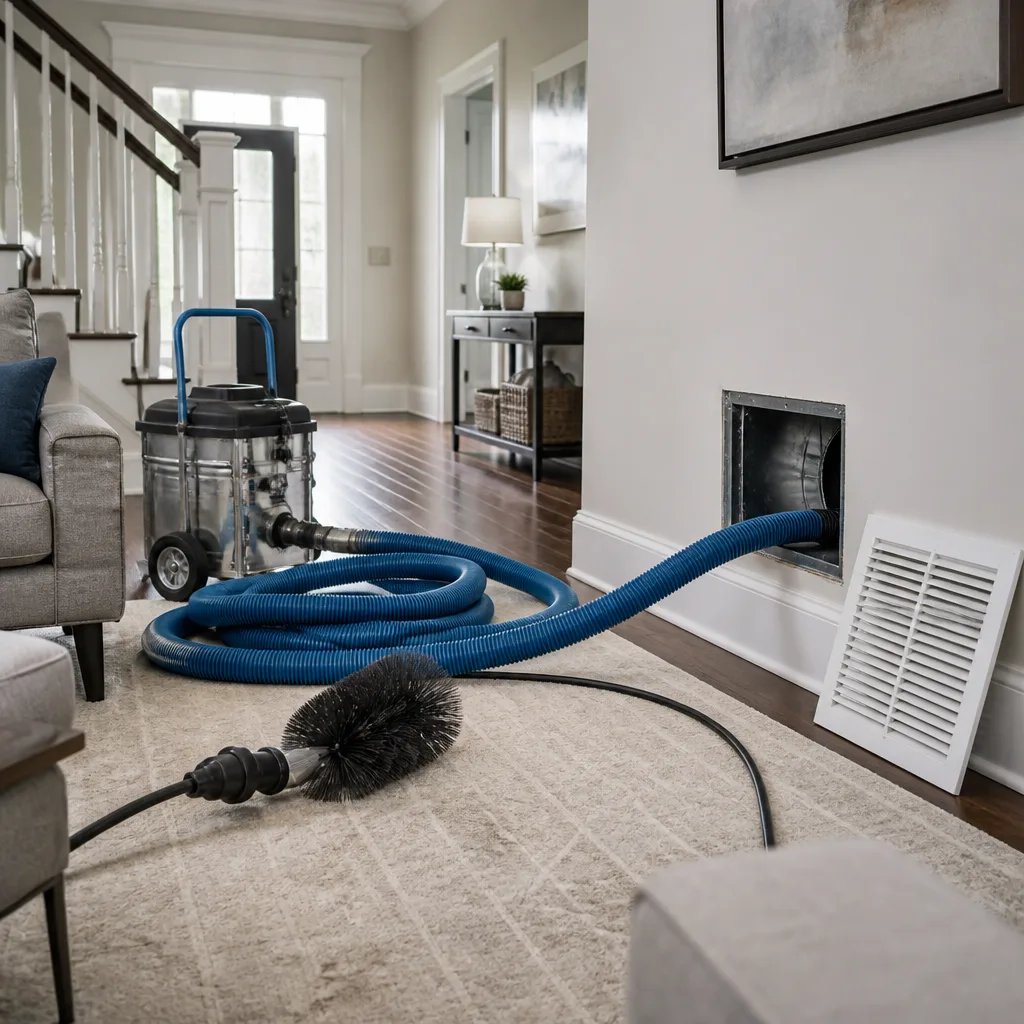 Whole-home duct cleaning
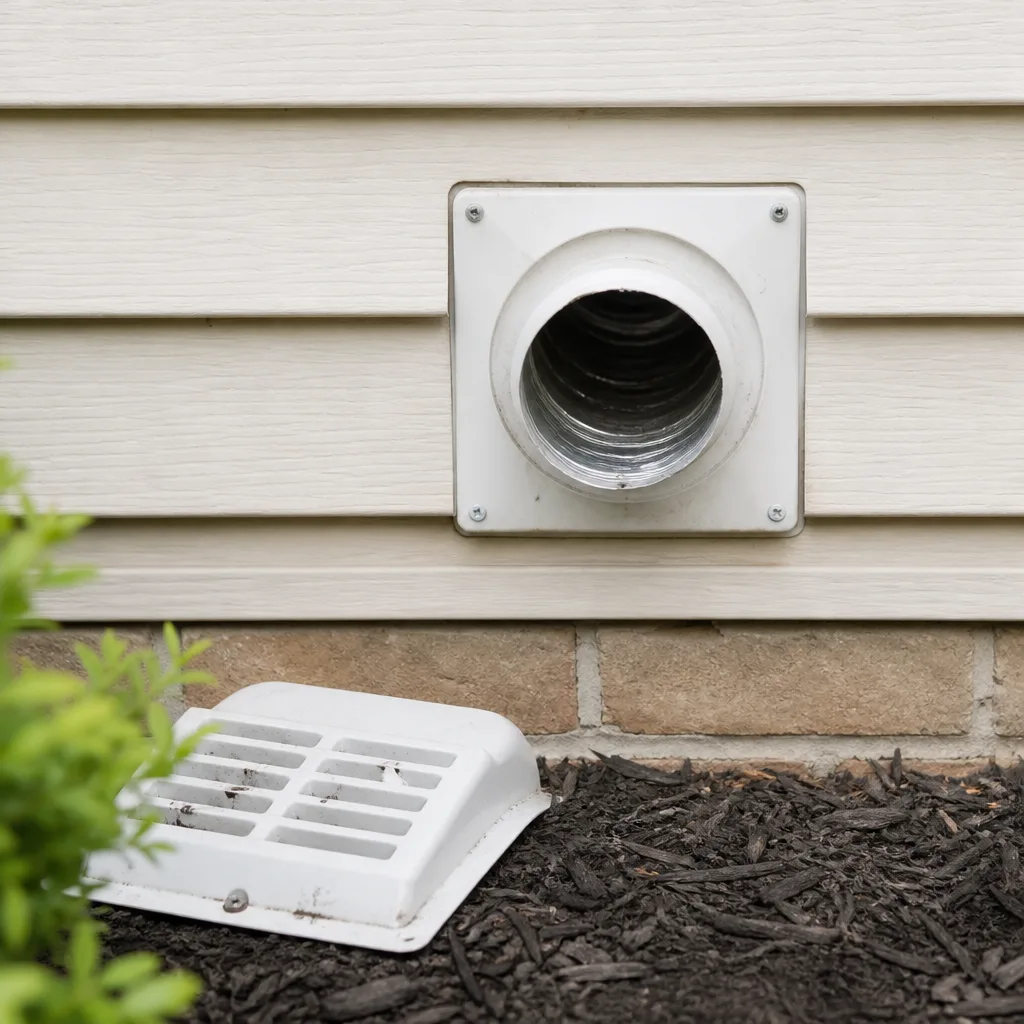 Dryer vent cleaning
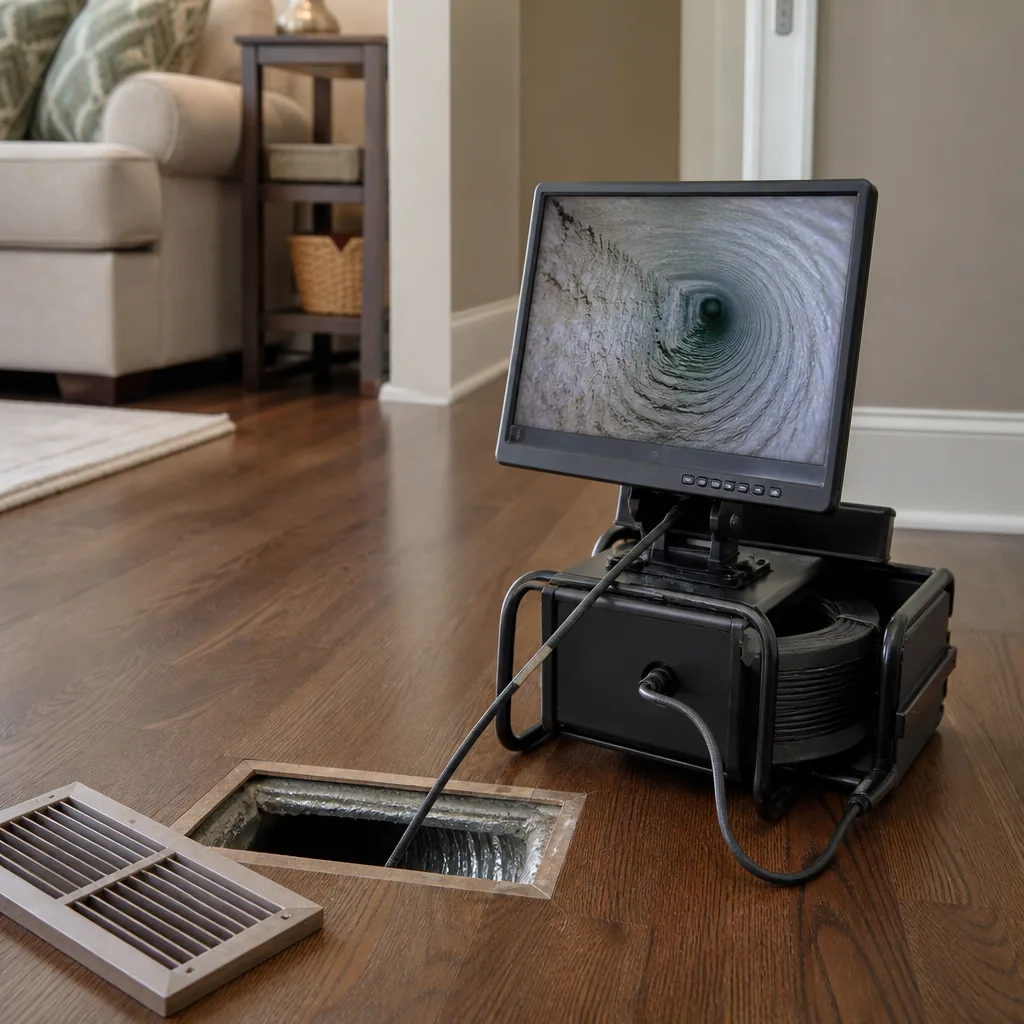 Camera inspection
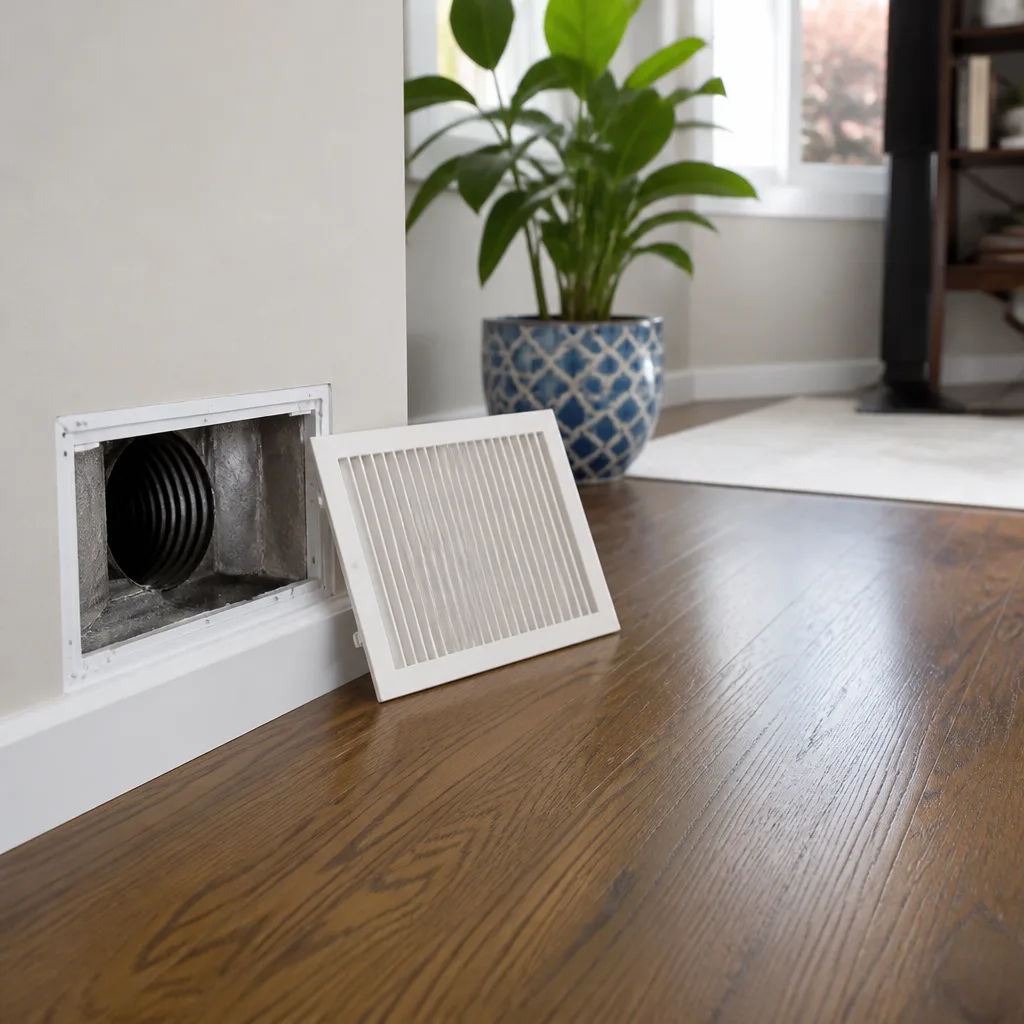 Sanitizing & deodorizing
Whole-system duct and dryer vent check with before-and-after photos - you see exactly what came out of your vents
That "$99 whole-house special" is a bait ad - the real number appears once they are in your hallway, or the "clean" is a shop-vac at the register. We photograph the inside of your ducts before and after instead.
The Complete Guide to Air Duct Cleaning in Miami
Here’s a number that should get your attention: Miami homes run their air conditioning for roughly 8,000 hours a year. The national average most duct-cleaning advice is built around assumes about 1,200 hours. That’s not a small gap. That’s the difference between changing your car’s oil every 3,000 miles and every 25,000. This Air Duct Cleaning guide is written for Miami homeowners specifically, because the duct conditions in a concrete-block house facing Biscayne Bay humidity have almost nothing in common with a wood-frame house in Phoenix. You’ll learn what actually gets cleaned, why Miami’s salt air and slab construction change the job, what you should expect to pay, and how to spot a crew that’s going to do it right.
Quick Answer
Air duct cleaning in Miami typically costs between $450 and $1,200 for a full system, depending on the home’s square footage, number of returns, and the cleaning method used. Miami’s humidity, year-round AC runtime, and salt-heavy coastal air mean ducts here accumulate contamination faster than the national benchmarks used by most guides. The job should always follow NADCA’s ACR standard, include negative-air containment, and come with a written price before work starts.
Styles & brands we work with
Table of Contents
- Why Miami Ducts Get Dirtier Faster
- What Air Duct Cleaning Actually Involves
- The NADCA ACR Standard vs. What Most Miami Companies Advertise
- Why Slab-On-Grade Construction Changes the Job
- Salt Air, Flex Duct Degradation, and What to Inspect First
- Realistic Air Duct Cleaning Prices in Miami
- How Often Should You Clean Your Ducts in Miami?
- Common Mistakes to Avoid
Why Miami Ducts Get Dirtier Faster
The EPA’s most-cited duct cleaning guidance was published in 1997. That predates the construction boom that added hundreds of thousands of high-rise condos and concrete-block homes across Miami-Dade County. It also predates the modern reality of South Florida’s cooling load: your air handler is pulling air through the duct system nearly 22 hours a day during the summer months, and not much less in January when temperatures still push into the 70s.
Here’s why that matters. Every cubic foot of air your AC moves carries particles. Dust from construction, skin cells, pet dander, cooking residue, and the fine gray soot from I-95 traffic all pass through the return ducts before hitting the filter. The more hours the system runs, the more total particles pass through. At 8,000 annual runtime hours, a Miami home’s duct system sees nearly seven times the particulate load of a northern home that runs its AC for 1,200 hours a season.
Now add humidity. Miami’s average relative humidity sits above 70% for most of the year. When dust particles absorb moisture, they become sticky. They cling to duct walls, coil fins, and blower blades instead of blowing through. That’s why a Miami duct that hasn’t been cleaned in five years often has a dark, tacky film on the interior surfaces. It’s not just dust. It’s dust bonded with moisture. And once that film forms, it becomes a surface that captures more particles, faster.
We’ve pulled return grilles off homes in Kendall, Coral Gables, and North Miami where the buildup was thick enough to reduce airflow at the return by a measurable amount. The system still cooled, but it worked harder to do it. That’s the hidden cost Miami homeowners pay: not just the air you breathe, but the added strain on a compressor that already runs thousands of hours more per year than the factory intended.
What Air Duct Cleaning Actually Involves
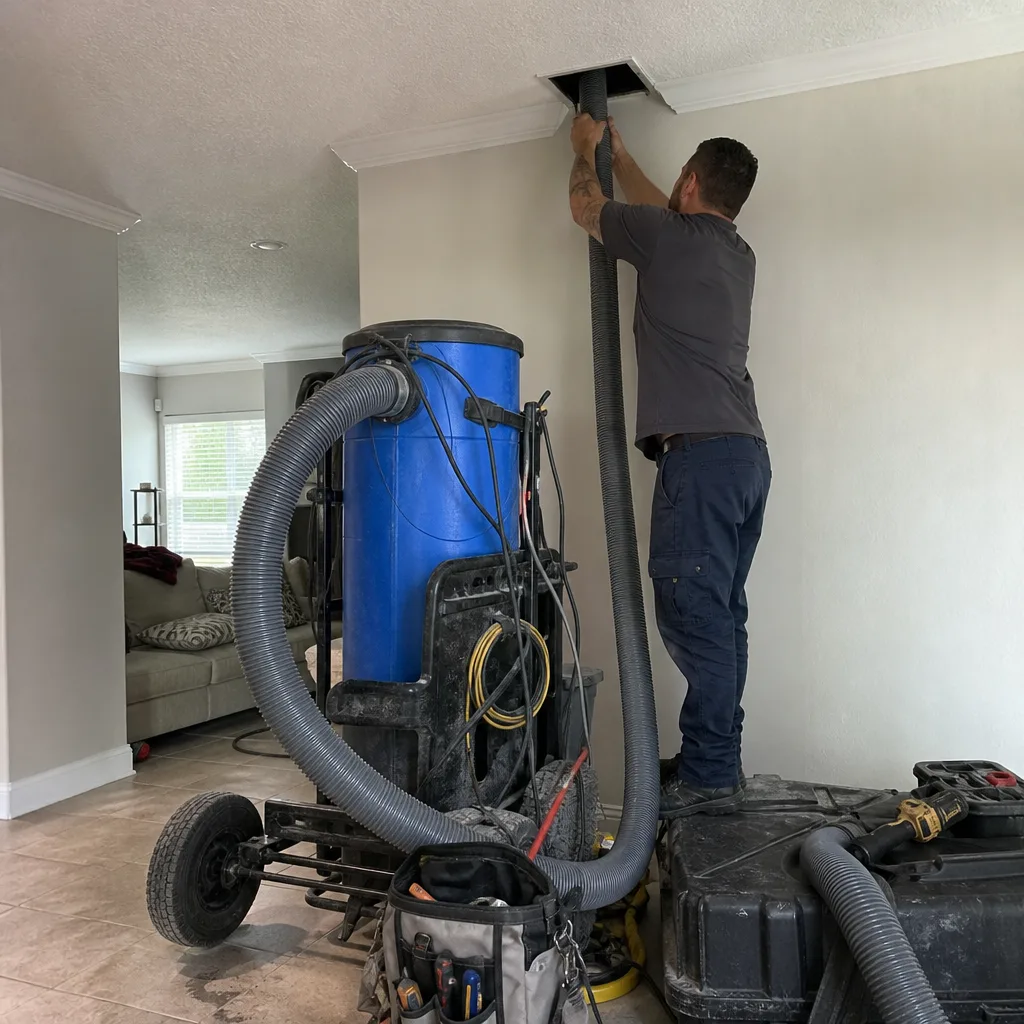
Duct cleaning is not vacuuming. It’s a mechanical and pneumatic process that removes the accumulated debris from the full interior of the duct system: supply runs, return runs, the trunk lines, the air handler, the blower, the coil, and the return plenum. A legitimate job takes three to six hours for a typical single-family home. Anything quoted at 90 minutes is a surface wipe, not a cleaning.
The standard method in Miami, and the one we use, is source-removal with negative-air containment. Here’s how it works, step by step:
- Inspection. The technician opens the supply and return plenums and documents the interior condition with a camera. You should be shown what’s inside before the cleaning starts.
- Containment. A negative-air machine is connected to the system to create suction that pulls loosened debris into a HEPA-filtered collection unit. This prevents the dust from blowing back into your living space.
- Agitation. A rotary brush or compressed-air whip is run through each branch line to dislodge the stuck-on film. In Miami’s humid ducts, this mechanical agitation matters. Air alone won’t break the bond between dust and a damp duct wall.
- Component cleaning. The blower, blower housing, evaporator coil, and drain pan are cleaned separately. A coil caked with Miami humidity residue can quietly reduce system efficiency by 10 to 20%.
- Sanitizing (optional, with cause). If visible microbial growth is present, an EPA-registered sanitizer is fogged into the system after the physical cleaning. This should not be a no-need upsell. If the ducts are dry and clear, you don’t need it.
- Final verification. The technician re-inspects with the camera and shows you before-and-after images of your own system.
We run Rotobrush rotary brush systems and Nikro negative-air machines on our Miami jobs. The tools matter because the conditions here are different. A rotary brush that works fine in a dry Arizona duct has to work harder against the damp, sticky film common in Miami return lines. The equipment is professional-grade for a reason.
If you’re comparing companies, ask one question: “Will you show me before-and-after photos of my own ducts?” A company that plans to actually clean your system will say yes without hesitation. A company that plans to run a shop-vac over the visible register and call it a day will start hedging.
The NADCA ACR Standard vs. What Most Miami Companies Advertise
NADCA, the National Air Duct Cleaners Association, publishes the industry’s definitive standard: the Assessment, Cleaning, and Restoration of HVAC Systems standard, commonly called the ACR. It’s the document that defines what a proper duct cleaning job actually requires. Most Miami homeowners have never heard of it. Most Miami duct cleaning companies have heard of it and choose to ignore large parts of it.
The ACR standard is specific about four things that matter to you:
- Source removal is mandatory. The ACR standard requires that debris be physically removed from the system, not just knocked loose and left to settle elsewhere. Agitation plus extraction, always.
- All system components are in scope. The ACR requires cleaning of supply ducts, return ducts, grilles, diffusers, the coil, the blower, the drain pan, and the air handler. A company that quotes “cleaning up to 10 vents” is not doing an ACR-compliant job.
- Containment is required. The ACR standard mandates that the work area and the unworn portions of the system be protected during cleaning. Negative-air containment is the standard method. A company that shows up with only a vacuum is not compliant.
- Post-cleaning verification is part of the scope. The ACR requires verification that the cleaning met the standard. Before-and-after photos are the minimum practical proof.
Here’s how to read a job scope like a trading partner, not a mark. A legitimate Miami duct cleaning quote will list the number of supply runs, the number of returns, whether the coil is included, and the cleaning method. It will specify containment. It will specify verification. A vague quote that says “full duct cleaning, up to 10 vents, $99” is a teaser. When the crew arrives, the price will move. That’s the game. The ACR standard is the scorecard that keeps everyone honest.
Our Air Duct Cleaning in Miami service is priced in writing, before work starts, with the full scope described on the invoice. No per-vent pricing. No adjustable numbers once the technician is standing in your hallway.
Why Slab-On-Grade Construction Changes the Job
A large share of Miami’s housing stock is built on slab-on-grade foundations. No basements. No crawl spaces in the traditional sense. In many of these homes, the return ducts run through enclosed chases in or under the slab, and the return grille pulls air from the floor instead of the wall. This is a Miami construction norm that most national duct cleaning guides never mention.
Slab returns create two problems you should know about. First, they trap humidity. A return duct embedded in or adjacent to a concrete slab sits at a temperature near the ground’s dew point in Miami’s climate. The air moving through it is warm and humid from the living space. The surfaces are cooler. Condensation forms. If the duct is poorly sealed, dust and microbial growth follow. Second, slab returns are harder to access. A wall-mounted return can be opened with a screwdriver. A slab return requires access from the return plenum at the air handler, and the technician needs to know how to run agitation tools through a chase that may be longer and tighter than a typical wall cavity.
This changes the cleaning method, not just the frequency. In a slab-return home, you cannot skip the mechanical agitation step. Air-washing alone will not address the damp, compacted debris that collects in the low points of an enclosed slab chase. You also need to inspect the return chase for standing water or visible mold before the cleaning starts. If water is pooling, the cleaning is the second job. The first job is finding where the water is coming from.
If you own a slab-on-grade home in Miami, ask the company you call: “How do you clean a slab return?” A company that has worked Miami homes will have an answer. A franchise quoting from a national script will pause.
Salt Air, Flex Duct Degradation, and What to Inspect First
Miami-Dade’s salt-heavy coastal air does something to duct systems that most guides never mention: it accelerates the degradation of flex duct outer liners and corrodes exposed metal components inside air handlers. If you live east of US-1, within a mile or two of the water, your duct system ages in dog years.
Flex duct is the flexible, insulated tubing used to connect supply and return plenums to individual rooms in most Miami homes built since the 1980s. The outer vapor barrier is typically a thin foil or vinyl layer. Salt air, combined with the UV exposure that comes with attic installations, causes that outer liner to crack and delaminate. Once the vapor barrier fails, the insulation underneath absorbs moisture from Miami’s ambient humidity. The duct loses its thermal performance. Worse, the damp insulation becomes a place where mold can grow, and the air moving through the duct carries whatever is growing in the insulation layer into your home.
Before you schedule a cleaning, do a visual inspection of the accessible flex duct in your attic or utility closet. Look for:
- Cracked or peeling outer liner on any section of flex duct
- Visible condensation on the outside of the duct jacket
- Compression or sharp kinks in the flex runs
- Gray or black staining where the duct meets the supply boot
- Duplicated duct tape patches, which signal failed prior repairs
If you see significant liner degradation, cleaning alone won’t fix the problem. The duct sections need to be replaced or sealed. Our Duct Sealing in Miami work addresses the liner and joint failures that allow humid attic air into the system. Sealing with mastic, not tape, is the method that holds up in Miami’s heat.
The salt-air factor is one reason we carry filtration products from Aprilaire and Abatement Technologies on our trucks. The right filter housing and media can capture a meaningful share of the fine salt particulate that makes it past the return. It won’t stop the corrosion, but it reduces the load your system and your lungs take on.
Realistic Air Duct Cleaning Prices in Miami
Forget the national averages you see on generic home service sites. Miami pricing reflects local labor rates, the complexity of slab-return and high-rise access, and the fact that legitimate negative-air cleaning takes real hours. Here’s a line-item breakdown of what you should expect to pay in Miami-Dade County for a standard single-family home:
| Scope Item | Typical Miami Range | What It Covers |
|---|---|---|
| Full system cleaning (8-12 supply runs, 1-2 returns) | $450 – $800 | Supply runs, return runs, trunk lines, return plenum, supply boots, grille cleaning |
| Air handler / blower / evaporator coil cleaning | $150 – $300 | Removal of blower assembly (when accessible), coil cleaning, drain pan service |
| Anti-microbial sanitizing application | $100 – $250 | EPA-registered fogging applied only when visible growth is present |
| Flex duct replacement (per run, if needed) | $75 – $200 per run | Replacement of degraded liner sections found during inspection |
| Slab return cleaning surcharge | $50 – $150 | Additional access and tooling time for enclosed slab chases |
A full Miami duct cleaning on an average 1,800 to 2,500 square foot home lands between $550 and $1,000 all-in. Larger homes with multiple returns, condos with difficult access, or systems that haven’t been cleaned in a decade can push toward $1,200.
What should each charge represent? The base price covers the labor and equipment time to physically clean every branch line and the trunk. The air handler charge is separate because it’s separate work: the blower must be pulled, the coil accessed, the drain pan cleared. Sanitizing should only be quoted when the inspection shows visible mold or microbial growth. A legitimate company will tell you if you don’t need it.
Here’s the part most guides won’t say plainly: the cheapest quote in Miami is almost never the cheapest job. A company offering $89 vent cleaning is buying the job with a teaser number. The minute the crew arrives, the price moves. Duct cleaning bait-and-switch is the most common complaint we hear from homeowners who call us second. The fix is simple: ask for a written scope and price before the technician arrives. If the company won’t put it in writing, call someone who will.
We price every job in writing before work starts. The number on the quote is the number on the invoice. That’s how The Garrison Standard works at Hollis Air Duct Miami home, and it’s one of the reasons homeowners who’ve been burned once tend to call us back.
How Often Should You Clean Your Ducts in Miami?
The generic answer you’ll find online is “every 3 to 5 years.” For Miami, that number is optimistic. The combination of 8,000 annual AC runtime hours, sustained humidity, and coastal particulate load means a Miami system accumulates the same contamination as a northern system in roughly half the time. Our practical recommendation: every 2 to 3 years for homes east of US-1, every 3 to 4 years for homes west of the Turnpike, and sooner if you own pets, smoke indoors, or are renovating.
You should move the timeline up if you have:
- Allergy or asthma symptoms that worsen at home but improve away from home
- Visible dust blowing from supply registers when the AC runs
- A persistent musty smell from the vents, especially in the first minutes after startup
- Renovation or construction work completed in the last 12 months
- Any history of water intrusion in the attic or around the air handler
If you bought a Miami home and the seller can’t produce documentation of the last duct cleaning, assume it hasn’t been done. Schedule one in the first year, not the third. You’ll establish a clean baseline and the inspection photos will tell you what kind of condition the previous owner left in the walls.
Common Mistakes to Avoid
- Falling for the $99 vent special. This is the duct cleaning equivalent of a free lunch. The quoted price covers four or five supply registers. Once the technician arrives, the “real” cleaning is suddenly $800. If the price isn’t in writing for the full system, pass.
- Using a company that can’t show the ACR scope. If the quote doesn’t specify containment, agitation, component cleaning, and verification, it’s not a NADCA-standard job. Insist on the scope in writing.
- Skipping the air handler and coil. A duct cleaning that skips the coil and blower is half a job. The dirtiest surfaces in your system are almost always the blower wheel and the coil. If the quote doesn’t mention them, ask why.
- Paying for sanitizing that wasn’t indicated. Sanitizing is a real step with real value when microbial growth is present. It’s also the easiest upsell in the trade. Ask to see the inspection photos that justify it.
- Ignoring the filter situation. A proper cleaning is the right time to upgrade the filtration. A 1-inch fiberglass filter in a Miami home is a speed bump, not a filter. Ask about a 4-inch media cabinet or a higher-MERV option sized correctly for your system.
- Delaying because the system “still cools fine.” Your AC will cool fine with dirty ducts. It will just work harder, cost more to run, and push more particulate into your living room. Duct cleaning is not a repair. It’s maintenance, and in Miami it’s maintenance with a shorter interval than the national norm.
When to Call a Professional
Call a Miami duct cleaning professional when built-up debris is visible at the return grille, when the system smells musty, when dust settles on surfaces within days of cleaning, or when you know the system hasn’t been touched in five years. Call sooner if anyone in the home has respiratory symptoms that spike indoors, if you’ve had water intrusion in the attic or slab, or if you’re moving into a new home and want a documented baseline. Duct cleaning is not a DIY job. The interior of a duct system is not reachable with household equipment, and cutting into the system without negative-air containment sends the accumulated debris directly into your living space.
Hollis Air Duct Miami offers free estimates throughout Miami-Dade. Call (850) 660-3272 and we’ll inspect the system before quoting a word about price.
See the difference
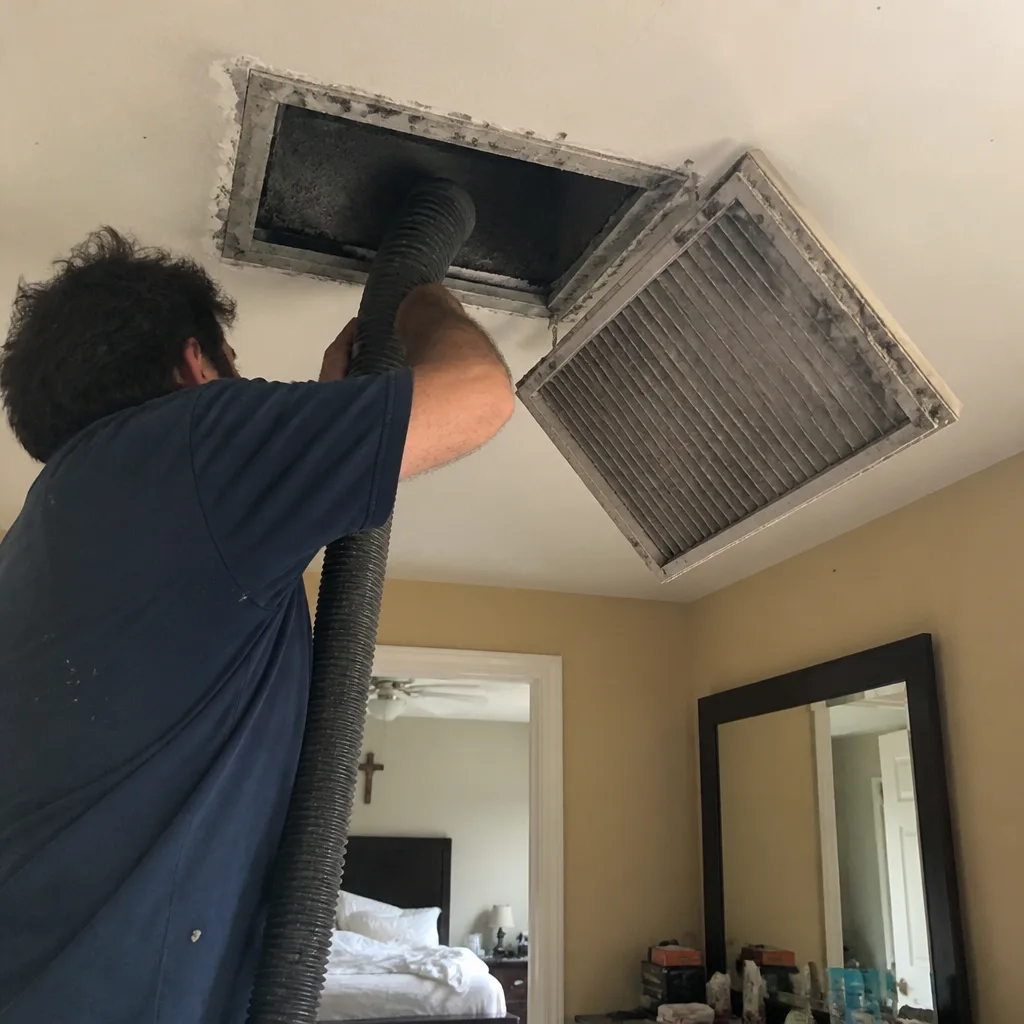 Before
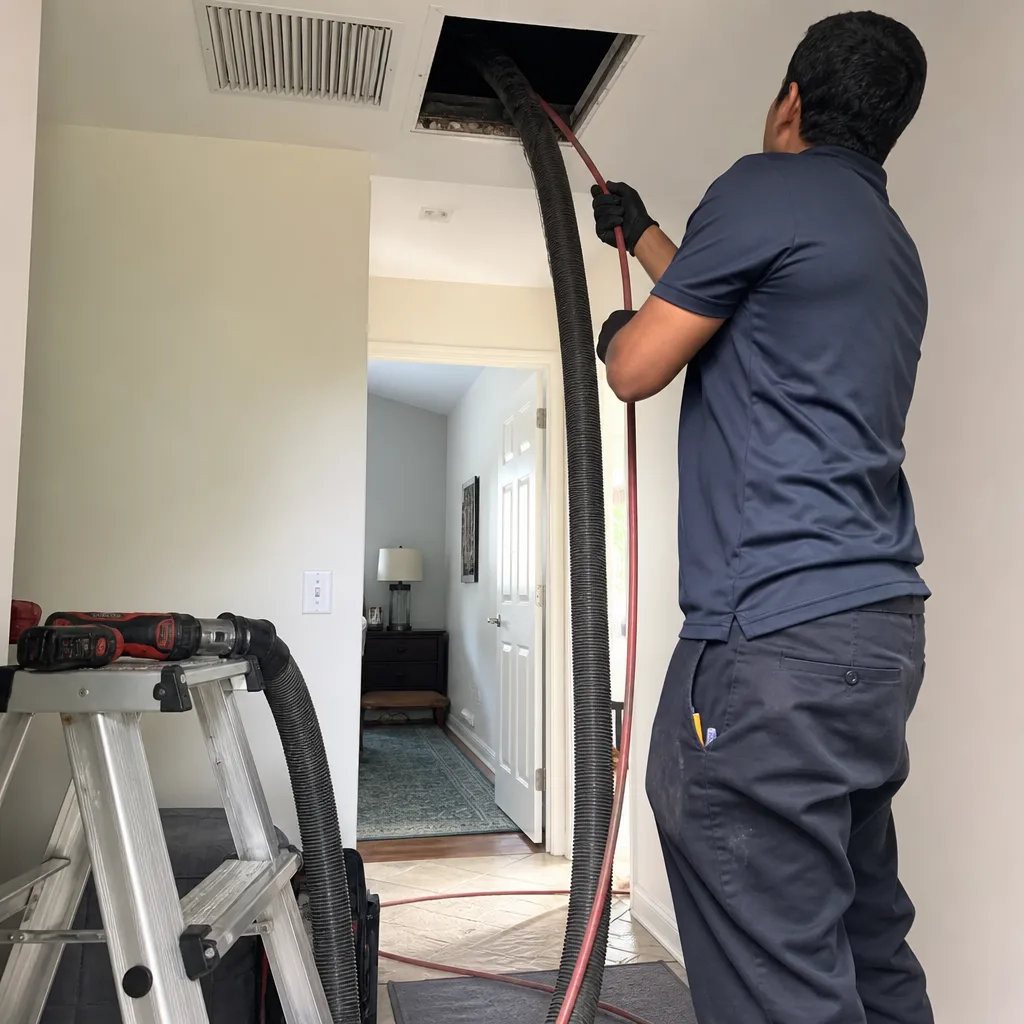 After
After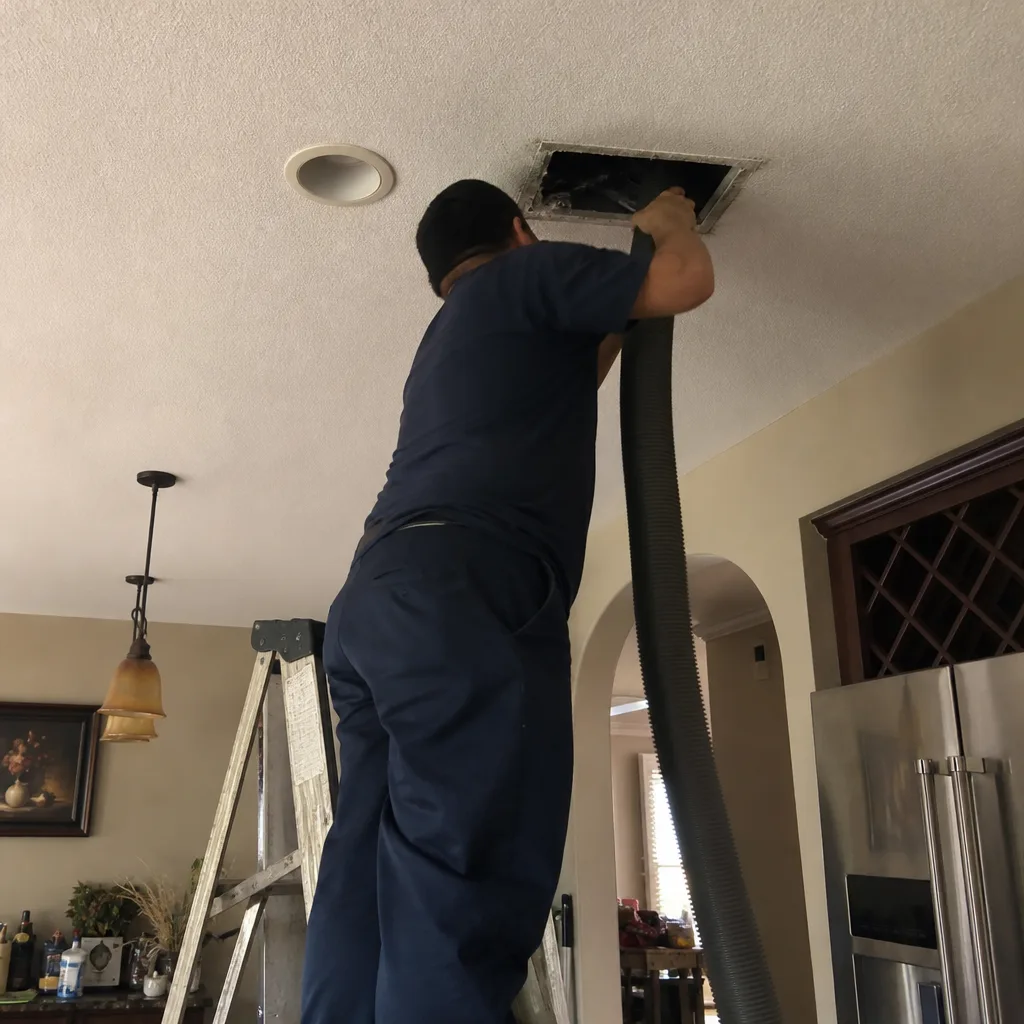 Before
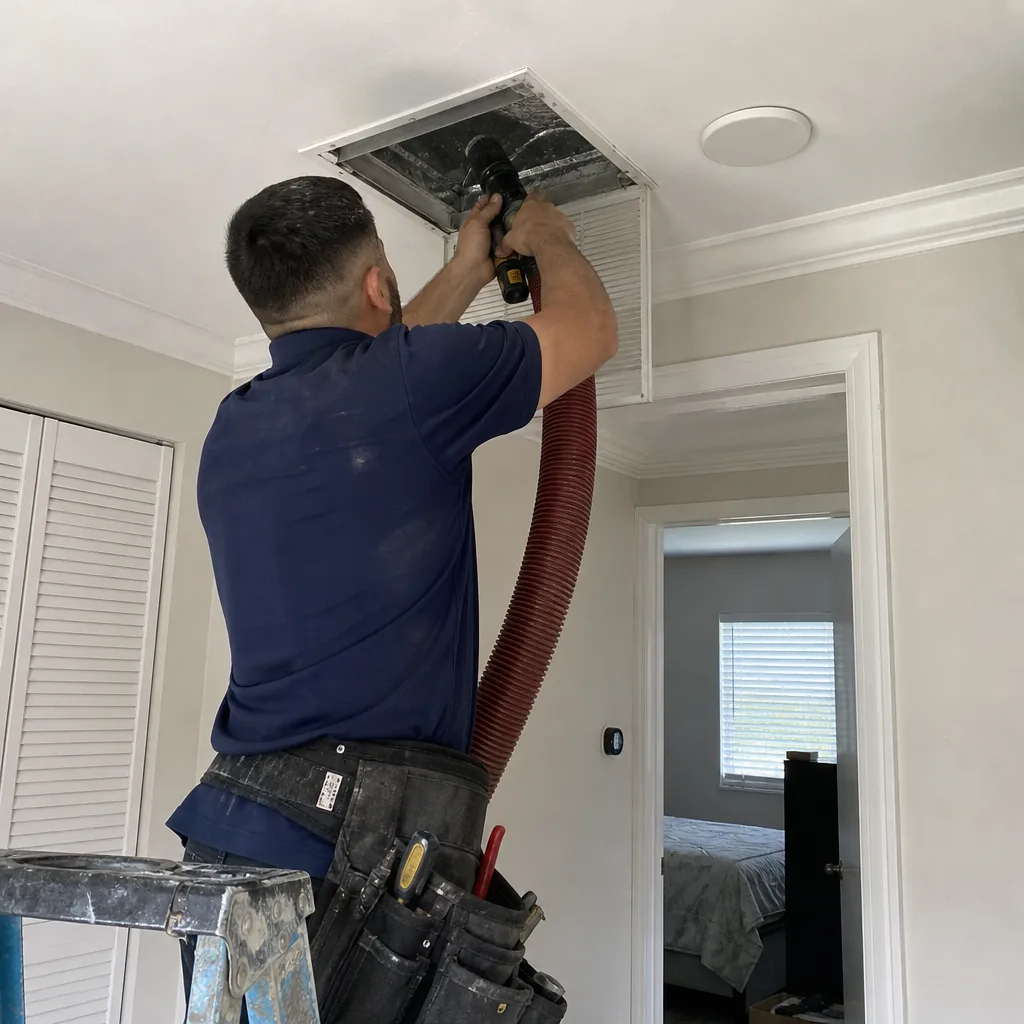 After
After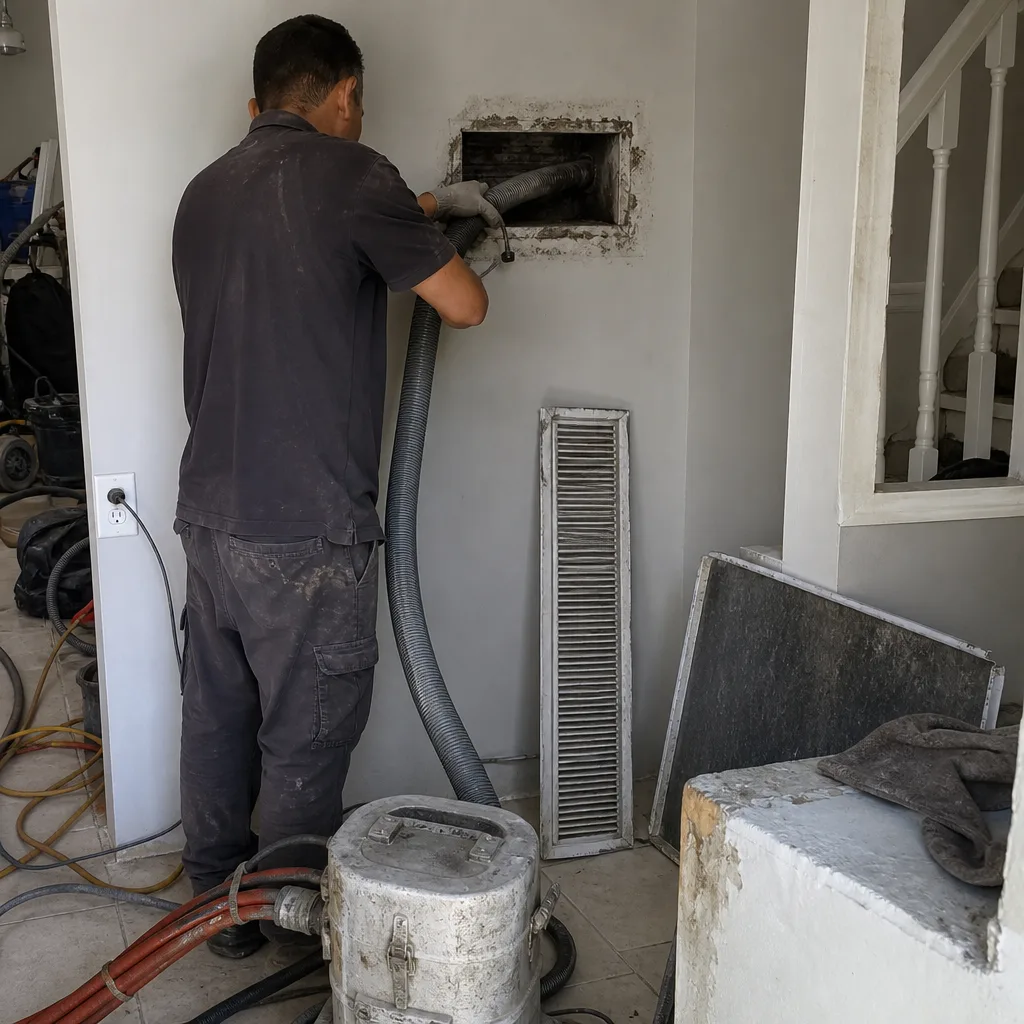 Before
 After
AfterFrequently Asked Questions
Air duct cleaning in Miami typically runs $550 to $1,000 for a full single-family home cleaning that meets the NADCA ACR standard, with larger homes or slab-return systems pushing to $1,200. The range covers supply and return ducts, the air handler, blower, and coil. Call (850) 660-3272 for a written quote on your specific system.
Cheap Miami duct cleaning quotes are almost always teaser pricing: a low number to get the appointment, followed by a much larger invoice once the technician is inside. Legitimate negative-air cleaning takes real hours and real equipment. A price far below the market is a warning, not a bargain.
You know the work was done when the company shows you before-and-after photos of your own system. Ask for this before you book. A company that hesitates on camera documentation is not planning to clean your ducts.
In Miami, every 2 to 3 years is the practical interval, not the 3 to 5 years most national guides recommend. Year-round AC runtime and humidity load double the accumulation rate. Homes with pets, smokers, or recent renovations should lean toward the shorter end.
Yes. Mechanical cleaning removes the organic debris that mold feeds on, and a proper job should include an EPA-registered sanitizer application when visible growth is present. The cleaning addresses the mold inside the ducts; if the source is a water leak or condensation problem, that must be fixed separately.
It can. A coil caked with Miami humidity residue and a blower wheel coated with dust force the compressor to run longer per cooling cycle. Clean components restore airflow and heat exchange, which reduces runtime. The savings won’t replace the cleaning cost overnight, but the system works less hard and lasts longer. Call (850) 660-3272 for a free assessment.
The Bottom Line
Miami’s duct conditions are not the national conditions that most cleaning guides assume. Year-round AC runtime, sustained humidity, slab-on-grade construction, and salt-laden coastal air stack the deck against your system. The fix is the same discipline that applies to any real trade: a written scope, a fair price agreed before work starts, a NADCA-standard cleaning with containment and verification, and a company that stands behind the work in writing. At Hollis Air Duct Miami, that means the 365-Day Done Right Promise on every job. Explore our more guides & resources for additional homeowner tips. If it’s not done right, we make it right, at no charge, for a full year. That’s the standard. Everything else is talk.
For Dryer Vent Cleaning in Miami or Duct Sealing in Miami, call (850) 660-3272. We answer the phone around the clock, and we’ll give you a written price before any work begins.
Written by Roy Castellanos, Owner at Hollis Air Duct Miami, serving Miami since 2004.