
Last updated October 15, 2026
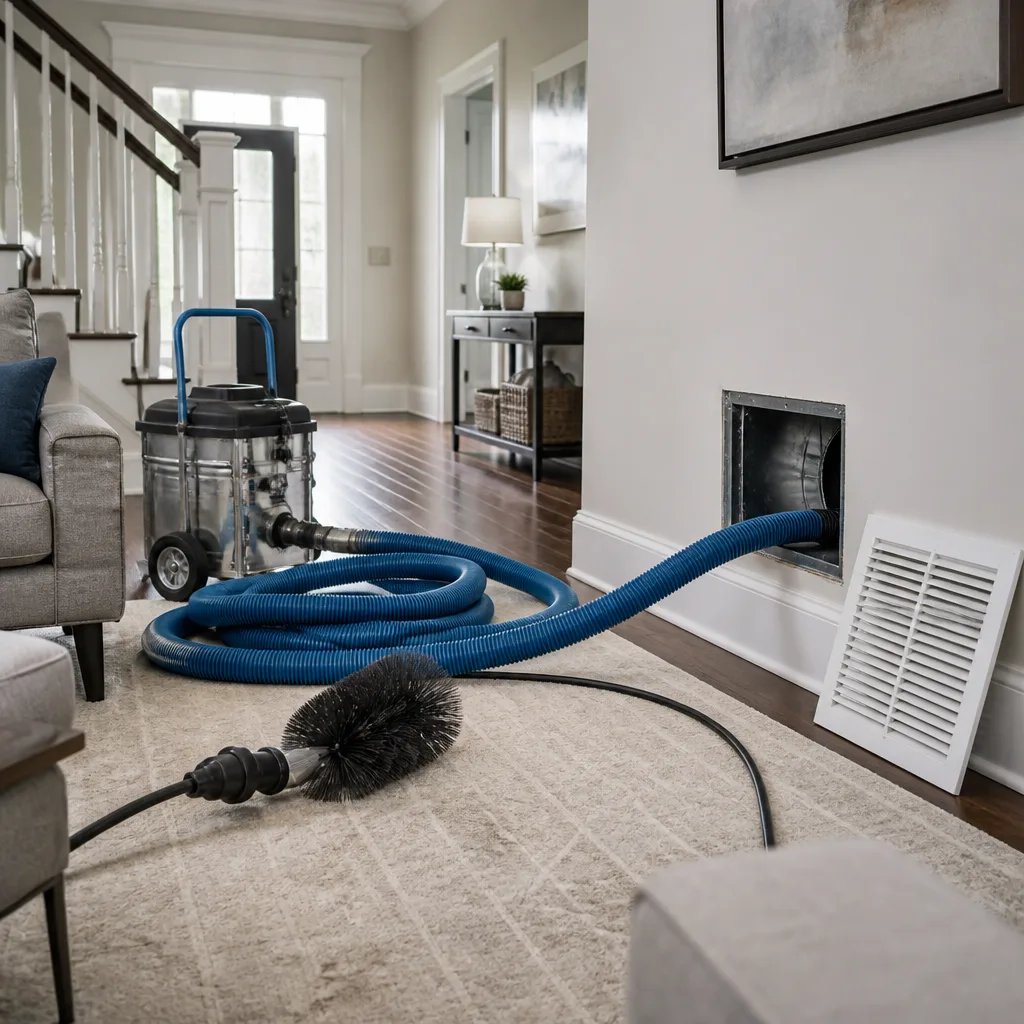 Whole-home duct cleaning
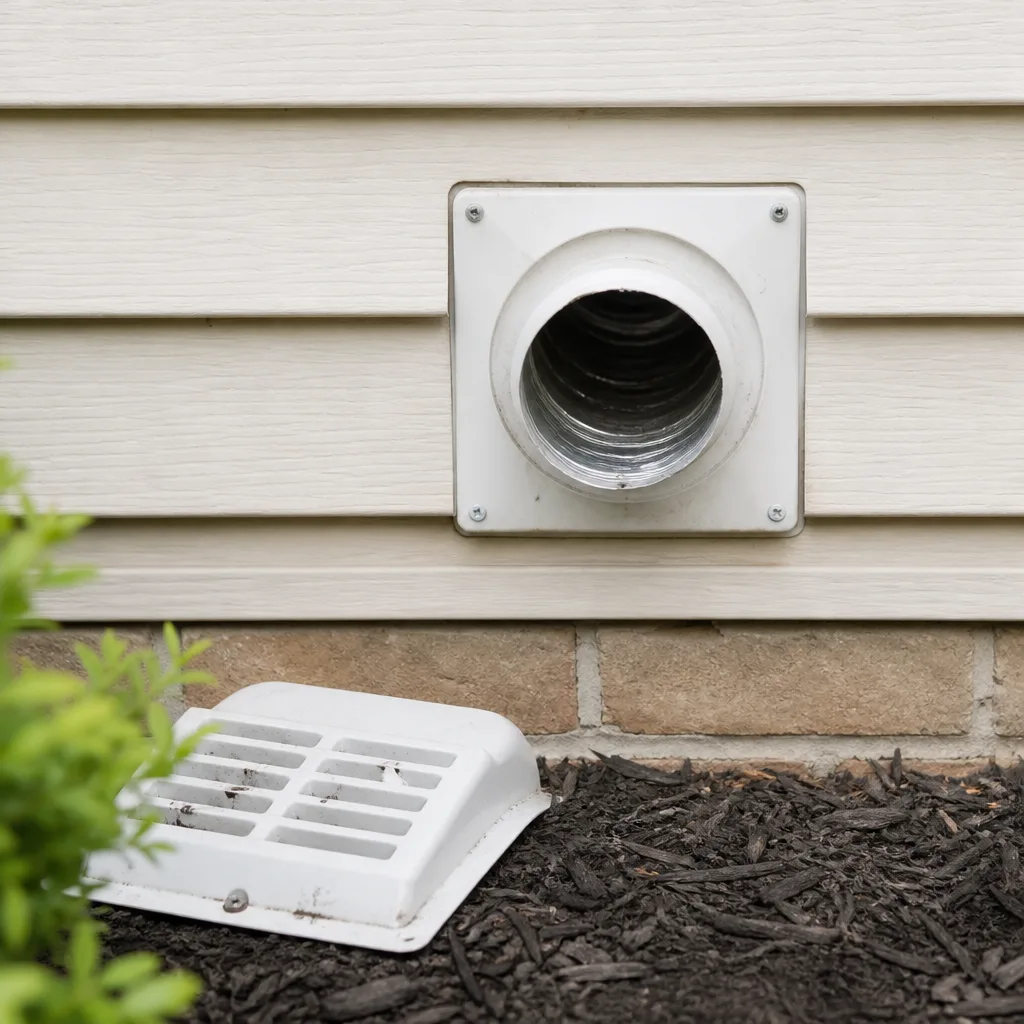 Dryer vent cleaning
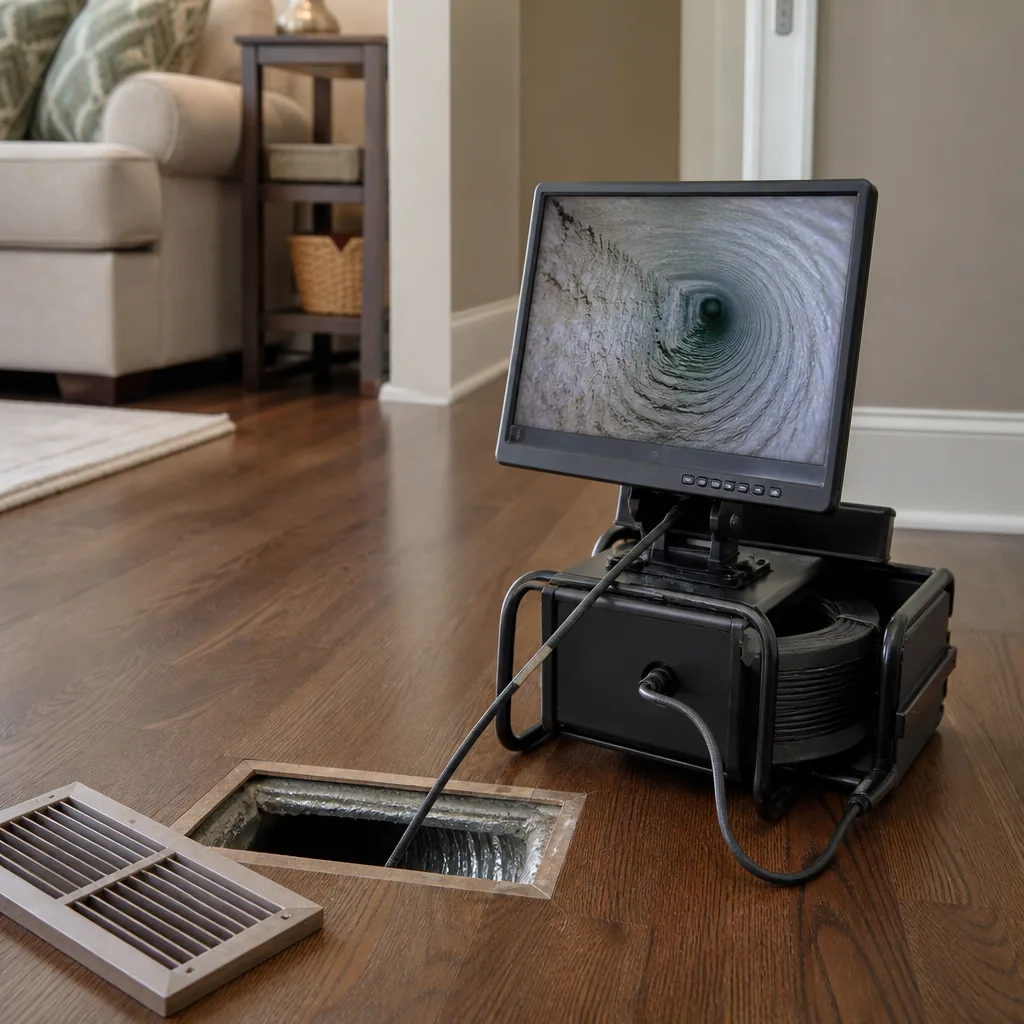 Camera inspection
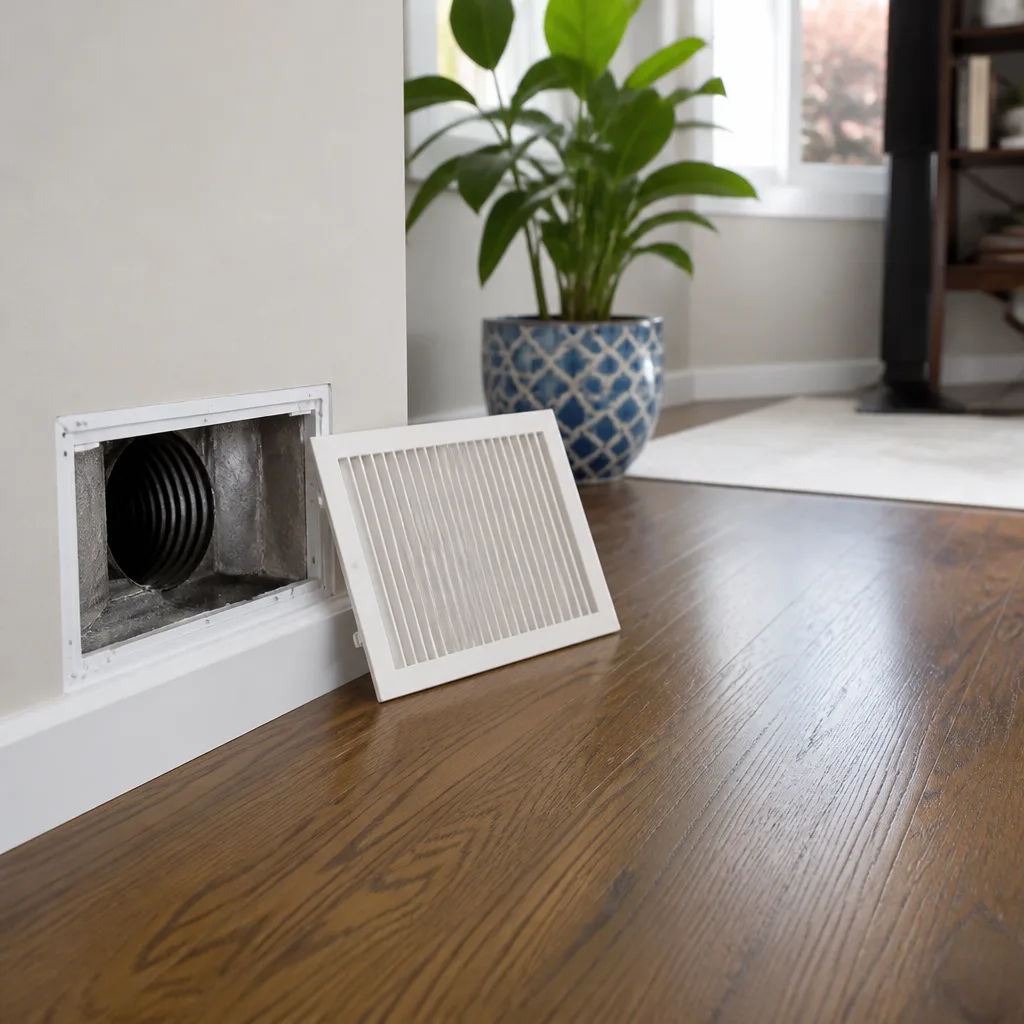 Sanitizing & deodorizing
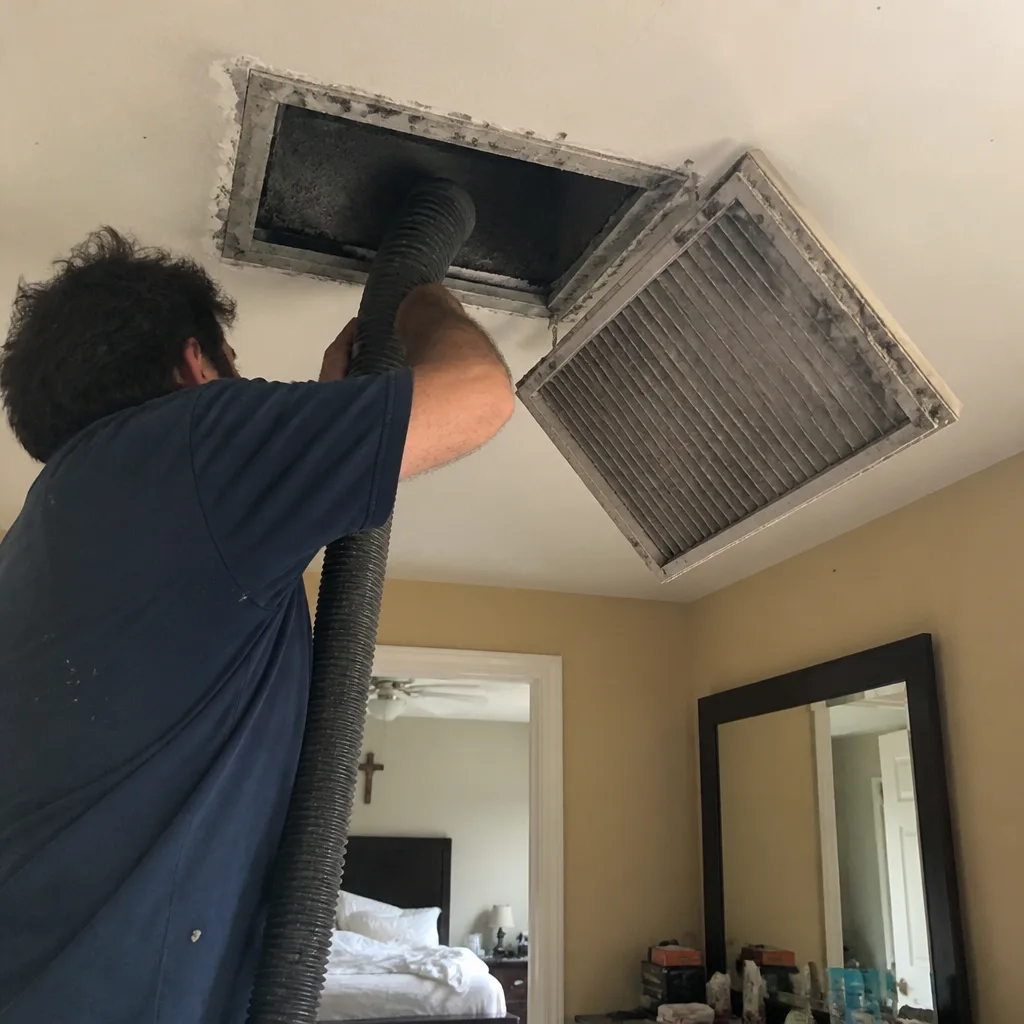
Whole-system duct and dryer vent check with before-and-after photos - you see exactly what came out of your vents
That "$99 whole-house special" is a bait ad - the real number appears once they are in your hallway, or the "clean" is a shop-vac at the register. We photograph the inside of your ducts before and after instead.
DIY vs Professional Air Duct Cleaning: The Miami Homeowner’s Decision Guide
Here is a counterintuitive fact most “DIY duct cleaning” articles won’t tell you: they assume you have access to a $1,500 negative-pressure vacuum system. You don’t. And without it, what you’re actually doing is register-level debris removal, not duct cleaning. That’s still worth doing – it just isn’t what the pros do. This guide from Hollis Air Duct Miami home walks you through exactly where your reach ends, what a Miami homeowner can realistically handle, and when calling a professional stops being optional and starts being the cheaper decision.
Styles & brands we work with
Quick Answer
DIY duct cleaning in Miami can handle the visible, reachable layer – registers, returns, and the first few feet of accessible duct – but it cannot replace professional negative-pressure extraction. Given Miami’s heat and humidity load, which accelerates dust-and-moisture buildup inside duct liners, most homes benefit from professional Air Duct Cleaning in Miami every 3 to 5 years, with DIY register-level cleaning in between. The deciding factor is what you can photograph and reach with a flashlight; if debris sits deeper than a forearm’s length into the duct, you’re only rearranging it.
Table of Contents
- The Honest Scope Map: What You Can Actually Reach
- Miami-Specific DIY Risks Most Guides Skip
- Legitimate DIY Maintenance That Extends Professional Intervals
- How to Document Your Ducts Before Any Service Call
- The Economic Framework: What DIY Actually Saves and What It Risks
- What Professional Cleaning Does That You Cannot
- How Often Miami Homes Really Need Duct Cleaning
- Common Mistakes to Avoid
- When to Call a Professional
- Frequently Asked Questions
- The Bottom Line
The Honest Scope Map: What You Can Actually Reach
Let’s be straight about what DIY duct cleaning involves. A homeowner with a good shop vacuum, a dryer vent brush kit, and a phone camera can reasonably reach about 18 to 24 inches into a duct from any register opening. That’s a physical fact, not an opinion. Your arm has a length. Your vacuum hose has a reach. Beyond that forearm-plus distance, whatever you’re removing from the visible duct surface is staying put unless you have professional extraction equipment pulling it out from the far end.
Here is what sits inside a Miami home’s ductwork, and what you can actually do about each layer:
- Surface dust on register covers and the first 12 inches of duct: Reachable with a vacuum and brush. This is legitimate DIY territory.
- Visible lint or pet hair in the first 18 to 24 inches: Reachable with a rotary brush kit attached to a drill. You can knock it loose, but you’re pushing some of it deeper into the system as you work.
- Dust film lining the full duct run (10 to 40 feet per branch): Not reachable with DIY tools. This requires a negative-air machine pulling from the main trunk while brushes agitate from each register. Without negative pressure, you’re not extracting – you’re relocating.
- Debris in the main return trunk near the air handler: In most Miami homes, this trunk runs through an attic or chase. It is not accessible by any practical DIY method.
We’ve had calls from Miami homeowners in Kendall and West Kendall who spent an entire weekend vacuuming registers and were surprised to see dust settling back on supply grilles within two weeks. What they did was clean the outlet. The source layer, sitting deeper in the trunk against warm duct surfaces, kept feeding it. That’s not failure on their part. That’s physics.
Miami-Specific DIY Risks Most Guides Skip
The national DIY advice does not account for South Florida humidity. That matters more than most people realize. In drier climates, the dust inside ducts stays dry and movable. In Miami, it doesn’t. Indoor relative humidity above 60% for large parts of the year means a thin biofilm of moisture-and-dust forms inside duct liners, especially older fiberglass-lined ducts still common in Miami-Dade homes built before the 1990s.
Here’s the risk that gets skipped: when you run a brush or a vacuum without containment at the air handler end, you disturb that settled biofilm-laden dust. In dry air, that means a temporary dust cloud. In humid Miami air, that dust can carry dormant mold spores that found enough moisture to stay viable. You may be releasing into your living space exactly what you were trying to remove. Professional cleaning addresses this by running a negative-pressure machine that keeps the system under suction while agitation happens, so displaced particles exit into a HEPA-filtered chamber instead of your bedroom.
A second Miami-specific concern: flexible ducts. A large share of Miami homes, especially townhomes and older ranches in neighborhoods like Westchester or Shenandoah, use flexible ductwork in attic runs. That duct liner is fragile. An aggressive drill brush can tear it. A torn flex duct in a hot Miami attic leaks conditioned air into a 130-degree space, which is a far more expensive repair than the cleaning you were trying to avoid paying for.
And a third concern is one nobody mentions: your own exposure. In a Miami attic in August, the temperature can exceed 120 degrees. Crawling through that space with a shop vacuum is not a weekend project. It’s a heat-stress event. We’d rather you stay out of that attic and save your ambition for the tasks that actually pay off.
Legitimate DIY Maintenance That Extends Professional Intervals
This is not an argument against DIY work. It’s an argument for doing the right DIY work. Here’s what genuinely moves the needle in a Miami home and can extend the interval between professional cleanings from 3 years toward 4 or 5:
- Register and grille cleaning (monthly during summer AC season): Remove each supply and return register, wash it in warm soapy water, dry it, and vacuum the visible duct opening with a brush attachment. This prevents surface-level buildup from migrating deeper. Ten minutes per room, real benefit.
- Air filter discipline (every 30 to 60 days in Miami): Miami’s AC system runs 3,000+ hours per year, more than double a northern home. A 1-inch filter loaded for 90 days is no longer filtering; it’s restricting airflow and forcing the blower to pull harder, which draws more dust into the system. Use a filter rated MERV 8 to 11, and check it monthly during July through September. Brands like Honeywell and Aprilaire make widely available MERV-rated options at Miami big-box stores.
- Drain pan inspection (monthly during humid season): A clogged condensate drain pan keeps standing water, which in a duct system means moisture in the air stream – and in Miami, everything that comes with it. Pour a cup of vinegar down the drain line monthly. If the pan gunk persists, get an HVAC tech involved before it becomes a duct contamination problem.
- Visual flex duct inspection from the attic access (annually): You don’t need to crawl in. Shine a bright flashlight from the attic hatch and look for obvious sags, kinks, or disconnected collars. Any of those is a red flag that should trigger a professional call, because a detached supply duct is pushing conditioned air into your attic while pulling unfiltered attic air into the living space.
- Return-side vacuuming (every 2 to 3 months): The return side pulls the most and shows the most. A quick vacuum of the return grille and the visible cavity behind it removes a surprising amount of pet hair and surface dust. This is the highest-traffic, most-visible DIY win in any Miami home.
Those five tasks, done consistently, keep the front layer of your duct system cleaner and give a professional cleaning a cleaner starting point when you do schedule one.
How to Document Your Ducts Before Any Service Call
Before you spend money on any duct cleaning, DIY or professional, take twenty minutes to photograph what’s actually inside your ducts. This documentation does two things: it shows you what you’re dealing with, and it gives any contractor a fixed scope to quote against. A picture doesn’t move. A sales pitch does.
Here’s the process that works:
- Turn the AC off. You want settled debris visible, not dust blowing past the lens.
- Remove a supply register in the bedroom you use most and one in the room you use least. This gives you a comparison. The heavy-use room should show more.
- Take a phone photo at the register opening, flash on, lens aimed down the duct at a 45-degree angle. Don’t aim straight down. The 45-degree angle shows the duct wall surface, which is where dust film is visible, not just the floor of the duct.
- Photograph the return grille cavity. This is the black box of most cleaning quotes. If the return cavity shows thick gray film or matted pet hair, that’s your anchor for scope.
- Photograph the filter slot and the air handler cabinet interior if accessible. The filter slot shows bypass – dust bypassing the filter – which tells you the system has been pulling unfiltered air.
- Take one photo of the attic flex duct run from the access hatch. If you can see sags or disconnected segments, that’s a duct repair quote, not a cleaning quote.
When you send those images to a Miami contractor, the conversation changes. You’re no longer asking “how much to clean ducts?” You’re asking “here is what I’m seeing, what does it take to remove it?” That’s the difference between a price anchored to your actual condition and a price built on a brochure. We use customer photos routinely at Air Duct Cleaning in Miami references to set a written price before we arrive. The photo doesn’t replace the visit, but it narrows the unknown before anyone walks on site.
The Economic Framework: What DIY Actually Saves and What It Risks
Let’s put numbers on the table, because Miami homeowners asking this question are not asking a philosophical question. They’re doing arithmetic.
A professional whole-home air duct cleaning for a typical 3-bedroom, 2-bath Miami home with 8 to 12 supply runs typically runs between $350 and $600. That’s the full job: negative-air extraction, agitation of all supply ducts and returns, and clearing of the main trunk. A larger home or a heavily contaminated system can run higher, but that range covers most single-family homes in Miami-Dade.
A DIY attempt costs what you already own plus maybe $40 to $80 in brushes, a step drill attachment, and a shop-vac filter bag. So the apparent savings is $300 to $550 per attempt.
Here’s the other arithmetic nobody posts:
- If you tear a flex duct while brushing: Replacement cost for a 25-foot flex duct run in a Miami attic is typically $300 to $500 including labor. You just spent your savings and got no cleaning.
- If you dislodge settled mold spores in a humid duct liner without containment: A professional mold assessment and remediation in a Miami duct system starts around $800 and goes up from there. This is not rare in Miami; humid duct liners are precisely where this risk concentrates.
- If you disturb the blower motor or damage the indoor coil during an ambitious DIY reach: Miami HVAC labor runs $90 to $130 per hour. The coil repair alone can exceed the cost of the professional cleaning you were trying to avoid.
The honest way to frame it: DIY saves you the cleaning cost only when your system is clean enough that the DIY work is genuinely sufficient. If your ducts show heavy visible dust film in photos, the DIY path doesn’t clean them – it just stirs the top layer and leaves the source intact, at which point you’re paying for the professional cleaning anyway, just later and after weeks of worse air quality.
What Professional Cleaning Does That You Cannot
This is where the gap between homeowner reach and professional results gets specific. The professional method is not the homeowner method with better tools. It’s a different operation entirely.
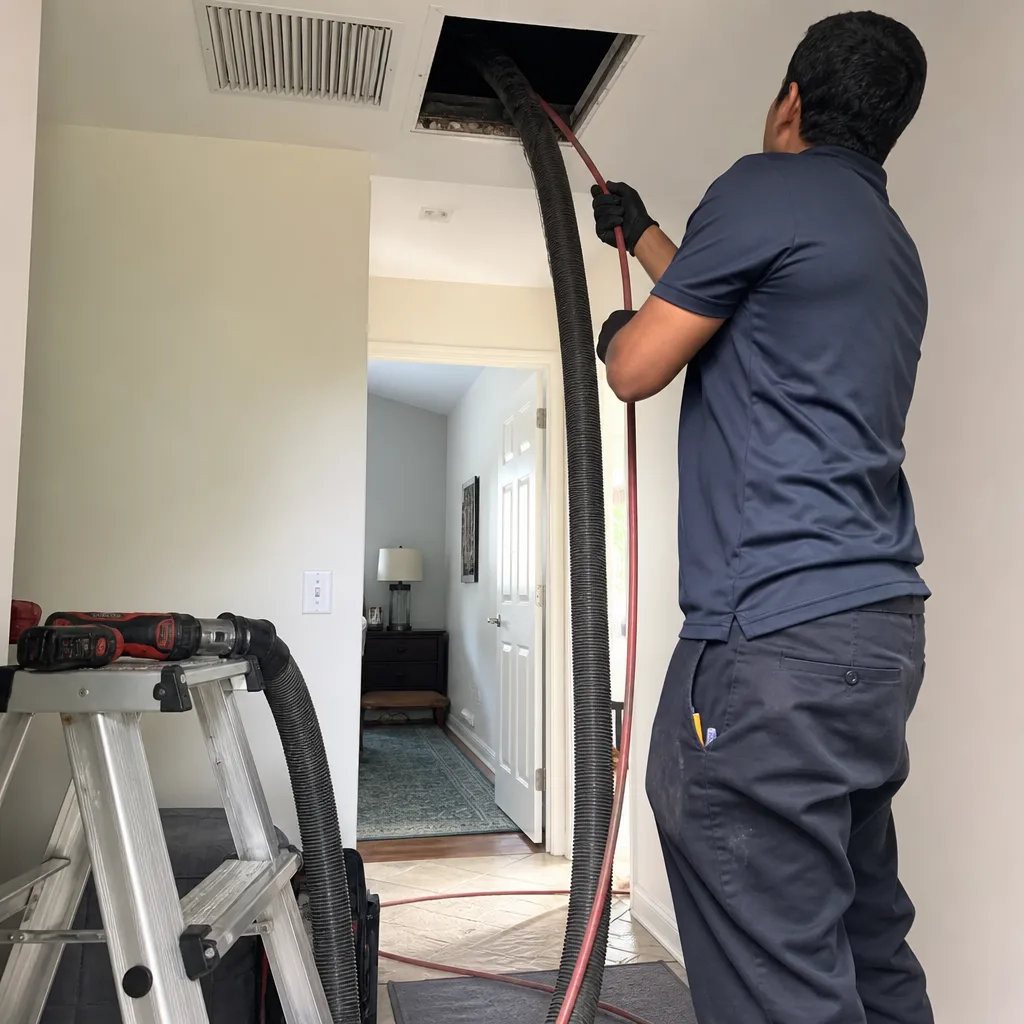
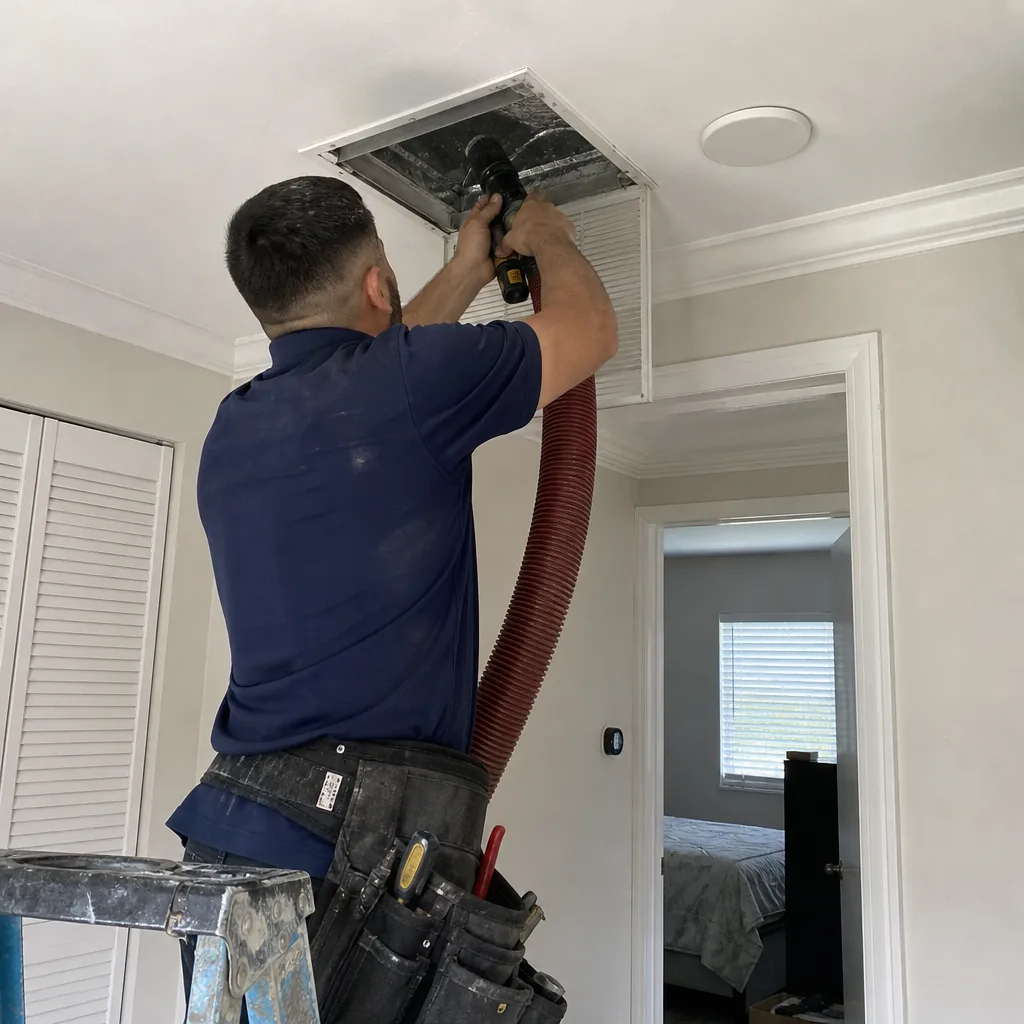
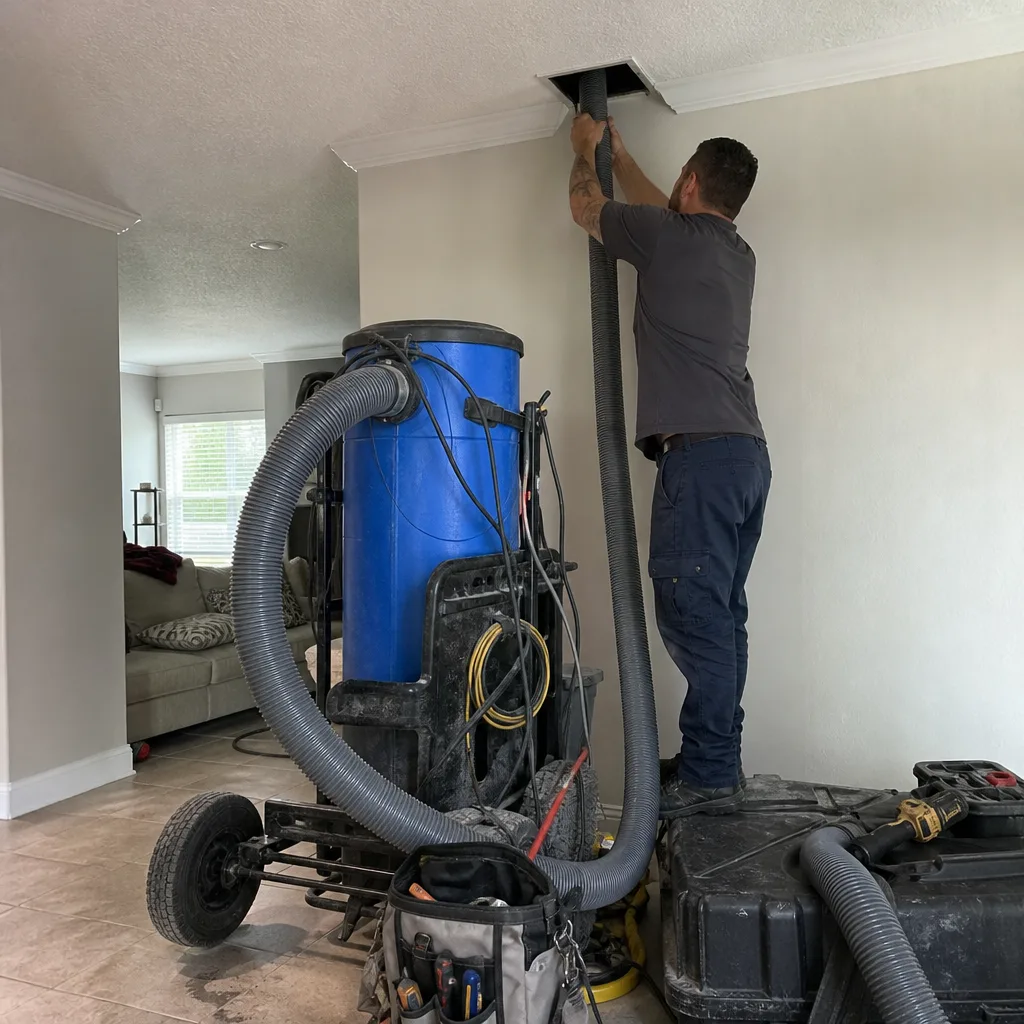
A professional cleaning uses a negative-air system, most commonly from manufacturers like Nikro or Abatement Technologies. That machine connects to the main trunk near the air handler and pulls the entire duct system under vacuum. While that negative pressure holds, a rotary brush system like a Rotobrush enters each register and agitates the duct surfaces. The airborne debris released by agitation has only one path out: into the negative-air filter, not into the living space. That’s the containment piece DIY cannot replicate, and it’s the single most important difference.
The second difference is reach. A professional rotary brush reaches 25 to 40 feet down a duct run from a single entry point. The brush gets to the trunk and back. For a Miami home with attic flex runs, that’s the difference between cleaning the first 2 feet and cleaning the full 25-foot leg.
The third difference is documentation. A professional cleaning includes before-and-after photos of each trunk and representative runs. You see what was removed. That’s not theater; it’s the only way to verify the work actually happened in the spaces you cannot physically see. No Miami homeowner should accept a duct cleaning invoice that doesn’t include photos of the inside of the ducts, before and after.
None of this is a criticism of DIY work. It’s a limitation description. If a shop vacuum could do this job, we wouldn’t exist, and Rotobrush and Nikro would not be multi-million-dollar equipment categories. The equipment exists because the physics of long-run duct extraction require it.
How Often Miami Homes Really Need Duct Cleaning
The national trade recommendation is every 3 to 5 years. For Miami, shift that window toward the shorter end. Here’s the logic.
Miami AC systems run 2,800 to 3,500 hours per year. A Chicago home might run 1,200. Every hour of runtime moves the same volume of air through the same duct walls. More hours means more dust deposited per year, all else equal. But all else is not equal in Miami: the outdoor air in Miami carries more particulate from construction, traffic, and vegetation than most markets, and indoor humidity keeps duct surfaces tacky, which grabs and holds dust that would stay airborne in a drier duct.
The practical cadence that fits most Miami homes:
- Homes with pets and children, AC at 74 or lower year-round: Every 3 years.
- Homes with one or two adults, no pets, high-quality filtration, consistent filter changes: Every 4 to 5 years.
- Homes with renovation work, water intrusion events, or visible mold in any duct photo: As soon as the event is resolved. This is not a calendar question; it’s a contamination question.
- Condominiums and townhomes with shared duct risers or older building systems: Check every 3 years, but be aware common-area ductwork may be the responsibility of the association, not the unit owner. Verify before you pay.
Between those cleanings, the DIY maintenance items described above – register cleaning, filter changes, drain pan checks, flex duct visual inspection – are your interval extenders and early-warning system. The goal of DIY work between professional cleanings is not to replace the cleaning. It’s to keep the accessible surfaces from becoming a source layer, and to give you information about when the professional cleaning can no longer wait.
Common Mistakes to Avoid
- Cleaning registers and calling it duct cleaning. Register cleaning removes the visible dust. It does not touch the full duct run. If you believe you’ve cleaned your ducts because the registers are shiny, you’ve misunderstood the system after the first 18 inches.
- Using a leaf blower to “blow out” the ducts from the register end. This pressurizes the system and forces accumulated debris back toward the air handler, where it coats the blower and coil, or out through other registers into your living rooms. Do not do this.
- Drill-brushing flex ducts aggressively. Flex duct liners tear easily. A tear in a 130-degree Miami attic means your cooled air is pouring into the attic and your electric bill will tell you about it before any inspection does.
- Ignoring the return side. Most homeowner attention goes to supply registers, but the return side pulls the most air and typically shows the most contamination. If you only clean what you can see on the supply side, you’re cleaning the outlet while the inlet keeps feeding it.
- Using hardware-store duct cleaning foggers or sprays. Most are fragrances, not cleaners. They don’t remove debris; they mask odor. Worse, some coat duct surfaces with a sticky residue that makes future dust adhere more aggressively.
- Paying for a cleaning you cannot verify. If a contractor cannot show you before-and-after photos of the inside of your ducts, you paid for a claim, not a service. Every professional cleaning should include visual documentation of what was removed.
- Cleaning ducts to fix a moisture problem. If your ducts are wet, or if you’ve had a water intrusion, cleaning removes spores but not the moisture source. Fix the leak, replace the insulation or liner, then clean. Cleaning wet ducts without addressing the source is scheduling a repeat problem.
When to Call a Professional
Some situations are not DIY decisions. If your duct photos show visible mold growth on duct liners or registers, stop and call a professional; disturbing mold without containment equipment puts spores into your living space. If you’ve had a water event in the attic or ceiling, treat the moisture source first, then schedule a cleaning. If you smell stale or musty air when the AC first kicks on, the source is likely beyond a register. If anyone in the home has allergies or respiratory conditions, the risk calculus shifts entirely and a professional cleaning with HEPA-filtered extraction is the responsible call. Duct Sealing in Miami is also part of this conversation when deteriorated ducts are leaking. Hollis Air Duct Miami offers free estimates in Miami – call (850) 660-3272 and we’ll review your photos and give you a written price before any work starts.
Frequently Asked Questions
Professional air duct cleaning for a typical 3-bedroom Miami home with 8 to 12 supply runs costs between $350 and $600. Larger homes, heavily contaminated systems, or homes requiring Duct Sealing in Miami alongside cleaning can run higher. You should receive a written price before any work starts, and you should reject any quote that moves after the technician arrives. Call (850) 660-3272 for an exact quote – estimates are free.
DIY air duct cleaning is worth it only for the accessible layer: register cleaning, return cavity vacuuming, filter changes, and drain pan checks. It cannot reach the full duct run, which is where professional negative-air extraction does its work. In Miami’s humid climate, aggressive DIY brushing without containment can disturb moisture-laden dust and release mold spores into the living space. Use DIY for the front layer and schedule a professional cleaning every 3 to 5 years for the full system.
Cheap quotes usually describe a different service: a visual inspection, a register vacuum, or a “system check” that does not include full negative-air extraction of every supply and return run. A legitimate whole-home cleaning for a Miami home costs $350 to $600, and a quote significantly under that should be read carefully. Ask what equipment will be used, whether the full trunk is included, and whether before-and-after photos are part of the job.
You verify it with before-and-after photos of the interior of the ducts and main trunk. Any professional cleaning should include this documentation as standard. If a service refuses to provide photos, or if the “after” photos look identical to the “before” photos, you did not receive the service as described. Your own phone-camera inspection before the visit gives you the baseline to compare against.
In Miami, most homes need professional cleaning every 3 to 5 years depending on pets, occupancy, and filter discipline. Homes with pets, children, or heavy AC usage at settings below 74 degrees should lean toward 3 years. Between cleanings, monthly register cleaning and 30-to-60-day filter changes extend the useful interval and keep the accessible surfaces from becoming a source layer.
Dryer vent cleaning is a different job than air duct cleaning, and the DIY version has real limits too. A homeowner can clean the first few feet of the vent from the dryer side with a brush kit, but most Miami laundry rooms vent through walls or roofs with runs of 10 to 20 feet, which a hand brush cannot fully clear. Dryer Vent Cleaning in Miami includes full-run access and lint removal. A clogged dryer vent is a fire danger, not a maintenance annoyance, and if your dryer takes longer than one cycle to dry a load, the vent is already compromised. Call (850) 660-3272 for a free estimate.
The Bottom Line
DIY duct cleaning in Miami has a real but limited role: register-level cleaning, filter management, drain pan checks, and visual flex duct inspection. Those tasks are worth doing, and done consistently, they extend the interval between professional cleanings. What they don’t do is clean your ducts. Full-system cleaning requires negative-pressure extraction that no homeowner tool can replicate, and in Miami’s high-humidity environment, the risk of disturbing settled debris without containment is real. The smart play is to do the front-layer work yourself, photograph what you find, and bring in a professional for the full run every 3 to 5 years. Hollis Air Duct Miami offers free estimates – call (850) 660-3272 and we’ll review your photos, give you a written price, and tell you honestly whether now is the time or you can wait a year.
Written by Roy Castellanos, Owner at Hollis Air Duct Miami, serving Miami since 2004.
See the difference
 Before
 After
After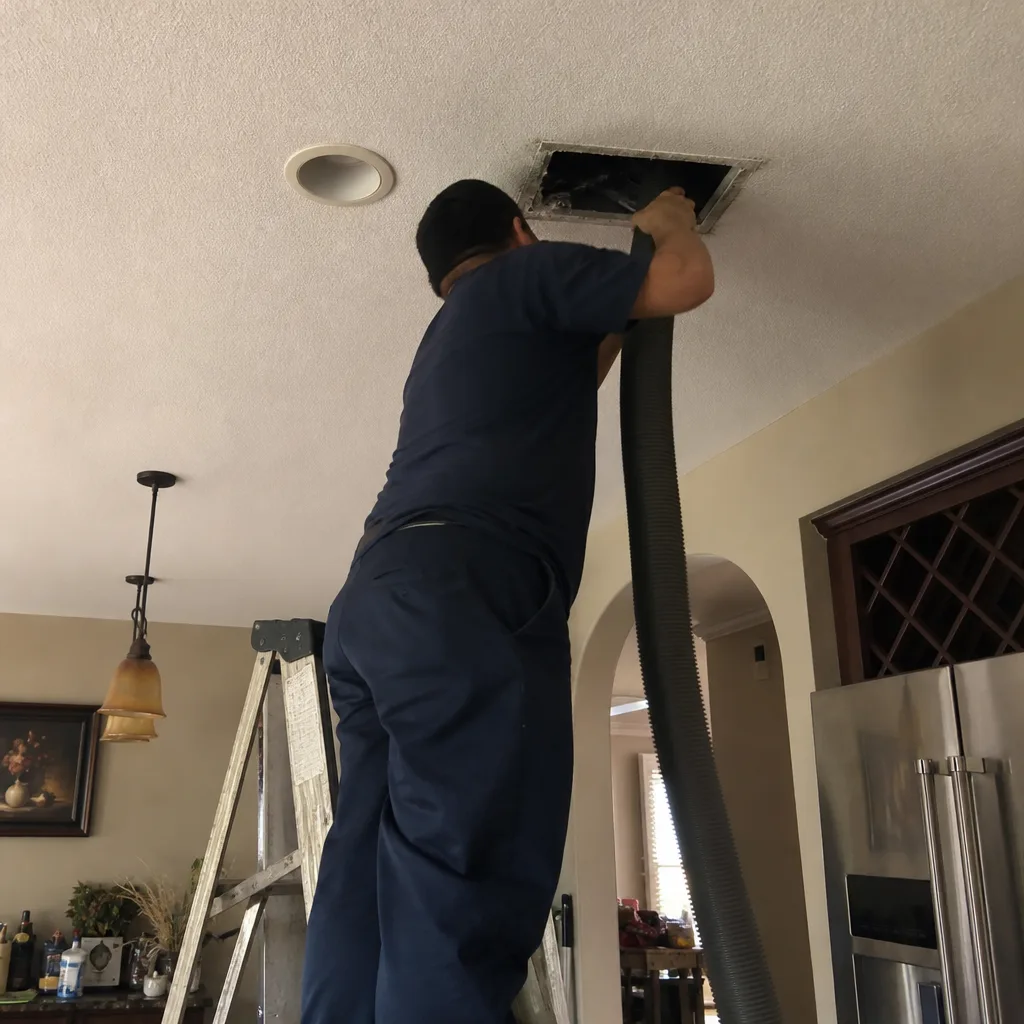 Before
 After
After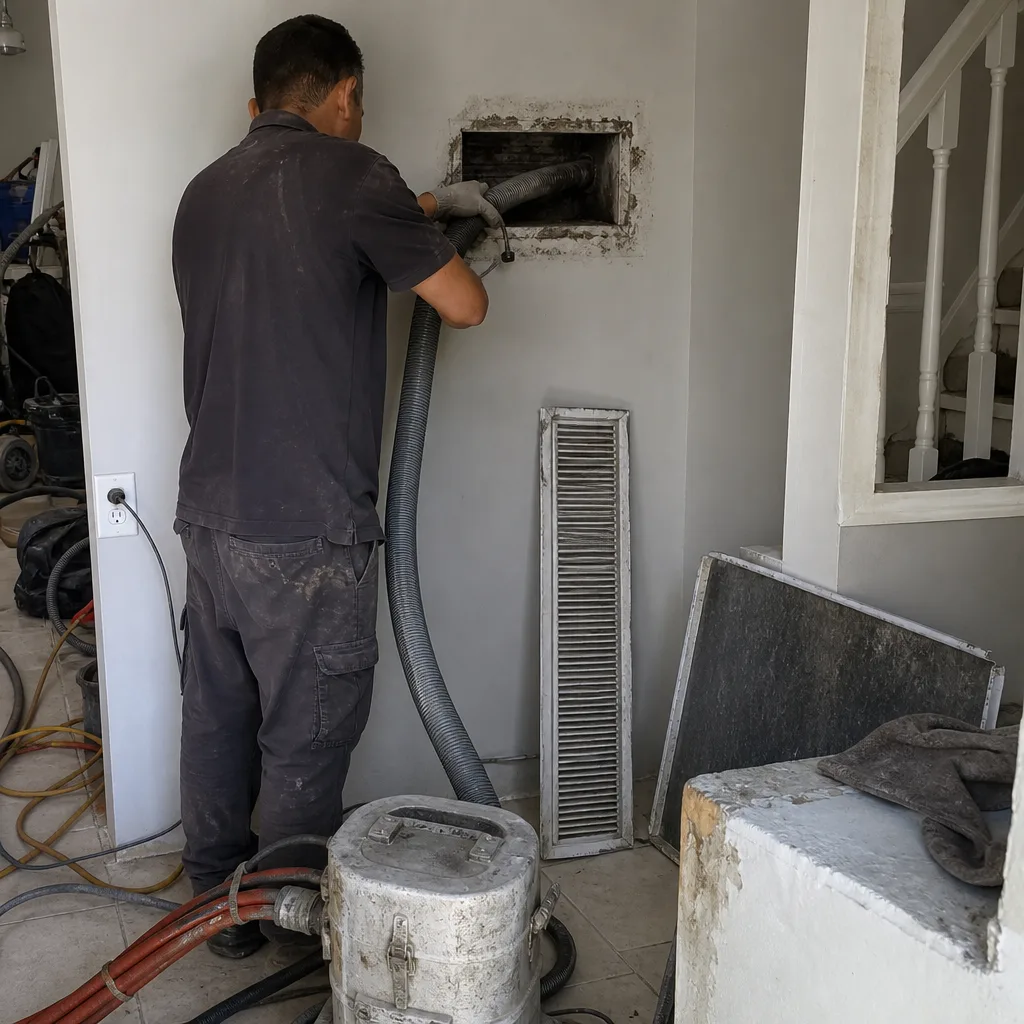 Before
 After
After