
Last updated October 15, 2026
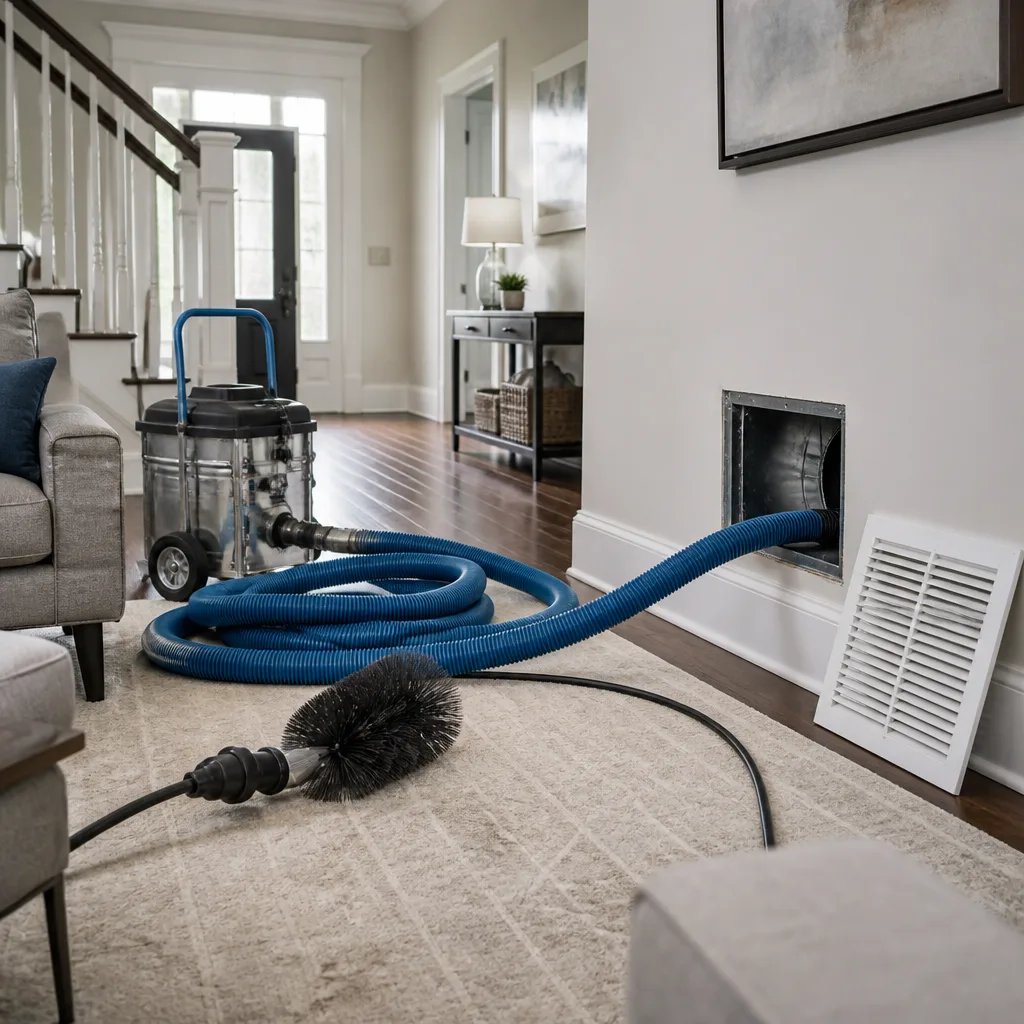 Whole-home duct cleaning
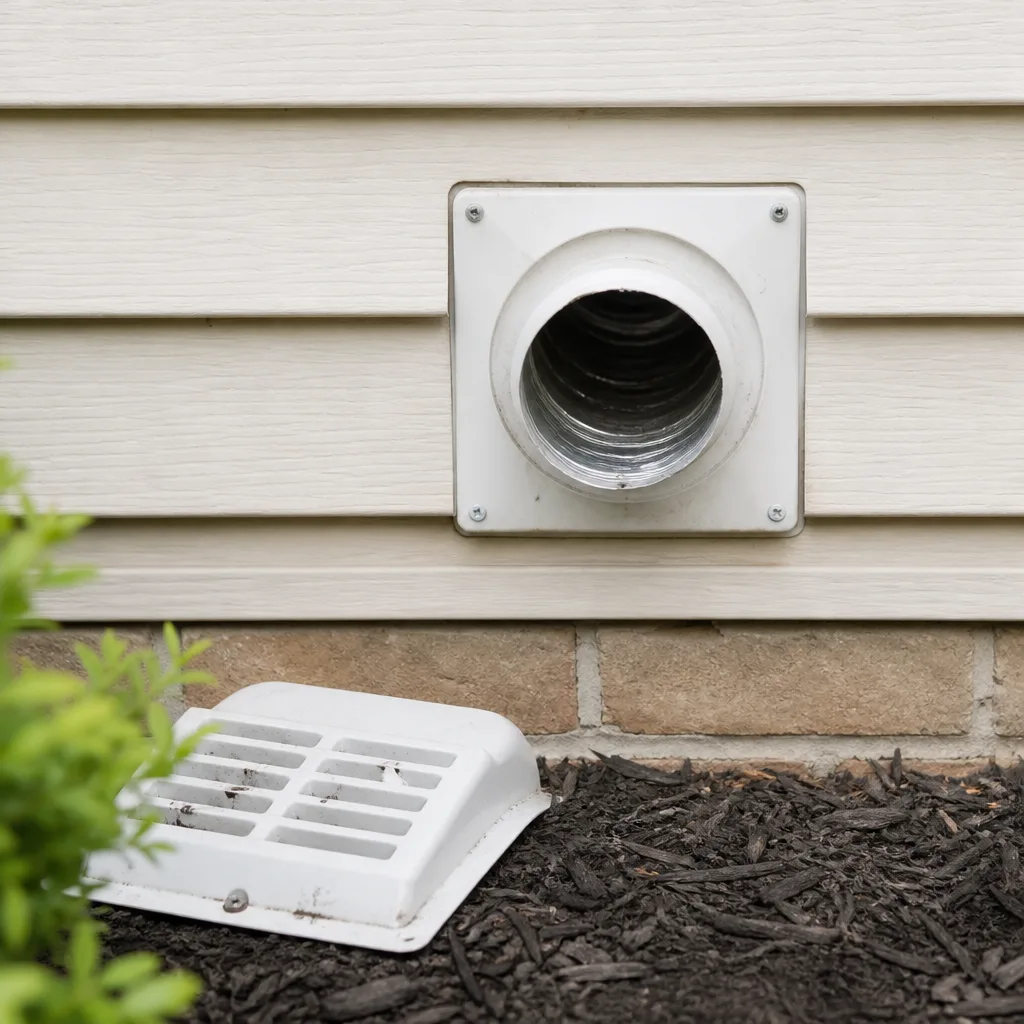 Dryer vent cleaning
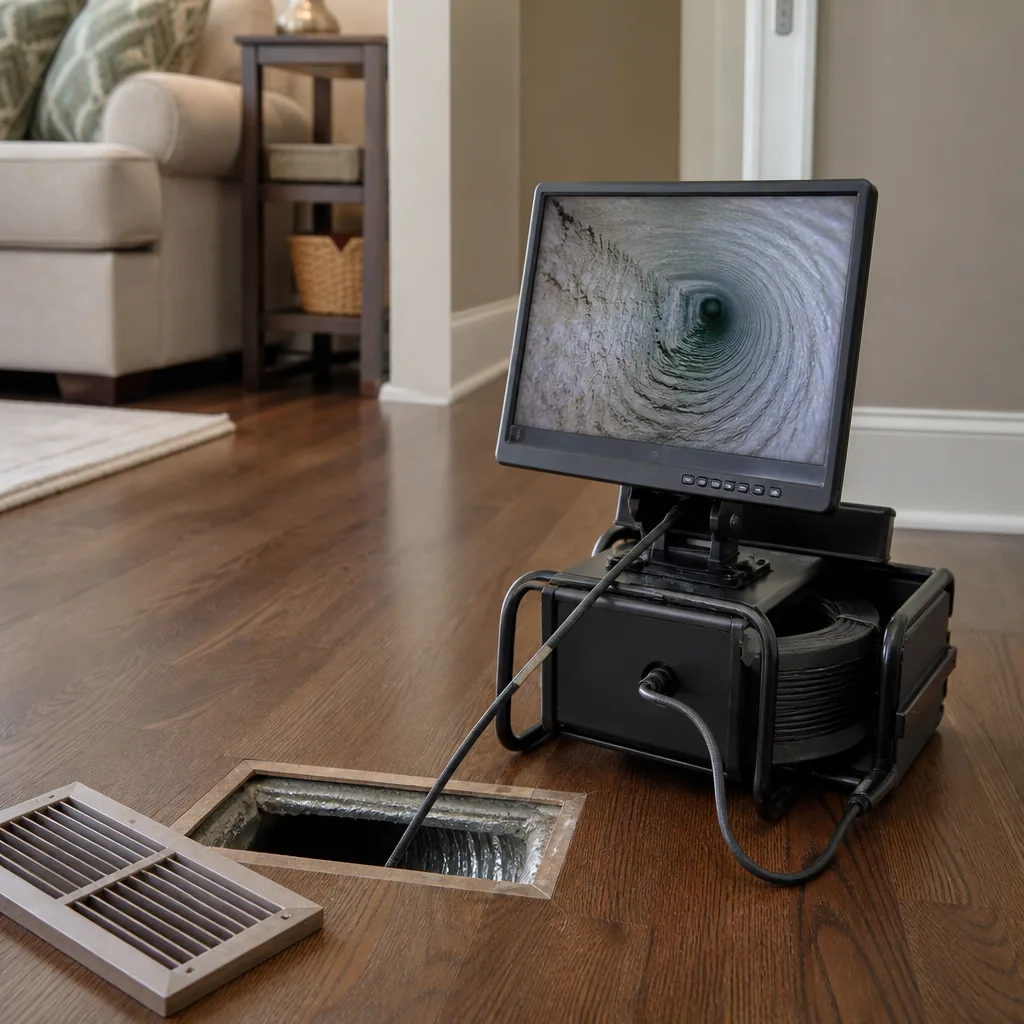 Camera inspection
 Sanitizing & deodorizing
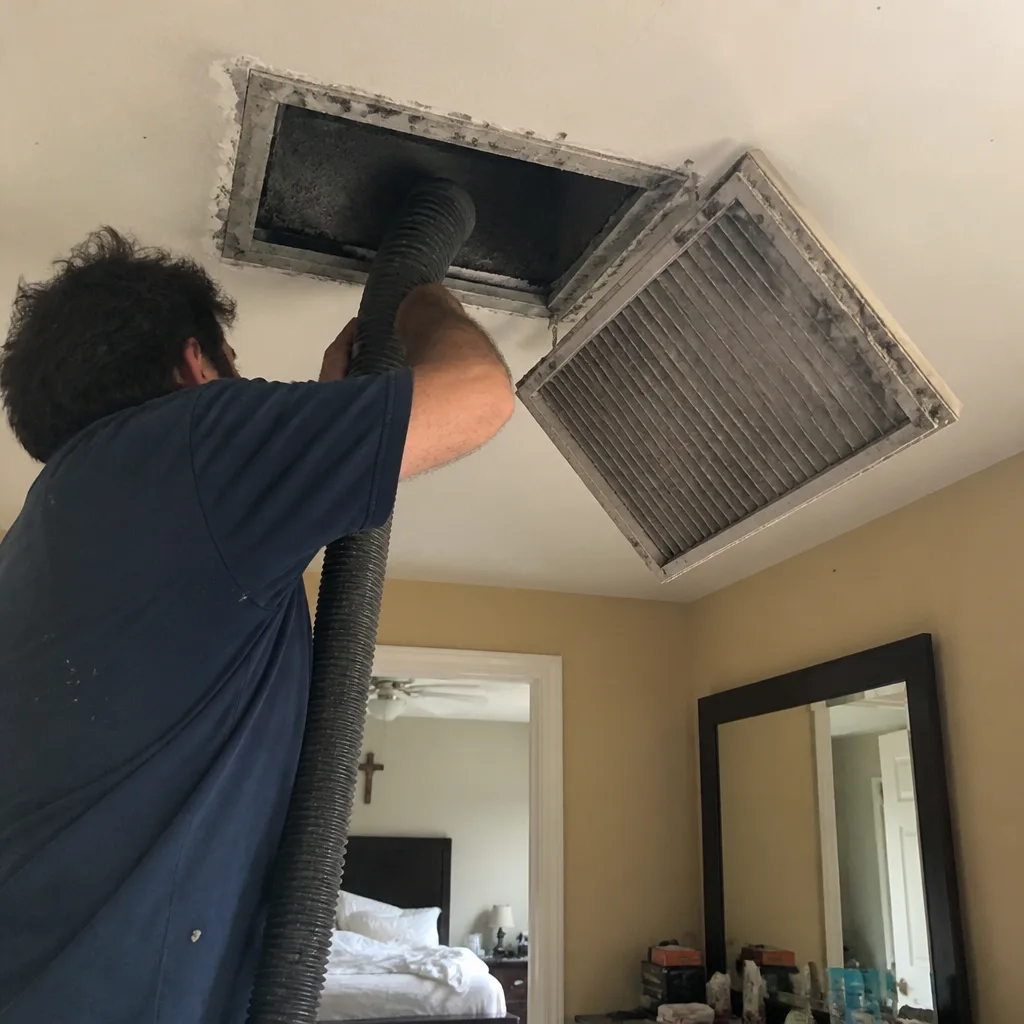
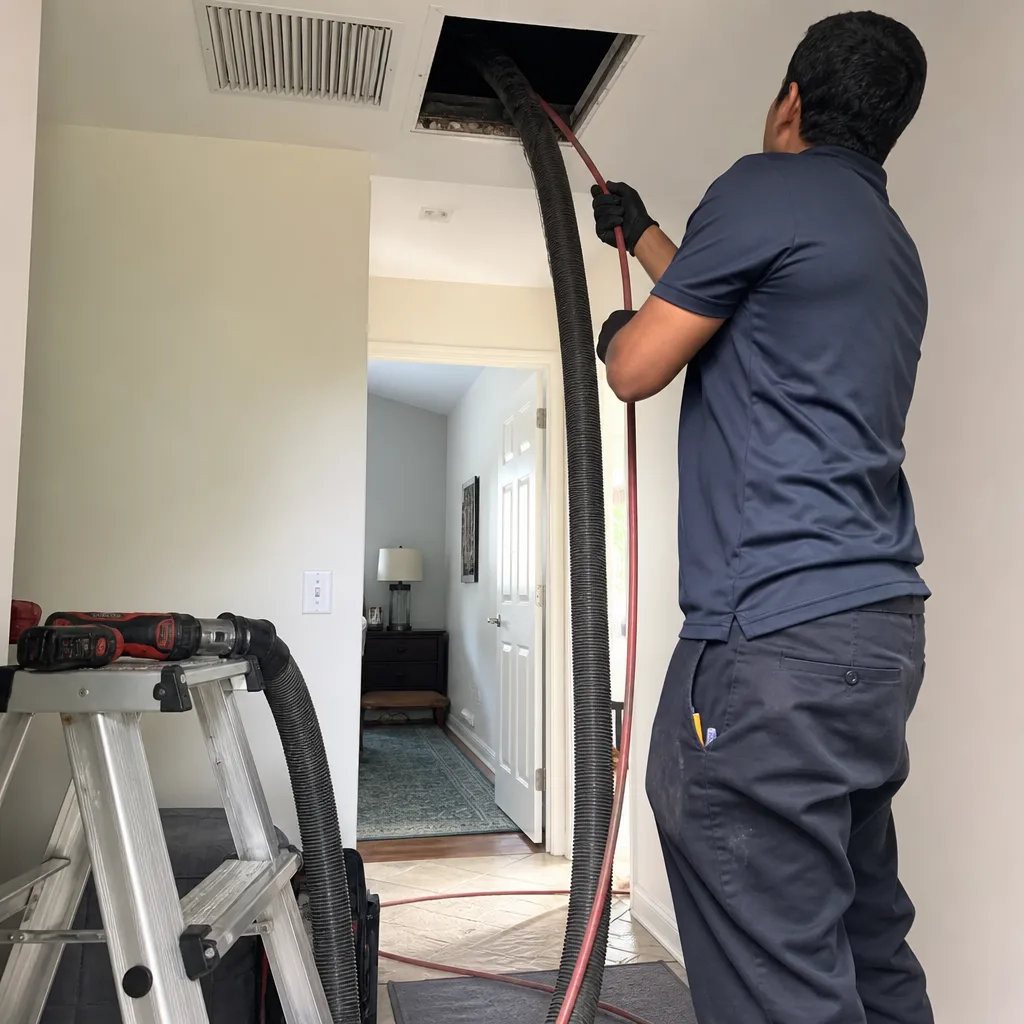
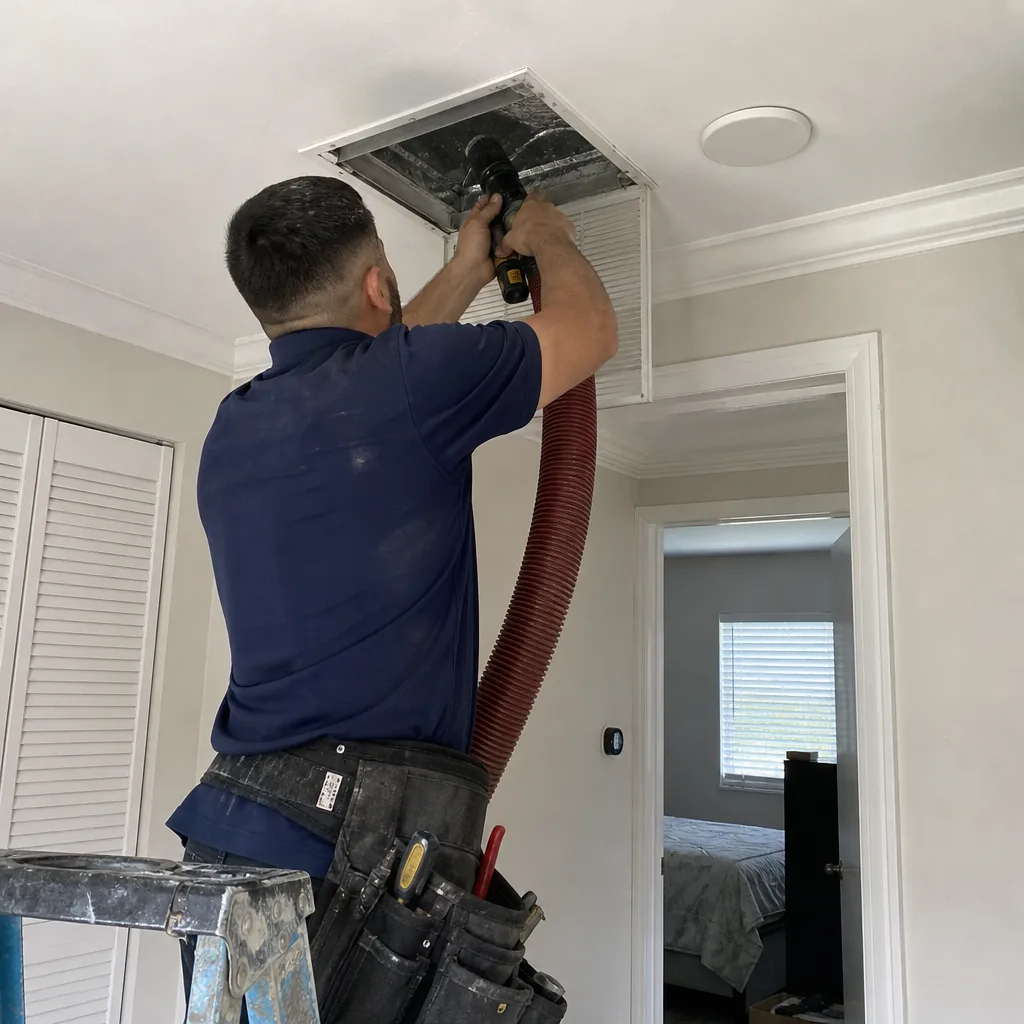
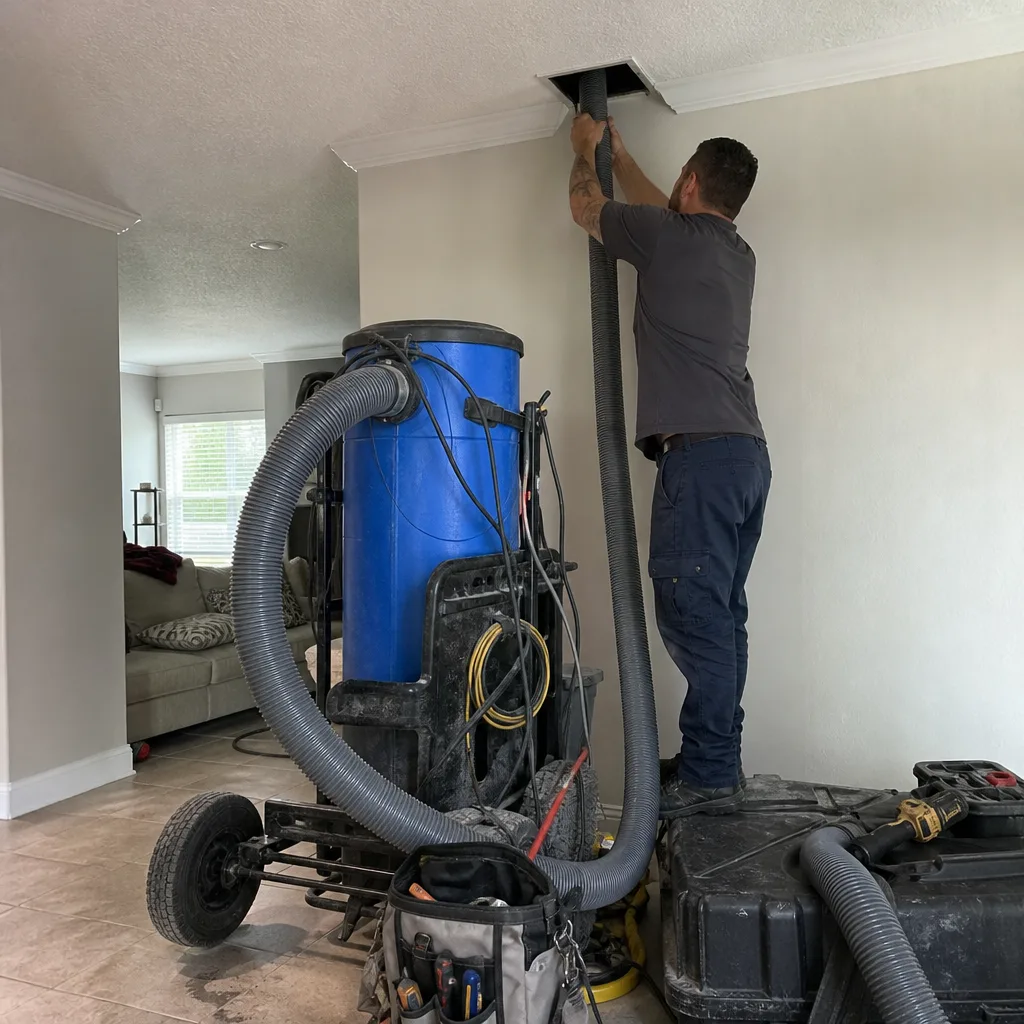
Whole-system duct and dryer vent check with before-and-after photos - you see exactly what came out of your vents
That "$99 whole-house special" is a bait ad - the real number appears once they are in your hallway, or the "clean" is a shop-vac at the register. We photograph the inside of your ducts before and after instead.
Air Duct Cleaning Maintenance Checklist for Miami Homeowners
In Miami, your air handler runs roughly 22 times more hours per year than it does in Boston. A checklist designed for a Boston homeowner’s system will miss critical Miami-specific failure points by a wide margin. This guide is built specifically for the way Miami homes actually operate: continuous cooling, relentless humidity, salt air near the coast, and a wet season that turns every duct system into a moisture management challenge. You’ll learn what to check monthly, what to log, what to leave alone, and when a real cleaning is warranted rather than a filter change and a wish.
Styles & brands we work with
Quick Answer
Maintaining air ducts in Miami means checking the air filter every 30 days during peak cooling months, inspecting the condensate drain line monthly, watching for musty odors or visible mold around supply registers, and scheduling Air Duct Cleaning services every 3 to 5 years, or sooner if you see dust buildup at registers, smell mildew when the AC cycles on, or have had water intrusion. Most Miami homes run their AC continuously from April through October, which means filters load up faster and humidity-related duct problems develop more aggressively than in drier climates.
Table of Contents
- Miami’s Climate Calendar: Why Standard Checklists Miss the Mark
- The Month-by-Month Task Schedule for Miami Ducts
- Filter Replacement Intervals Calibrated for Miami’s Continuous Runtime
- Drain Pan and Condensate Line Checks: The Humidity Connection
- How to Log Visible and Olfactory Changes Over Time
- What You Can Inspect Yourself vs. What Requires Professional Instruments
- Wet Season and Hurricane Prep: The Duct-Specific Checklist
- Common Mistakes to Avoid
- When to Call a Professional
- Frequently Asked Questions
- The Bottom Line
Miami’s Climate Calendar: Why Standard Checklists Miss the Mark
Generic duct maintenance guides assume a furnace season and a cooling season. Miami doesn’t have that split. Your AC is doing the heavy lifting from March through November, and in many older Miami homes with poor insulation, the system never really shuts down at all between February and December. That changes everything about how often filters load, how quickly condensation accumulates, and how fast microbial growth can take hold inside ducts.
Miami’s real calendar has three operational seasons that matter for ductwork:
- Dry season (November through April): Lower humidity means less standing condensate, but it’s also when Miami homeowners run the AC less and open windows more on cool days. That’s when outside dust, pollen, and construction debris from the city’s constant development have an easier path into return ducts. It’s also the best window for scheduling a professional cleaning, because the system isn’t under peak cooling load.
- Wet season (May through October): Dew points regularly exceed 75°F. The evaporator coil produces more condensate per hour than at any other time, and the drain pan and condensate line become the front line of duct health. If that line clogs, water backs up into the air handler cabinet and wicks into insulated duct interiors. That’s the moment mold gets a foothold in the duct system, not in the air handler alone.
- Hurricane prep window (June 1 through November 30): Before a storm, you need to know your duct system’s condition so you’re not discovering a compromised run of flexible duct during an extended power outage when mold conditions inside the home are already elevated. After a storm that brought water into the home, duct inspection is not optional. Water that reached wall cavities and plenum spaces does not dry out on its own in Miami’s humidity.
If you’re using a maintenance checklist that says “check the filter every three months” or “inspect ducts before winter,” you’re using a checklist written for a different city. In our experience across Miami neighborhoods from Kendall to North Miami Beach, the homes with the worst duct contamination are almost always the ones where a homeowner followed a generic guide for years and never realized the logic didn’t apply to their system’s runtime. For a deeper look at when contamination becomes serious, see our guide on Air Duct Cleaning Warning Signs: A Miami Homeowner’s Reference Guide.
For a deeper look at how Miami’s climate affects duct systems, see our guide to Air Duct Cleaning in Miami.
The Month-by-Month Task Schedule for Miami Ducts
You don’t need to do everything every month. What you need is the right task at the right time so that no single failure point gets a season to fester. Here is a month-by-month schedule built for Miami’s actual conditions.
January – February (Dry Season, Lower Runtime)
- Inspect the air filter. Even in lower runtime months, Miami’s dry-season wind carries dust and pollen. Replace if it’s visibly gray or loaded.
- Check the condensate drain line for algae buildup. The line may see less condensate now, but algae that grew during the wet season dries into a hard film that narrows the line for next season.
- Inspect all visible ductwork in the attic or garage while the space is cooler. Look for sagging flex duct, disconnected joints, and rodent signs. Cooler attic temperatures make this inspection far more tolerable now than in July.
- Log any musty odor at startup in your maintenance journal. Dry season startup odors that clear after a minute are often dust burning off the heat strip. Odors that persist past five minutes need professional attention.
March – April (Transition: Runtime Rises)
- Replace the air filter if you haven’t already. You want a clean filter entering peak cooling season, not one that’s already partially loaded.
- Pour one cup of white vinegar down the condensate drain line to dissolve early algae. Wait 30 minutes, then flush with warm water. Do this monthly through October.
- Walk the house and check every supply register for visible dust streaks on the wall or ceiling above the register. Those streaks are evidence of particle bypass around the filter.
- If you’re considering duct cleaning, schedule it now. March and April offer comfortable attic temperatures for technicians and full daylight for damage documentation. The system isn’t yet under peak load, so downtime is less disruptive.
May – June (Wet Season Begins: The Critical Window)
- Replace the air filter and set a phone reminder to check it every 30 days through October. Do not skip a cycle.
- Inspect the drain pan inside the air handler cabinet. If you see standing water, even a half inch, the drain line is partially clogged. Address it now before July’s humidity pushes condensate volume to its annual peak.
- Sniff every room after the AC has been off for two hours. Walk in and breathe normally. If you notice a damp, earthy odor near the registers in any room, that’s a microbial signal specific to wet, dark duct interiors.
- Check attic duct insulation for condensation. Miami’s wet season can bring attic dew points high enough that exposed metal duct surfaces sweat. Insulation on the outside of ducts should be dry to the touch.
July – August (Peak Load, Peak Condensate)
- Check the air filter every 30 days without exception. If it’s loaded in 20 days, replace it in 20 days. The manufacturer’s “90-day” rating assumes intermittent runtime that Miami systems don’t have.
- Flush the condensate line with vinegar monthly. If the line has clogged once before, consider having a professional install an access port so future flushes are simpler.
- Inspect the area around the air handler for water stains on the platform, wall, or ceiling below. Peak condensate season is when a slow, serious drain problem reveals itself as a stain.
- If the AC runs continuously and the house isn’t reaching setpoint, check your return ducts for obstruction. Blocked or collapsed returns starve the system and increase negative pressure, which can pull humid attic air into the ductwork through tiny leaks.
September – October (Wet Season Peak, Hurricane Threat Elevates)
- Continue the filter and drain line routine. This is the period when many Miami homeowners let maintenance slide because the end of summer is near. Don’t. September and October are Miami’s moldiest months inside duct systems.
- Walk the perimeter of the house and look for standing water near the foundation after heavy rain. Duct systems in slab homes with under-slab returns are vulnerable to moisture migration from saturated soil.
- If a storm warning is issued, know where your air handler shutoff is and how to turn the system off. Run the AC normally until you lose power; then keep the fan switch in “auto” rather than “on” to avoid pulling humid outside air through the system during the outage.
November – December (Dry Season Returns: Recovery and Repair Window)
- Replace the air filter again even if it looks only lightly loaded. You’re resetting the system after six months of heavy use.
- Do a full visual inspection of the duct system while attic temperatures are comfortable. This is the time to catch problems that developed under peak load and schedule repairs during the low-stress dry season window.
- Schedule any deferred duct cleaning now. The workload is lighter, scheduling is more flexible, and the dry season lets any wet-cleaning methods dry properly.
- Review your maintenance log for the year. If you recorded three or more musty odor events during the wet season, or if you cleaned mold from registers twice, you have enough documentation to justify a professional duct assessment.
Filter Replacement Intervals Calibrated for Miami’s Continuous Runtime
Most air filter packaging says “replace every 90 days.” That assumes a system that runs 8 to 10 hours per day in a seasonal cooling climate. A Miami air handler in July runs 18 to 24 hours per day, every day. Your filter is working two to three times as hard as the packaging assumes, and it’s loading up two to three times faster. The National Air Filtration Association’s runtime-based guidance is clear: replace a one-inch filter every 250 to 300 runtime hours. For a Miami system in summer, that’s every 25 to 35 days.
Here is a practical filter replacement schedule for Miami, by filter type:
- Basic 1-inch fiberglass (MERV 2-4): Replace every 30 days during peak season, every 45 days in dry season. These filters protect the coil, not your air quality. They load fast and offer little particle capture. If this is what’s in your return, upgrade to MERV 8 at minimum.
- Pleated 1-inch (MERV 8-11): Replace every 45 to 60 days during peak season, every 60 to 90 days in dry season. Filter brands like Honeywell and Aprilaire make 1-inch pleated filters with real MERV ratings. Cheaper no-name pleated filters often underperform their printed rating.
- 4-inch media filters (MERV 11-13): Replace every 6 months. These are the deep-bed filters installed in dedicated media cabinets. They have enough surface area to handle Miami runtime. If you have allergy concerns and a system that can handle the pressure drop, this is the right choice for Miami homes.
- Washable filters: Clean monthly during peak season, every 45 days in dry season. Washable filters rarely achieve the MERV rating printed on the frame once they’re wet-cleaned and reused. We tell Miami homeowners that washable filters are a fine dry-season choice but a risky peak-season choice.
One Miami-specific point that generic guides miss: your filter’s job during the wet season is not just particle capture. A loaded filter increases pressure drop across the coil, which reduces airflow, which reduces coil temperature, which increases condensation. That extra condensate is exactly what feeds the drain line problems and microbial growth we discussed. In Miami, a dirty filter is a humidity multiplier, not just a dust collector.
Drain Pan and Condensate Line Checks: The Humidity Connection
Most duct cleaning guides never mention the drain pan or condensate line because, in dry climates, those components rarely interact with duct health. In Miami, they’re inseparable. The evaporator coil sits inside the air handler, usually directly upstream of your supply duct plenum. Every gallon of water that coil produces in a day is a gallon that must drain somewhere, and the path it takes runs through the pan, down the condensate line, and out to a drain or pump. When that path backs up, water doesn’t stay politely in the pan. It migrates into the air handler cabinet, soaks into the insulation lining the cabinet, and travels into the duct board or flex duct connected downstream. That’s the single most common starting point for mold inside Miami duct systems.
Here’s a monthly drain and condensate checklist:
- Locate the drain pan under the air handler. If you can see the pan, check for standing water. A properly draining system leaves only a film, not a pool.
- Find the condensate drain line where it exits the air handler. In most Miami homes, it’s a 3/4-inch PVC pipe that runs to a floor drain, a condensate pump, or outside. Check the visible end for steady water flow while the AC has been running for at least 30 minutes.
- Look for a drain line cleanout port. Many Miami installers include a T-fitting with a cap. Open it carefully and shine a light down the line. Algae presents as a dark, slimy coating.
- Pour one cup of vinegar into the cleanout monthly during wet season. Algae in Miami’s heat and humidity grows aggressively. Vinegar is a mild acid that dissolves the matrix without damaging PVC. Bleach kills algae but also embrittles PVC over time and voids some manufacturer warranties.
- If you have a condensate pump, test it monthly during wet season. Pour a cup of water into the pump reservoir and confirm it kicks on and discharges. A failed pump is the reason many Miami air handler cabinets flood with water even though the drain line itself is clear.
The connection between this check and duct cleaning is direct: if water has pooled in the air handler cabinet for any length of time, the inside of the cabinet and the first several feet of supply duct should be inspected for mold by a professional. Cleaning the ducts without correcting the drainage problem means the mold comes back within a season.
How to Log Visible and Olfactory Changes Over Time
Most Miami homeowners call a duct cleaning company because they noticed something that day. They can’t tell you when it started, whether it’s getting worse, or what they did that might have changed the system. That’s a problem, because a technician who arrives without that history has to diagnose from a snapshot. A log turns a vague complaint into a pattern, and a pattern tells a professional exactly where to look.
You don’t need a spreadsheet. A phone note works. What matters is that you record the same observations in the same way every time.
Here’s what to record, and how:
- Date and time of observation. Always note whether the AC had been running or off, and for how long. The same odor can mean different things after 2 hours off versus after 30 minutes running.
- Odor type and location. Use precise words: “damp cardboard,” “dirty sock,” “electrical burning,” “chemical sweet.” Note which room or which register. A smell that appears only at one register points to a local problem; a smell at every register points to a system-wide one.
- Visual changes at registers. Use your phone camera. Photograph any dust streaks, mold spots, or discoloration on the register face or the wall around it. Photos dated in your phone metadata are far more persuasive to a technician than a verbal description.
- Filter condition at each change. Note how long the filter was in service and what it looked like. A filter that goes from clean to loaded in 21 days in February is a different diagnostic signal than one that loads up in 21 days in August.
- Allergy or respiratory symptoms among occupants, by room. If one bedroom gives the occupant congestion and the rest of the house doesn’t, that room’s duct run is suspect. Track it for 60 days before you reach conclusions.
When you call a professional with this log, the conversation changes. Instead of “my ducts smell,” you say “starting in late May, I’ve recorded a dirty-sock odor at the supply registers in the two back bedrooms whenever the AC cycles on after being off for more than two hours. I have photos of grey staining at both registers. Filter is a MERV 8 replaced 20 days ago.” That’s a diagnostic statement, not a complaint. It narrows the problem from “your whole system” to “two branch runs off the trunk,” and it protects you from a $2,000 upsell that addresses the wrong area.
What You Can Inspect Yourself vs. What Requires Professional Instruments
There’s a line between a homeowner’s inspection and a professional’s assessment, and knowing where that line sits protects both your health and your checkbook. You can see, smell, and feel a great deal on your own. But some of the most important indicators of duct contamination require instruments you don’t own, and trying to eyeball them is how Miami homeowners get talked into or out of work they can’t verify.
What a homeowner can reliably inspect and record:
- Register faces and the wall area within 6 inches of them, using a flashlight to look into the boot from the room side.
- The air filter, including its type, age, and visible loading.
- Visible duct runs in the attic or garage, checking for disconnected joints, collapsed flex, torn vapor barrier, and sagging that exceeds 1 inch per 4 feet of run.
- The drain pan, drain line cleanout, and condensate pump operation.
- Odors at startup and during operation, logged by room and time.
- Airflow at each register, measured crudely by holding a tissue near the grille. A register that barely moves a tissue while others flap it strongly is restricted.
- Interior duct surface inspection. Flexible duct interiors can’t be seen from the register. Professionals use a camera push rod or a borescope, which is the only way to visually confirm mold, debris accumulation, or damage inside a run.
- Static pressure testing. Measuring pressure drop across the filter, coil, and entire duct system is how a professional determines whether the system is restricted. High static pressure increases energy use and shortens blower motor life. It can’t be felt by hand.
- Airflow measurement at each register, in CFM. An anemometer gives the real number. Tissue tests tell you relative restriction; they don’t tell you whether the whole system is underdelivering.
- Particle counting before and after cleaning. A professional-grade laser particle counter measures airborne particulate levels with the system running. This is how you document that a cleaning actually improved indoor air. Companies that don’t offer post-cleaning particle data, including brands like Abatement Technologies and Guardsman commonly used in commercial work, are making a claim they can’t substantiate.
- Mold sampling. Not every dark stain is mold, and not every mold is hazardous. Surface sampling with lab analysis identifies what’s growing and at what concentration. A homeowner sees a stain; a lab report says what species and whether remediation or cleaning is sufficient.
- Replace the air filter with a fresh one. Document the date and filter type in your maintenance log.
- Clear the condensate drain line with vinegar and verify flow. This is not the month to discover a partial clog.
- Walk the attic or mechanical room and check every visible duct joint for separation. Miami’s humidity softens the adhesives and tape on older systems, and joints that held fine all winter can loosen as the wet season begins.
- Look at the duct insulation condition. Wet insulation compresses and darkens compared to dry insulation. If you see any section that looks heavy or sagging, mark it and have it inspected before the season peaks.
- Confirm the air handler shutoff location. You want to know exactly how to cut power to the system if a storm approaches or water enters the mechanical space.
- Maintain the 30-day filter check without exception.
- Inspect around the air handler for water stains monthly. Catching a drain problem in week two leaves you with a $150 repair and no contamination. Catching it in week eight leaves you with a flooded cabinet, soaked duct insulation, and mold.
- After any severe thunderstorm with wind-driven rain, check the attic for signs of water entry near roof penetrations. Duct runs that pass near vents, chimneys, or HVAC roof jacks are vulnerable to wind-driven rain that follows the penetration into the attic.
- Run the AC normally until you lose power or the storm reaches your area. Do not pre-emptively shut down. Pre-cooled air in the home and the duct system gives you more margin after outage.
- If you evacuate, leave the thermostat fan in “Auto,” not “On.” “On” runs the blower constantly when power is present, and if the home is open or damaged, it pulls humid outside air through the duct system.
- If you stay and power drops, switch the fan to “On” only if you’re running a generator to power the air handler and you’re able to keep windows closed. Most portable generators can’t run an AC compressor, but they can usually run a blower, and moving filtered air through the home after the storm passes helps begin drying.
- Before restarting the system, inspect the air handler and visible ductwork for water. If the air handler cabinet sat in floodwater, do not restart the system.
- If any ductwork was submerged or soaked, it cannot be restored by cleaning. Flex duct and duct board both absorb water. Replacement is the correct scope of work. Hollis Air Duct Miami has handled this exact scope hundreds of times after Miami storms, and proper replacement is what our technicians recommend over cleaning in every flood case.
- If the home took in water but the ducts themselves appear dry, run the fan continuously for 48 to 72 hours after power is restored while running a dehumidifier in the home. Then schedule a professional duct inspection with camera verification before returning to normal operation.
- Following the filter packaging’s 90-day replacement claim. In Miami’s peak cooling months, that filter is done in 30 days. A 90-day filter left in place through July and August becomes a source of restriction that raises power bills, reduces airflow, and increases coil condensation. If your filter looks gray at 30 days, replace it.
- Ignoring the condensate line because “duct cleaning is about air, not water.” In Miami, water is the main vector for duct contamination. A clogged drain line floods the air handler cabinet, soaks the insulation, and seeds mold growth in the supply plenum. The drain line is a duct maintenance item in this city.
- Treating the filter as the only particle control in the system. In many Miami homes, the filter sits in a single return grille with gaps around the frame and unsealed joints in the return plenum. Particles bypass the filter and go straight into the coil and ducts. If you see dust streaks above your supply registers, your filter isn’t the problem; the bypass paths are.
- Assuming clean ducts can’t harbor mold because the air is cold and dry. Miami duct interiors are cold, but they are not dry. They’re dark, humid, and lined with dust that becomes food for mold the moment condensation forms. The cold air doesn’t kill the mold; it makes the surfaces a better place for mold to grow.
- Using bleach to kill mold you find inside a duct. Bleach does not penetrate porous surfaces, which is what duct liner and duct board are. It wets the surface, provides moisture, and often leaves the root structure of the mold intact. Professional duct cleaning uses antimicrobials formulated for HVAC surfaces, not household bleach.
- Waiting until you smell mold to act. By the time a musty odor is detectable at a supply register, the mold colony has already established itself. The smell is the metabolic byproduct being pushed through your living space. Early indicators like dust streaks, uneven airflow, and elevated indoor humidity readings are the warnings you should act on.
What requires professional instruments:
One practical boundary: if the material in question is flexible duct that has been soaked by floodwater or a major condensate backup, no cleaning protocol restores it. Flex duct is fiberglass insulation wrapped in a plastic vapor barrier, and once the interior gets wet, the insulation wicks water and supports mold growth through the full thickness. It gets replaced, not cleaned. A professional who has seen 50 flooded Miami systems can make that call in minutes; a homeowner cannot.
Wet Season and Hurricane Prep: The Duct-Specific Checklist
Miami’s wet season is not just a period of higher humidity. It’s a continuous stress test for every sealed joint, every drain line, every filter, and every square inch of duct insulation between May and October. And starting in June, it’s also hurricane season, which means the same system has to survive or recover from conditions most American duct systems never face. Here’s how to prepare and respond, in order.
Before the season starts (ideally by May 15):
During the wet season (monthly through October):
Hurricane preparation (when a watch is issued):
After a storm or flood event:
For preventative protection of the duct system itself, see our guide on Duct Sealing in Miami. A properly sealed duct system is also significantly harder for humid outside air to infiltrate during Miami’s wet season.
Common Mistakes to Avoid
Most duct maintenance mistakes in Miami are not acts of negligence. They’re the result of applying generic advice to a market that runs differently. Here are the mistakes we see most often, and what they cost.
When to Call a Professional
Some maintenance tasks are yours to do, and doing them regularly saves you money and keeps the system running honestly between professional visits. But there are conditions that should trigger a call immediately rather than a wait-and-see approach. Call a professional if you notice any of the following: a persistent musty or dirty-sock odor at startup that does not clear within five minutes; visible mold growth on register faces, duct interiors, or the air handler cabinet; water staining on walls, ceilings, or the platform under the air handler; a flood or major condensate backup has occurred and insulation is wet; or you’ve completed this checklist faithfully for two wet seasons and your allergy symptoms haven’t improved. In any of those cases, the question is no longer about maintenance; it’s about the condition of the system itself.
Hollis Air Duct Miami offers free estimates in Miami. Call (850) 660-3272 and we’ll give you a written price before any work starts, with no obligation and no pressure. We’ve been doing this in Miami since 2004, and every job carries the 365-Day Done Right Promise in writing.
Frequently Asked Questions
Most Miami homes should have their air ducts professionally cleaned every 3 to 5 years. The interval depends on the home: households with pets, smokers, high foot traffic from children, or a resident with allergies or asthma may need cleaning every 2 to 3 years. In our experience, Miami homes near construction corridors or with older, leaky duct systems accumulate debris faster than the national average. After any water intrusion event into the duct system, cleaning or replacement should happen immediately, not on a schedule. For an exact assessment of your system, call (850) 660-3272 and we’ll give you a written estimate.
In Miami, professional air duct cleaning for a single-family home typically runs between $450 and $900 for the full system, with larger homes or those with extensive contamination running higher. The price should include all supply and return ducts, the air handler, the coil, the blower, and both plenums. Hollis Air Duct Miami gives you one flat price for the entire system in writing before work starts, not a per-vent price that changes once the technician is in the attic. For a quote specific to your home, call (850) 660-3272.
Cheaper duct cleaning quotes in Miami usually come from companies using a “blow-and-go” method: they insert a compressed air wand into the first few feet of duct, blow debris around, and leave. They may not use negative-air collection, they may not clean the coil or blower, and they almost never provide before-and-after documentation. A legitimate cleaning uses a negative-air machine to keep the home under negative pressure while mechanical agitation knocks debris loose, and it includes the full system. The price difference reflects scope, equipment, and time. For a written scope that spells out exactly what’s included, call (850) 660-3272.
Regular filter changes reduce the amount of new debris entering the system, but they don’t remove debris already inside the ducts, and they don’t address the moisture-related problems we’ve described. In Miami, even homes with disciplined filter habits accumulate fine particulate in the duct system over years. The filter stops large particles at the return; it does nothing for the dust that settles inside ducts during low-airflow periods, or for the biological growth that feeds on that dust. Filter changes are maintenance; duct cleaning is remediation of accumulated material.
Ask for before-and-after photos or video of the duct interiors taken with a camera system, and ask for particle counts. A professional Miami duct cleaning company should be able to show you the interior surface of your ducts before and after the job, with the differences visible. Companies using camera documentation and particle counting before and after the job are giving you objective evidence. If a company refuses to provide either, that’s a signal the work may not have been done to a verifiable standard. Hollis Air Duct Miami provides before-and-after documentation on every job, and our 365-Day Done Right Promise covers you if any issue with the work appears within a year.
No. Household vacuums don’t have the airflow, the filtration, or the reach to clean duct interiors. What typically happens is a homeowner dislodges debris from the first few feet of duct, scatters it deeper into the system, and creates a worse condition than they started with. Duct cleaning requires a negative-air machine capable of maintaining 2,000+ CFM of airflow through the system and HEPA filtration to prevent cross-contamination. The equipment we use, from manufacturers like Rotobrush and Nikro, is professional-grade gear designed for exactly this job. This is one task where a legitimate professional cleaning pays for itself in verified results.
The Bottom Line
Miami duct maintenance is a year-round discipline, not a seasonal chore. The checklist that works is the one that tracks filter loading every 30 days during peak cooling, keeps the condensate line clear through the wet season, logs odors and visual changes with dates and photos, and calls a professional when a wet season has pushed the system past what routine maintenance can address. If you follow this guide, you’ll catch problems early, document conditions honestly, and spend less money overall. For more guides & resources on keeping your Miami home’s air system healthy, explore our blog. That’s the whole point: a maintained system fails less often, costs less to run, and keeps the air in your home moving cleanly through every month of Miami’s heat and humidity.
Written by Roy Castellanos, Owner at Hollis Air Duct Miami, serving Miami since 2004.
See the difference
 Before
 After
After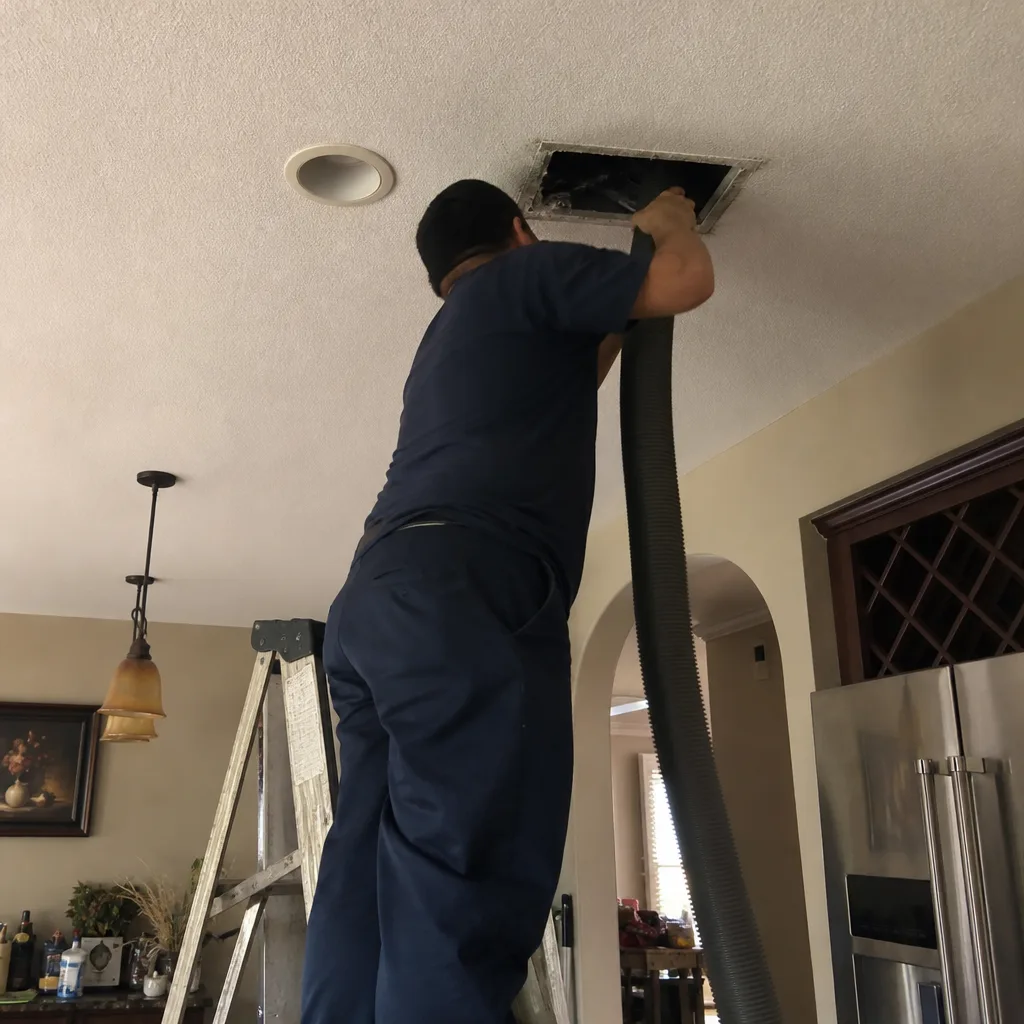 Before
 After
After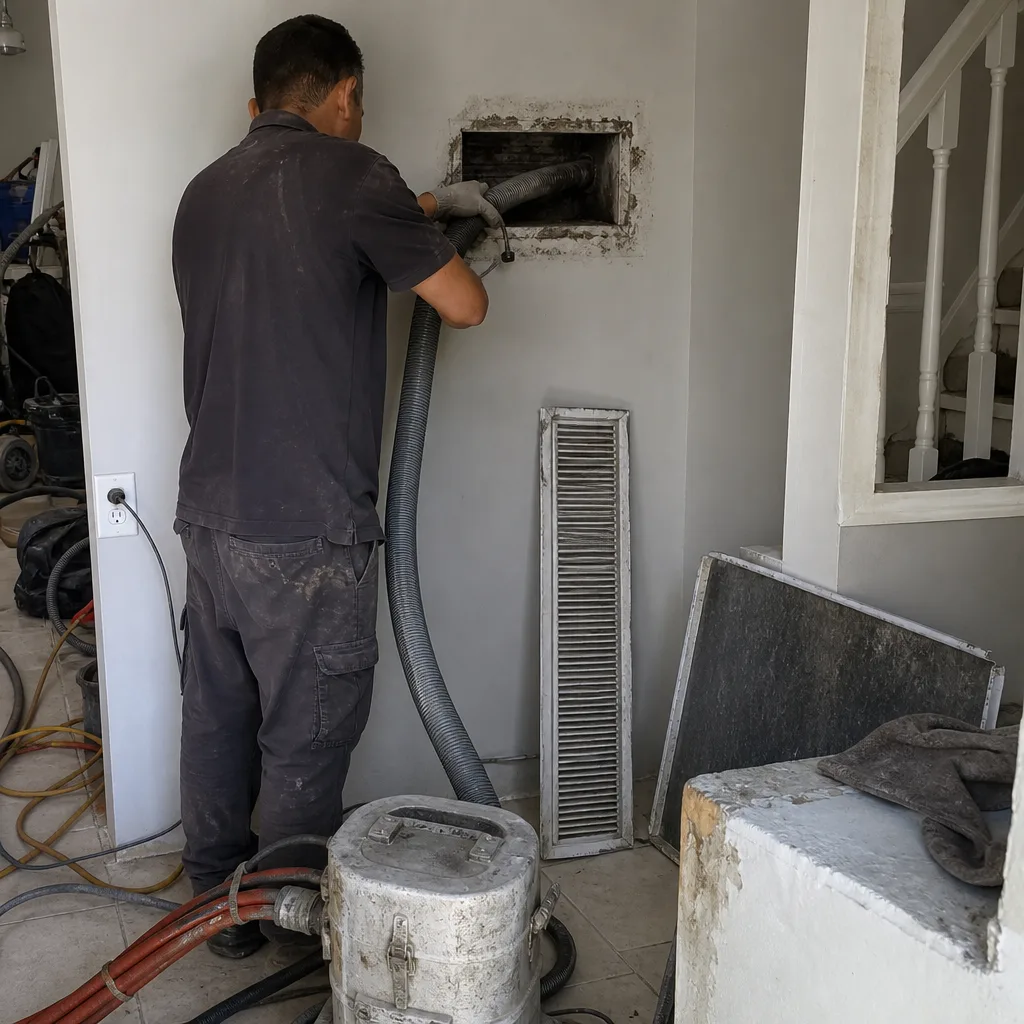 Before
 After
After