
Last updated October 15, 2026
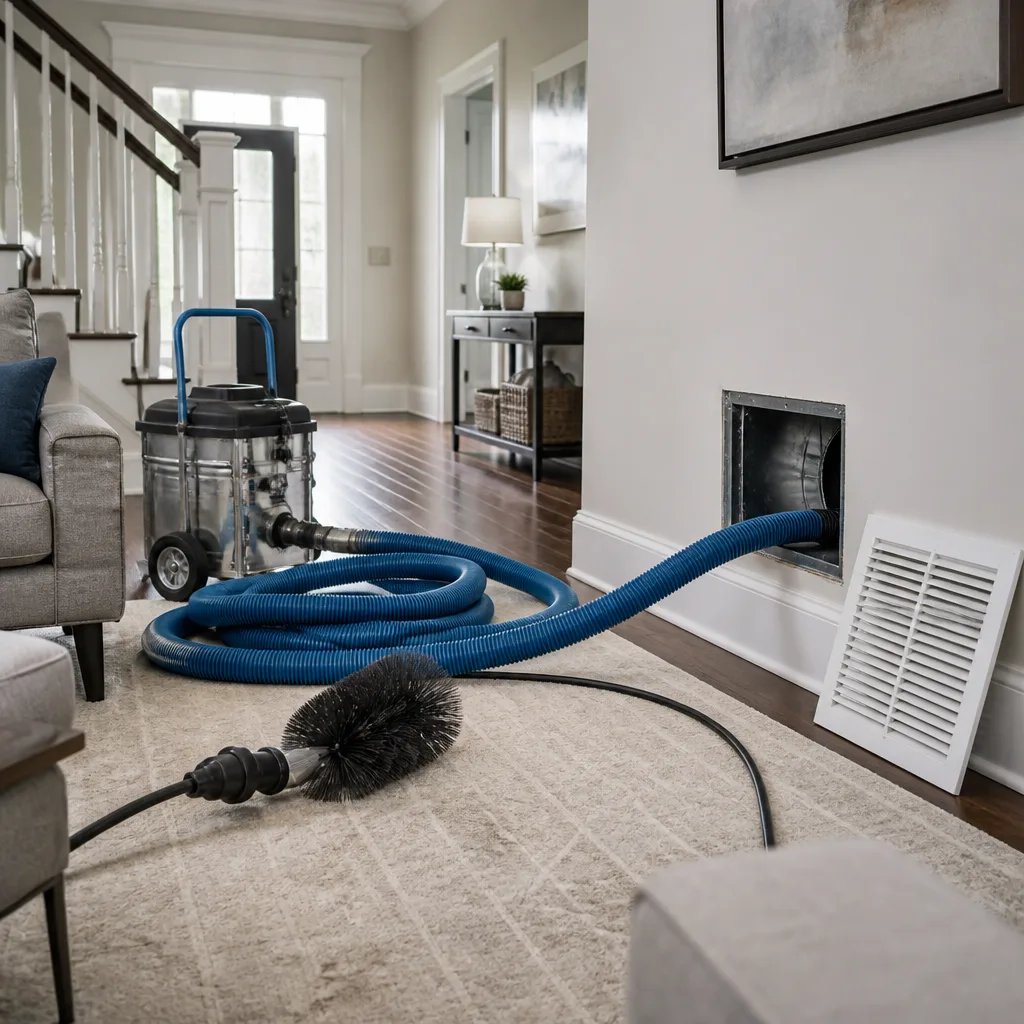 Whole-home duct cleaning
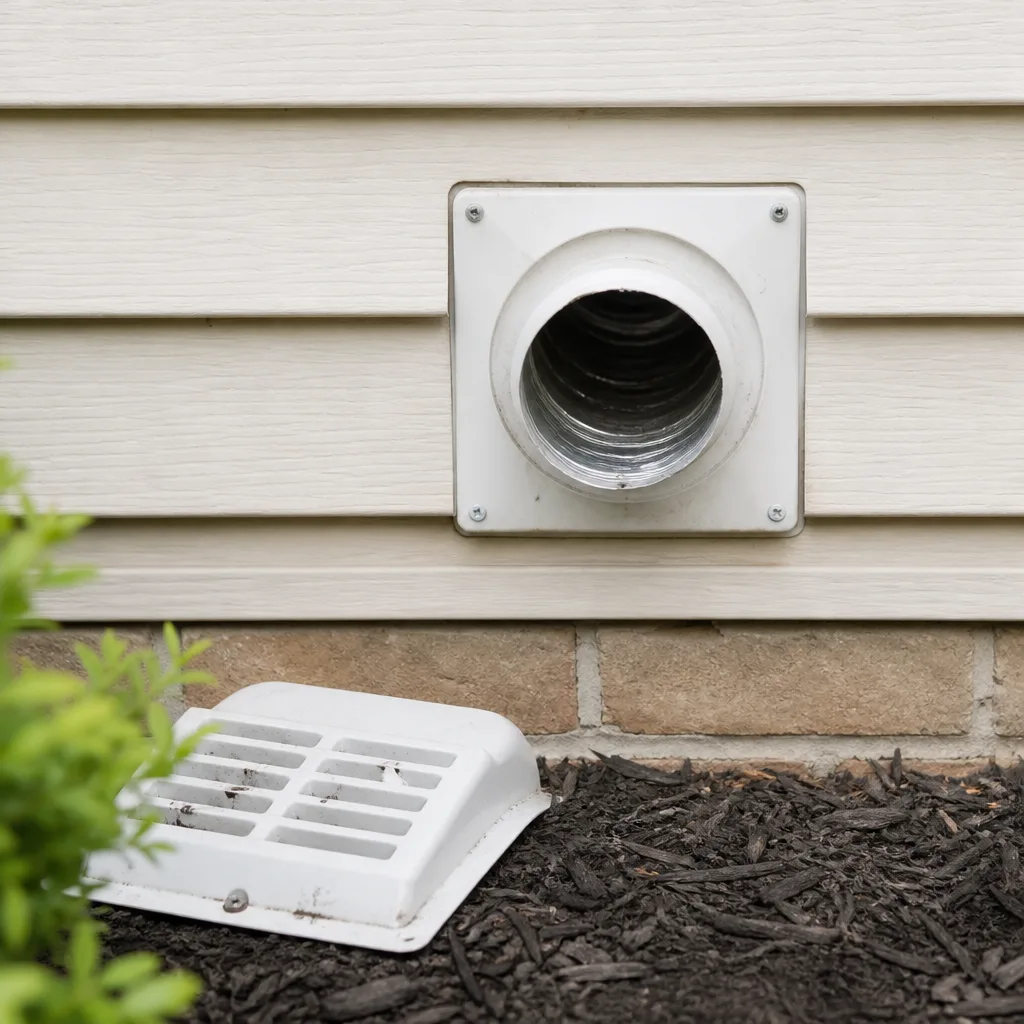 Dryer vent cleaning
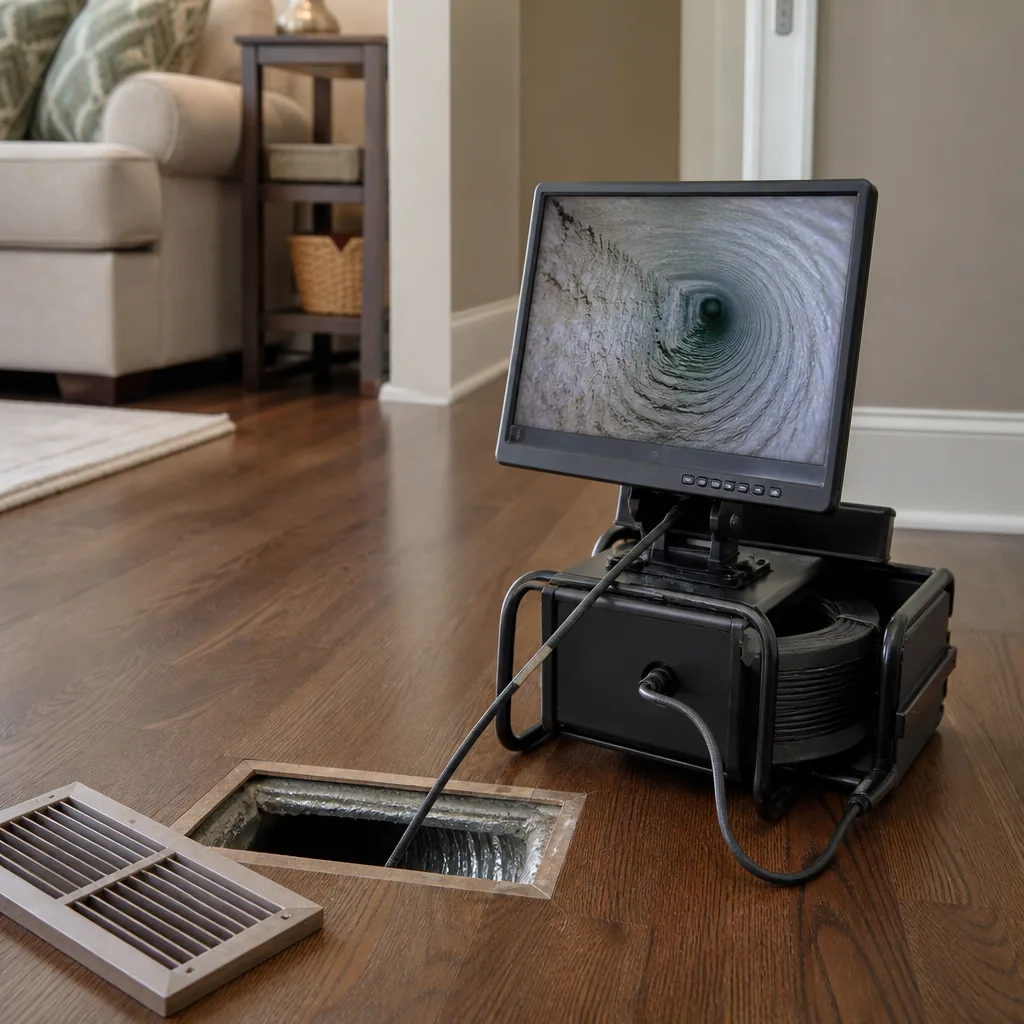 Camera inspection
 Sanitizing & deodorizing
Whole-system duct and dryer vent check with before-and-after photos - you see exactly what came out of your vents
That "$99 whole-house special" is a bait ad - the real number appears once they are in your hallway, or the "clean" is a shop-vac at the register. We photograph the inside of your ducts before and after instead.
Air Duct Cleaning Cost Breakdown: The Miami Homeowner’s Reference for 2026
A $49 duct cleaning quote and a $650 duct cleaning quote for the same Miami home are not competitors, they are different products. One is a loss-leader designed to get a technician in the door so the real invoice can start climbing. The other is a complete system cleaning with professional equipment and a written guarantee. This guide breaks down every line item behind our Air Duct Cleaning services and Miami duct cleaning prices so you can compare quotes that are actually comparable. By the time you finish reading, you will know what a fair price looks like in 2026, which add-ons matter, and which ones are pure margin.
Styles & brands we work with
Quick Answer
Air duct cleaning in Miami typically costs between $350 and $700 for a full system on a single-family home under 2,500 square feet in 2026, depending on the number of vents, duct accessibility, and the equipment used. Condos and apartments run lower, usually $200 to $400, because the systems are smaller and the air handler is often closer to the living space. High-rise units and homes with extensive flex duct runs or access issues can push past $800. The single biggest variable is scope of work, not company greed, and the rest of this guide explains exactly what that means.
Table of Contents
- What a Miami Duct Cleaning Should Actually Cost in 2026
- Line-by-Line Cost Structure: What Every Quote Should Include
- Why Miami Duct Cleaning Prices Differ From Other Markets
- Negative-Air vs. Portable Units: Why Equipment Changes the Price
- Add-Ons Decoded: What’s Worth It and What’s Margin
- How to Evaluate a Written Quote Line by Line
- How Often Should You Actually Clean Ducts in Miami?
- Common Mistakes to Avoid
- When to Call a Professional
- Frequently Asked Questions
- The Bottom Line
What a Miami Duct Cleaning Should Actually Cost in 2026
The honest answer is that a legitimate, complete air duct cleaning in Miami for a typical three-bedroom, two-bath home costs between $400 and $650 in 2026. That is the price range for a crew that uses a negative-air machine, cleans every supply and return register, brushes the trunk lines, and leaves the home clean. Homes with two air handlers, homes over 3,000 square feet, or homes with unusually long duct runs from a slab foundation can land between $650 and $900.
Here is what that range looks like by property type in the Miami market right now:
- Condominium (900 – 1,400 sq ft): $200 – $400. Shorter duct runs, fewer registers, the air handler is typically within 20 feet of the living space.
- Single-family home (1,500 – 2,500 sq ft): $400 – $650. This is the bulk of what we quote in neighborhoods like Kendall, Westchester, and Cutler Bay.
- Single-family home (2,500 – 3,500 sq ft): $550 – $800. More vents, longer trunk lines, often two systems, longer labor time.
- High-rise unit or slab-foundation home with access issues: $600 – $900. Access cuts may be required, and those add labor and materials.
These numbers assume a normal cleaning with no mold remediation, no duct sealing, and no UV light installation. Those are separate services with their own pricing, covered in our Air Duct Cleaning Maintenance Checklist for Miami Homeowners and later in this guide. The key number to remember is the full-system range: $400 to $650 for most Miami single-family homes. If a quote lands far below that, the company is almost certainly selling a partial job. If it lands far above, you should be asking what specialty work is included.
We have been cleaning ducts in Miami since 2004 as part of the Garrison Partners family. Roy Castellanos and our crew have quoted and completed thousands of jobs across Dade County, and the price range above holds steady year over year, adjusted slightly for fuel and equipment costs. What changes more than the price is what companies try to include in the scope, which is exactly what the next section covers.
Line-by-Line Cost Structure: What Every Quote Should Include
Every legitimate duct cleaning quote breaks down into the same five categories. If your quote does not show these lines separately, you are not seeing the full picture, and that is a red flag. Here is what each item should cost in the 2026 Miami market and what it covers.
1. Base System Charge
Expected range: $150 – $300
This covers the fixed cost of bringing the equipment to your home, setting up containment, running the negative-air machine, and doing the work safely. Think of it as the cover charge for the job. Every company charges this, whether they show it or not. The ones that hide it are subsidizing it somewhere else, usually in per-vent pricing that balloons once the technician starts counting registers.
2. Per-Vent Pricing (Supply and Return Registers)
Expected range: $15 – $35 per register
Most Miami homes have between 8 and 16 total registers. At $25 per register, a 12-register home adds $300 to the base charge, which gets you to about $450 to $600 all-in. Be careful here: some companies quote a low base and then charge $45 or $50 per vent. A 14-vent home at $50 per vent is $700 just in vent charges, on top of the base. Ask for the per-vent price up front, in writing, and multiply it against the number of registers in your home before you commit.
3. Access Cut Charges
Expected range: $20 – $75 per cut, typically 1 – 3 cuts
Older Miami homes, especially slab-foundation homes in neighborhoods like Shenandoah, Coral Way, and parts of Hialeah, often have ducts that are not accessible from the attic or the air handler closet. The only way to access the trunk line for a proper cleaning is to cut a service opening, clean through it, and reseal it. This is a legitimate additional cost. If a company quotes a flat price without asking about your home’s construction, they are probably not planning to do a complete job, or they will hit you with an access cut surcharge at the door. A written quote should state the per-cut price clearly.
4. Sanitizer or Anti-Microbial Application
Expected range: $75 – $150 for a full-system fogging
This is a fogging treatment applied after the mechanical cleaning, designed to knock down bacteria and surface mold inside the ducts. In Miami’s humidity, this step is more relevant than in dry climates, because the ducts are a damp, dark environment for half the year. We recommend it on homes where the ducts have never been cleaned or where there is visible dust accumulation on the register grilles. It is not a replacement for source removal, and no sanitizer is a substitute for a real cleaning.
5. Filter Replacement
Expected range: $20 – $60 per filter, or bring your own
Your system should have a fresh filter after a cleaning. Some companies include a standard 1-inch filter in the base price. Others sell you an upgraded media filter at the end of the job. If you have a 4-inch or 5-inch media cabinet, a quality replacement from Honeywell or Aprilaire will cost between $40 and $80. We tell our customers in Hollis Air Duct Miami home visits to replace their filters every 2 to 3 months in Miami’s cooling season, which runs roughly ten months of the year.
Here is a real-world example for a 1,900 sq ft Miami home with 12 registers, one air handler, attic-accessible ducts, and no access cuts needed:
- Base system charge: $225
- Per-vent (12 @ $25): $300
- Sanitizer fogging: $100
- Filter: included
- Total: $625
Now you have a number you can hold any quote against. A $49 coupon that turns into a $700 invoice does not survive contact with this line-item structure.
Why Miami Duct Cleaning Prices Differ From Other Markets
Miami’s housing stock is not like Atlanta’s or Dallas’s. Two structural differences in the typical Miami home directly affect how long a duct cleaning takes, and therefore what it costs. If you understand these differences, you will understand why quotes vary more than they should.
Flex Duct Is the Default, Not the Exception
Most Miami homes built after 1975 use flex duct, the insulated, foil-wrapped, spiral-wire tubing you see snaking through attics. That is true in Kendall, Doral, Country Walk, and most of the suburban expansion that defines the Miami metro area. Flex duct is cheaper to install than rigid sheet metal, which is why it is everywhere here.
The problem: flex duct is more fragile than rigid duct. A rotary brush system spinning too aggressively can tear the inner liner or separate the insulation. That is why the negative-air method, explained below, is often the right approach for Miami homes, and why a careful technician takes longer. Compare that to older markets with rigid duct: the duct can handle aggressive brushing, the job goes faster, and the labor cost per hour works out lower.
How to verify which duct type you have before calling for quotes: open your attic access. If you see shiny, foil-covered round tubes, that is flex duct. If you see rectangular sheet metal, that is rigid. The answer changes the right cleaning method and the fair price. A company that does not ask about your duct type before quoting is guessing.
Humidity Means Mold Is Always a Conversation
Miami’s average humidity sits above 70% for most of the year. Inside your ducts, condensation forms on the interior walls every time the AC cycles off, especially in the shoulder months when the system runs in short bursts. That is a fact of living here, and it means surface mold inside ducts is a genuine concern, not a scare tactic. A legitimate cleaning in Miami should include a visual inspection for visible mold on the register grilles, the interior of the duct boots, and the air handler coil. If the company is not willing to show you photos of what they find, do not hire them.
The humidity also means a slower drying cycle after the cleaning. A proper crew will run the negative-air machine long enough to remove any moisture introduced by the sanitizer fogging. Cheap crews skip this step, which can leave you with a musty smell that was not there before.
Negative-Air vs. Portable Units: Why Equipment Changes the Price
There are two fundamentally different methods for cleaning air ducts, and the equipment choice changes both the price and the result. In Miami, the distinction matters more than in most markets because of high-rise buildings and slab-foundation homes that cannot accommodate a truck-mounted system.
Negative-Air Truck-Mount Systems
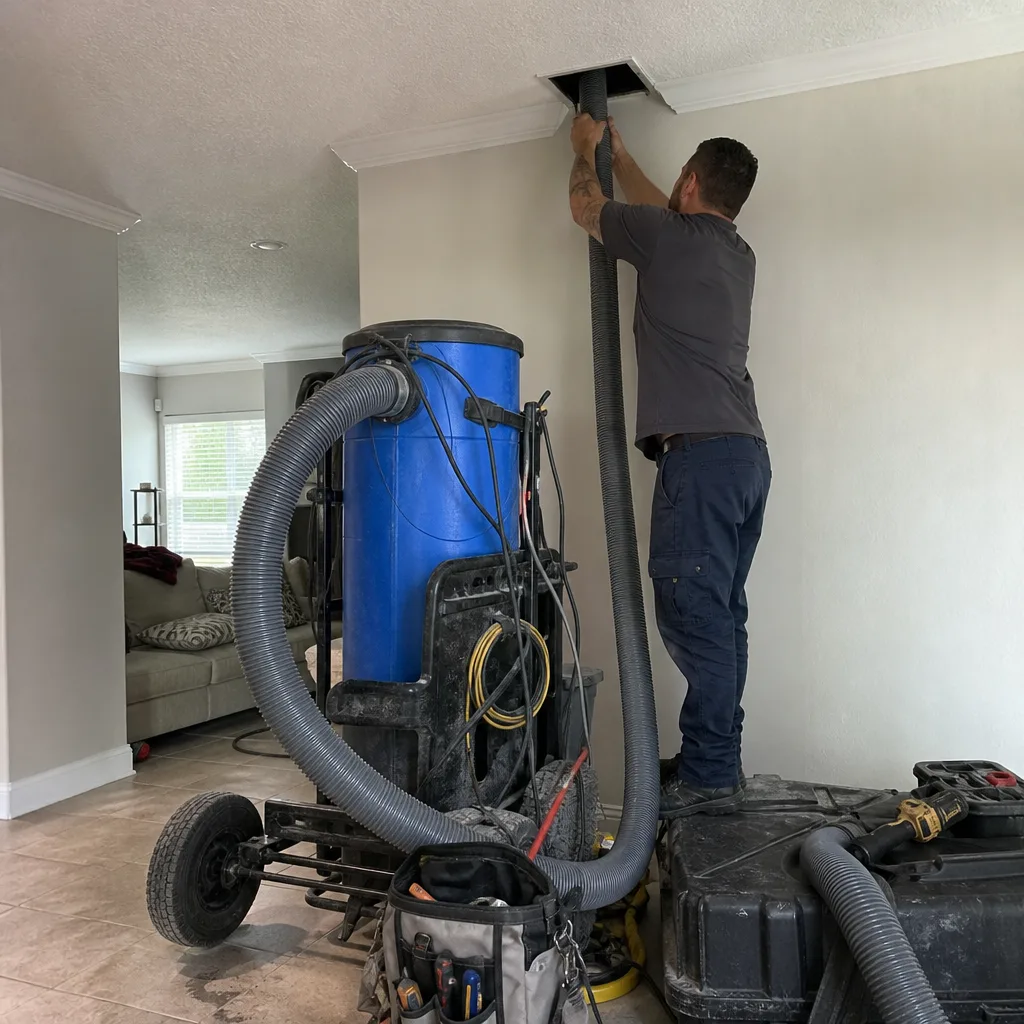
A truck-mounted negative-air machine connects to your home’s duct system through a large vacuum hose running from the truck to the air handler or a cut access point. The machine pulls a powerful negative pressure through the entire duct system while a rotary brush or compressed-air agitation tool dislodges debris inside the ducts. The debris flows toward the vacuum, through the hose, and into the truck’s collection chamber. Nothing stays in the home. This is the method used by reputable companies with equipment from brands like Rotobrush and Nikro.
Cost impact: $50 to $150 more than a portable-unit job, because the equipment is more expensive to own and operate.
Result: The most thorough cleaning available. The entire system is put under negative pressure, which means debris does not escape into the home during the process.
Portable Negative-Air Units
A portable unit serves the same function but on a smaller scale. The vacuum and filtration system sits inside your home near the air handler, connected to a single duct branch at a time. It is the only option for high-rise condominiums where the truck cannot park anywhere near the unit, and for homes where the duct runs are spread across multiple floors or far from any external access point.
Cost impact: $50 to $150 less than a truck-mount job.
Result: Effective on smaller systems and shorter runs, but less powerful than a truck-mounted machine. A portable unit moves less air per minute, which means the cleaning takes longer and removes less debris on larger homes. For a condo under 1,200 square feet, a portable unit is the right tool and the right price.
Why This Matters for You
Ask every company you call which equipment they use and why. A company that uses a portable unit on a 3,000 sq ft suburban home is cutting a corner, and you are paying full price for a partial result. A company that refuses to quote a high-rise job because their truck-mount cannot reach it is being honest, even if it costs them the job. We run both types of equipment in Miami, and Roy Castellanos or the crew lead will tell you which method fits your home before a quote is ever written.
Add-Ons Decoded: What’s Worth It and What’s Margin
Once the base cleaning is quoted, the add-on conversation begins. Some add-ons are legitimate services that solve real problems. Others are margin machines designed to inflate a $400 job into a $1,400 invoice. Here is what each one actually costs in Miami and when it is actually warranted.
UV Light Installation: $300 – $800
When it is warranted: UV lights installed inside the air handler kill mold spores and bacteria on the coil and in the air stream. In Miami’s humidity, the coil is wet for most of the year, which makes UV a defensible investment if you have visible growth on the coil, allergy symptoms that improve when you leave home, or a family member with respiratory issues. It is a maintenance tool, not a mold removal tool.
When it is pure margin: When a technician pitches it before the system has even been cleaned. Clean the system first, then decide. A UV light in a dirty duct system is a bandage on an open wound. Quality units from Guardsman and other established brands run $300 to $500 installed; anything above $800 is pricing pressure, not equipment cost.
Mold Treatment / Anti-Microbial Fogging: $100 – $300
When it is warranted: When the cleaning reveals visible surface mold on the interior of the ducts. The fogging treatment neutralizes spores that survive the mechanical cleaning. It is a standard step in Miami, where humidity creates the conditions for mold growth.
When it is pure margin: When it is sold as a replacement for mold remediation. Fogging is not remediation. If you have significant visible mold growth, you need a licensed mold remediator, not a fogging treatment. A legitimate duct cleaner will tell you that directly.
Duct Sealing: $500 – $1,200
When it is warranted: Duct sealing with mastic, the thick paste used by HVAC professionals, closes the air leaks in your ductwork that let conditioned air escape into the attic. A sealed system can improve efficiency by 15 to 20%, which in Miami means your AC does not work as hard. That is real money back on your FPL or Florida Power & Light bill. Our team handles duct sealing in Miami as a separate service with its own pricing and its own written guarantee.
When it is pure margin: When it is bundled into a “premium cleaning package” without any leak testing. Proper duct sealing starts with a leak assessment, not a brush-and-go. Ask whether the company tests your system before quoting the sealing work. If they do not test, they are selling you a line item, not a repair.
Dryer Vent Cleaning: $90 – $180
When it is warranted: Every 12 to 18 months, regardless of what else is happening in the home. Lint buildup is the leading cause of dryer fires in the US, and Miami’s humid air makes lint stickier and more prone to clogging. Our dryer vent cleaning in Miami service is a standalone job, and we recommend it even if you never clean your ducts.
When it is pure margin: When it is added on at the end of a duct cleaning with no inspection. Ask to see the lint you paid to have removed, and ask about the before-and-after airflow test. A good crew will show you both.
How to Evaluate a Written Quote Line by Line
The difference between a fair quote and a bait-and-switch is almost always visible in the writing. A disciplined company writes prices down before any work starts, and the price does not move at the door. Here is how to read a quote like a pro.
Step 1: Confirm the Scope of Work Is Specific
A legitimate quote lists the square footage, the number of registers, the duct type, and the equipment method. It says something like: “Clean all supply and return registers (14 total), trunk line via negative-air truck-mount, sanitize interior surfaces, replace filter.” A vague quote says “Complete system cleaning” and nothing else. That vagueness is not an oversight; it is room to adjust the price later.
Step 2: Identify the Per-Vent Price
Is the per-vent price listed in dollars, or is it left blank? If blank, call and ask. Then multiply the per-vent price by the number of registers in your home yourself. If your count and theirs do not match, resolve that before the technician arrives.
Step 3: Look for Access Cut Language
Does the quote mention what happens if access cuts are required? A quote that ignores access cuts is a quote that will grow. Demand a per-cut price in writing, with a maximum number of cuts specified.
Step 4: Check the Guarantee Language
What does the company promise if the work is not done right? “Satisfaction guaranteed” is not a guarantee; it is a phrase. A written guarantee should state what is covered, for how long, and what happens if the work fails. At Hollis Air Duct Miami, every job is covered by the 365-Day Done Right Promise: if the work fails within a year, we return and make it right at no charge, including a free second visit. That is what a written guarantee looks like. It is specific, it has a time frame, and it says what happens next.
Step 5: Confirm Who Is Coming to Your Home
Background-checked, uniformed technicians are the standard we have held since 2004 under The Garrison Standard. If a company will not tell you who is showing up, or whether they are employees or day labor, that is an operational detail that will show up in the quality of the work. The Garrison Code governs how our technicians behave on every job: arrive inside the window, price in writing, complete the work by the book, leave the site clean. Every Hollis location is independently owned and operated under that same Standard.
Step 6: Compare the Total Out-the-Door Price, Not the Advertised Price
This is the step that saves you money. Take the written quote from each company and add up every line. Ignore the coupon number, the advertised discount, the “percent off” headline. Compare the total out-the-door price. In Miami, as everywhere else, the company with the loudest advertising and the lowest teaser number is usually the one whose final invoice will be the highest. Disciplined companies quote the real number up front, because their reputation depends on the final price matching the written one.
How Often Should You Actually Clean Ducts in Miami?
The honest answer is every 3 to 5 years for most Miami homes, with two exceptions that push the schedule up to every 2 to 3 years. For more guides & resources, the NADCA, the industry association for duct cleaners, is deliberately vague on frequency because every home is different. But in Miami, the climate gives you a consistent answer.
- Every 3 – 5 years: Single-family home with no pets, no smokers, standard fiberglass filter changed regularly. Your ducts will accumulate a thin film of dust, but not enough to affect airflow or indoor air quality.
- Every 2 – 3 years: Home with pets that shed, recent renovation, a smoker, or family members with allergies or asthma. These homes accumulate debris faster, and the debris is more irritating.
- Every 1 – 2 years: Home with visible dust on the register grilles, musty odor when the AC kicks on, or unexplained increases in the electric bill. These are signs of clogged ducts or duct leakage, not just dust.
If the previous owner did not clean the ducts, and the home is over ten years old, do it once when you move in, then follow the schedule above. A single cleaning on a neglected system can make a visible difference in the air you breathe and the dust that settles on your furniture. Roy Castellanos has walked into Miami homes where the flex duct was half-collapsed under its own weight from accumulated dust and lint, which brings us to the mistakes section.
Common Mistakes to Avoid
- Chasing the lowest advertised price. The $49 duct cleaning coupon exists for one reason: to get a technician inside your home. The final invoice will not be $49, and the job will not be a full cleaning. The company is buying the appointment, not selling the service.
- Not verifying the equipment method. A portable unit used on a large single-family home will leave debris behind. Ask which machine they are using and have them justify it against your home’s size and layout before you sign.
- Ignoring the access cut clause. Miami’s slab-foundation homes often require access cuts to clean the trunk line properly. If the quote does not mention them, the technician will mention them after the work starts, when your negotiating leverage is zero.
- Skipping the written guarantee because you trust the salesperson. Verbal promises are not worth the air they travel through. A written guarantee, with a term and a remedy, is the only thing that protects you if the work fails.
- Assuming a higher price means a better job. Some of the most expensive quotes in Miami come from companies that train their technicians to sell, not to clean. Price is not quality; the written scope of work and the written guarantee are the quality signal.
- Not asking for before-and-after photos. Every register, every trunk line, every return. If the company will not provide them, you have no way to verify the work was done. A disciplined crew documents its work.
- Replacing your AC filter only once a year. In Miami, a 1-inch fiberglass filter should be changed every 2 to 3 months during the cooling season. A clogged filter starves the system, wastes electricity, and pulls dust into the ducts you just paid to clean.
When to Call a Professional
Call a duct cleaning company when you see visible dust buildup on register grilles, when you notice a musty odor that activates with the AC, when your home gets dusty within days of cleaning, or when you have purchased a home and do not know its duct maintenance history. These are the practical triggers in Miami. Do not wait for a respiratory issue or an electric bill spike to investigate. Duct cleaning is a scheduled job; it is not an emergency service, and the right company will schedule you within a reasonable window and price the job in writing before any work starts. Hollis Air Duct Miami offers free written estimates in Miami, call (850) 660-3272.
Frequently Asked Questions
In Miami, a full air duct cleaning for a single-family home under 2,500 square feet costs between $400 and $650 in 2026. Condos run $200 to $400, and larger homes with two systems or access issues can run $650 to $900. The final price depends on the number of vents, the duct type, and the cleaning method. Call (850) 660-3272 for a free written estimate on your specific home.
Cheap quotes in Miami are almost always partial jobs. The company is quoting a base price that covers only a portion of the system, then applying per-vent pricing, access cut fees, and mandatory add-ons once the technician is inside your home. A $49 quote and a $650 quote for the same home are different scopes of work, not different levels of generosity. Compare the line-item total, not the advertised price.
Ask for before-and-after photos of every register, the trunk line, and the air handler. A proper duct cleaning company documents its work. If the company will not provide photos, you have no way to verify the job was completed. The 365-Day Done Right Promise we include on every job means we stand behind the work in writing, and the photos are part of that record.
Every 3 to 5 years for most Miami homes, and every 2 to 3 years for homes with pets, smokers, allergies, or recent renovations. Miami’s humidity creates conditions that make ducts a more hospitable environment for dust and surface mold than drier climates, so the local schedule runs slightly more frequent than the national average. If you do not know when your ducts were last cleaned, schedule an inspection.
A new home should not need duct cleaning for 3 to 5 years, unless the builder left construction debris in the ducts, which happens more often than it should. Drywall dust, sawdust, and packaging material get sucked into open duct runs during construction. If you are buying a new construction home in Miami, check the registers with a flashlight. If you see debris, get the ducts cleaned before you move your furniture in.
The negative-air method uses a powerful vacuum system, either truck-mounted or portable, to create negative pressure inside the duct system while a rotary brush loosens debris. The negative pressure pulls all loosened debris into the collection chamber rather than releasing it into your home. It costs slightly more than push-only brushing because the equipment is more expensive and the setup takes longer, but it is the standard for a complete cleaning in Miami homes.
The Bottom Line
Air duct cleaning in Miami costs between $400 and $650 for most single-family homes in 2026, and the range is driven by scope of work, equipment method, and the structure of your home, not by company greed. A legitimate quote breaks down into a base charge, per-vent pricing, access cut charges if applicable, sanitizer, and filter replacement. A legitimate company writes the price down before any work starts, documents the job with photos, and backs the work with a written guarantee. Everything else is noise. Hollis Air Duct Miami home visits start with a written estimate and end with a system you can inspect yourself, covered by the 365-Day Done Right Promise. Call (850) 660-3272 for a free estimate and a price that does not move.
Written by Roy Castellanos, Owner at Hollis Air Duct Miami, serving Miami since 2004.
See the difference
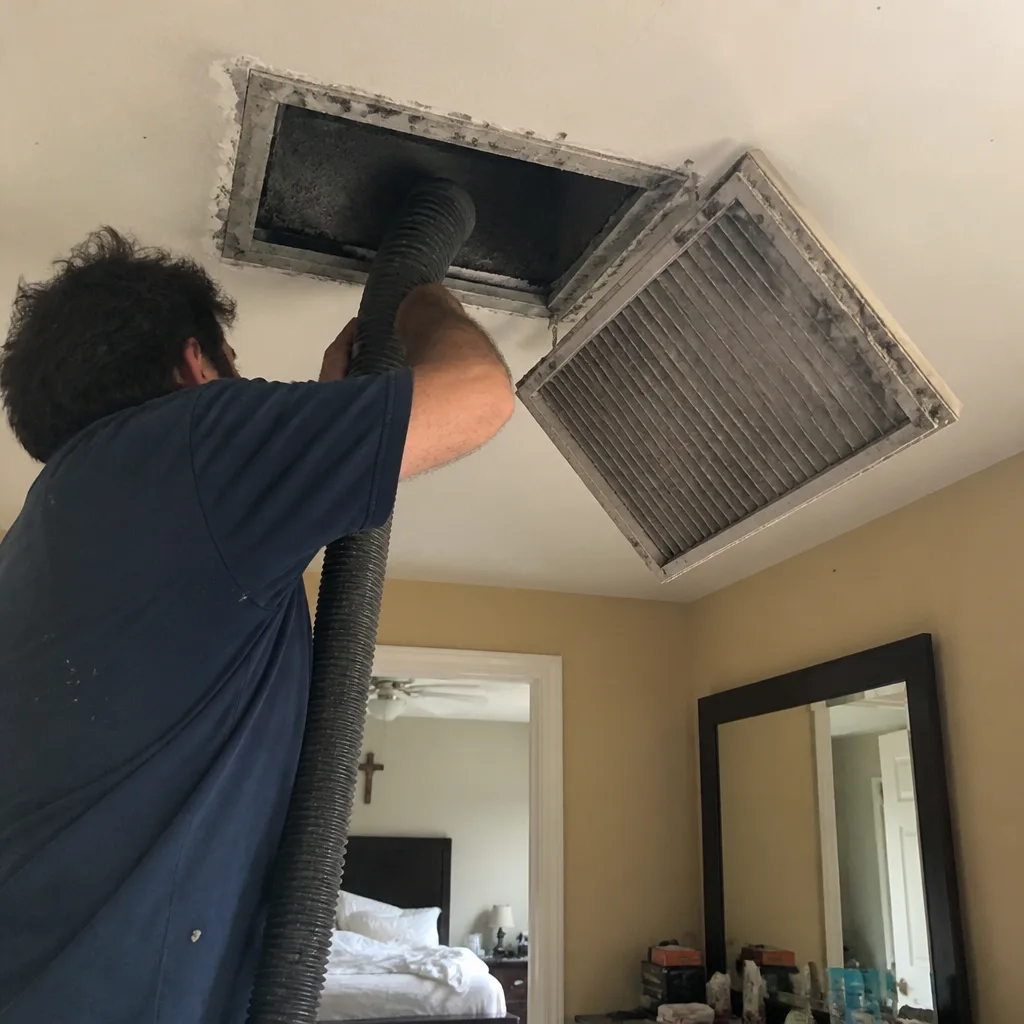 Before
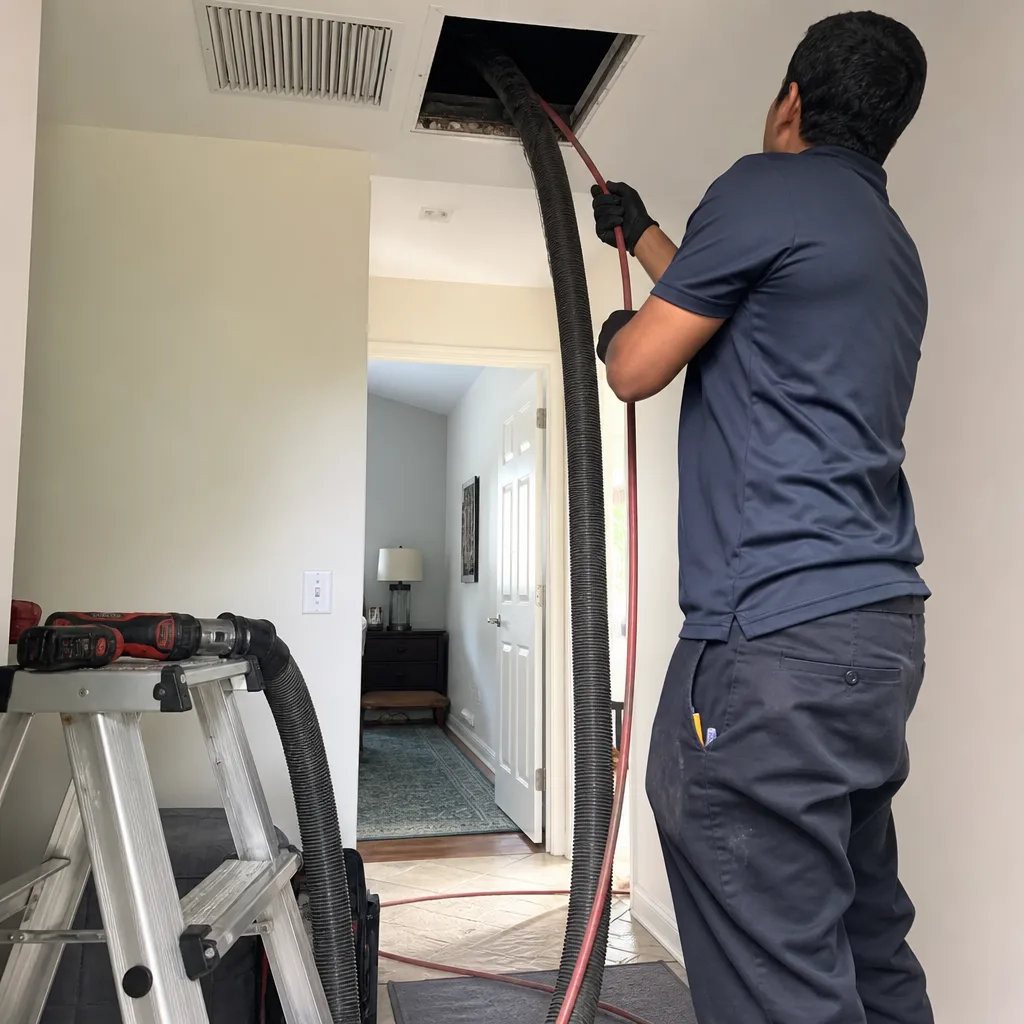 After
After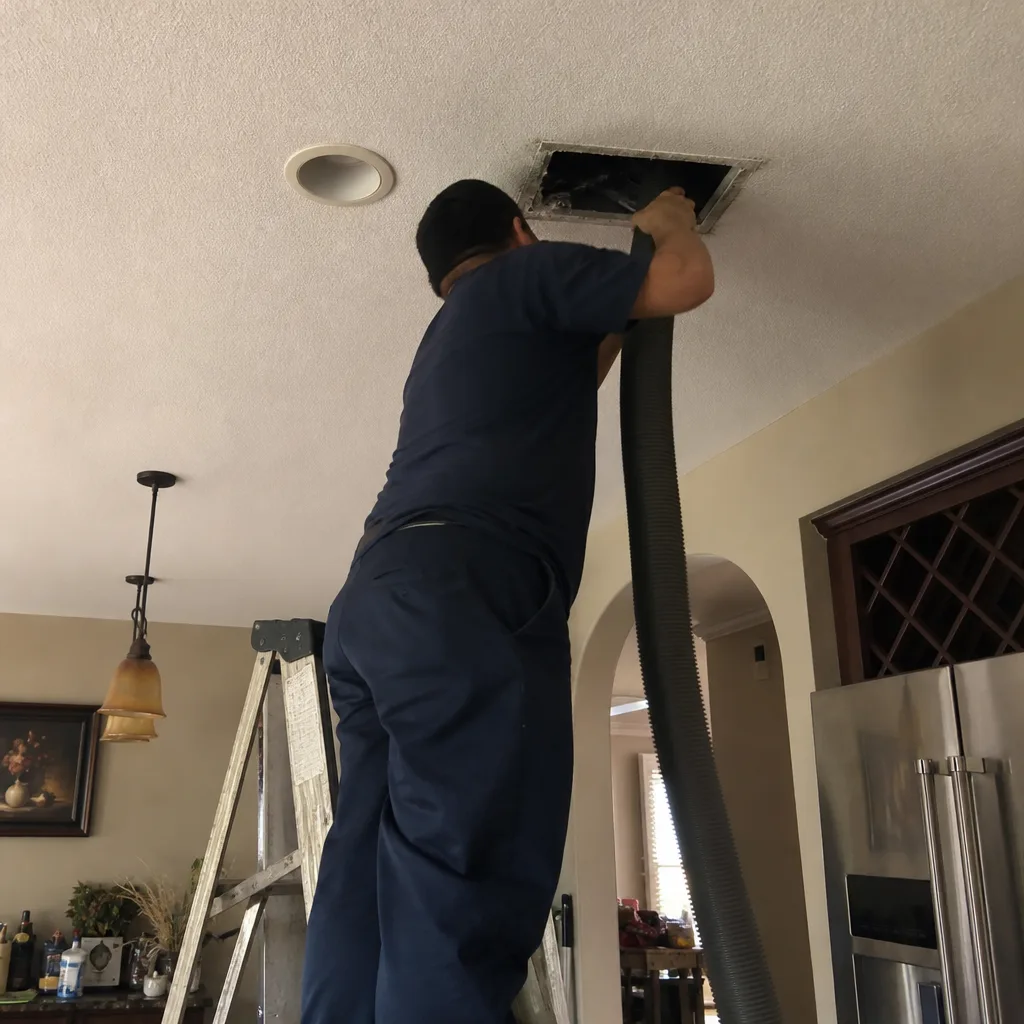 Before
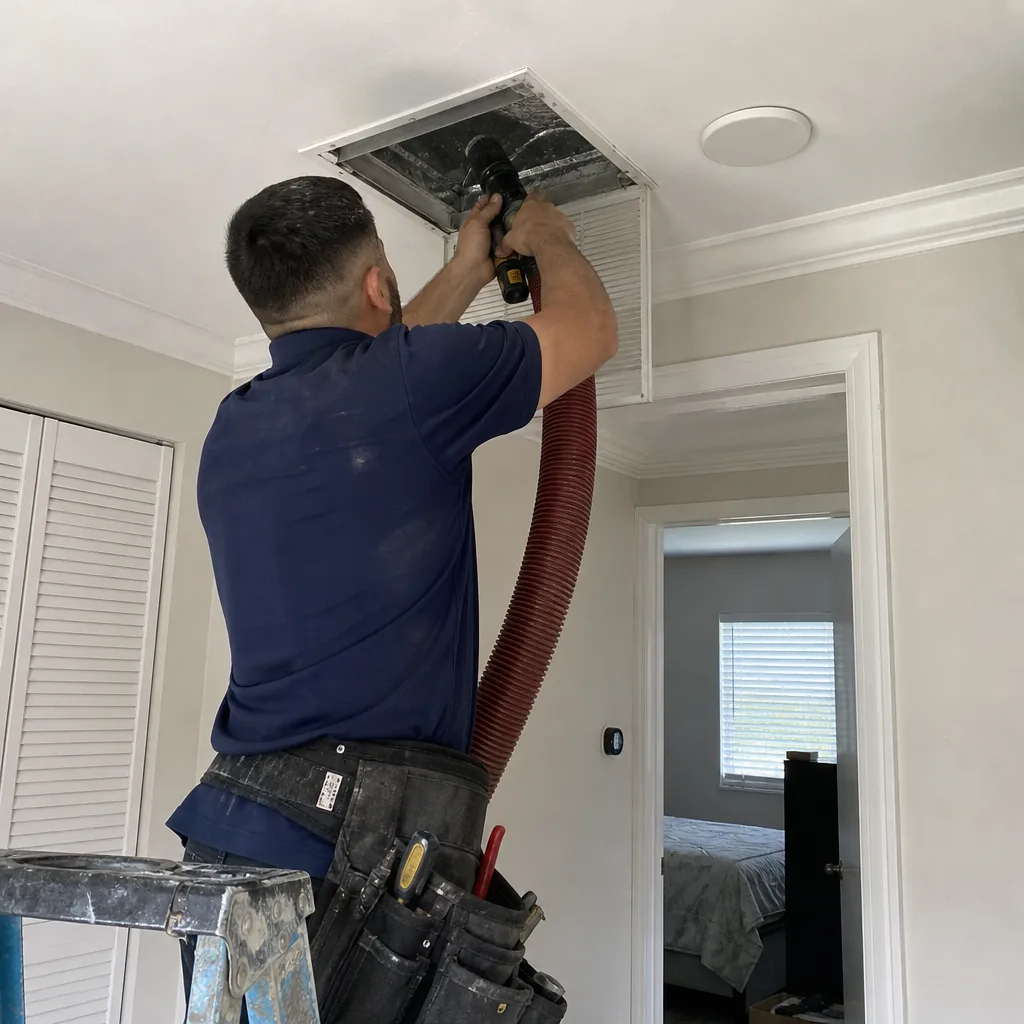 After
After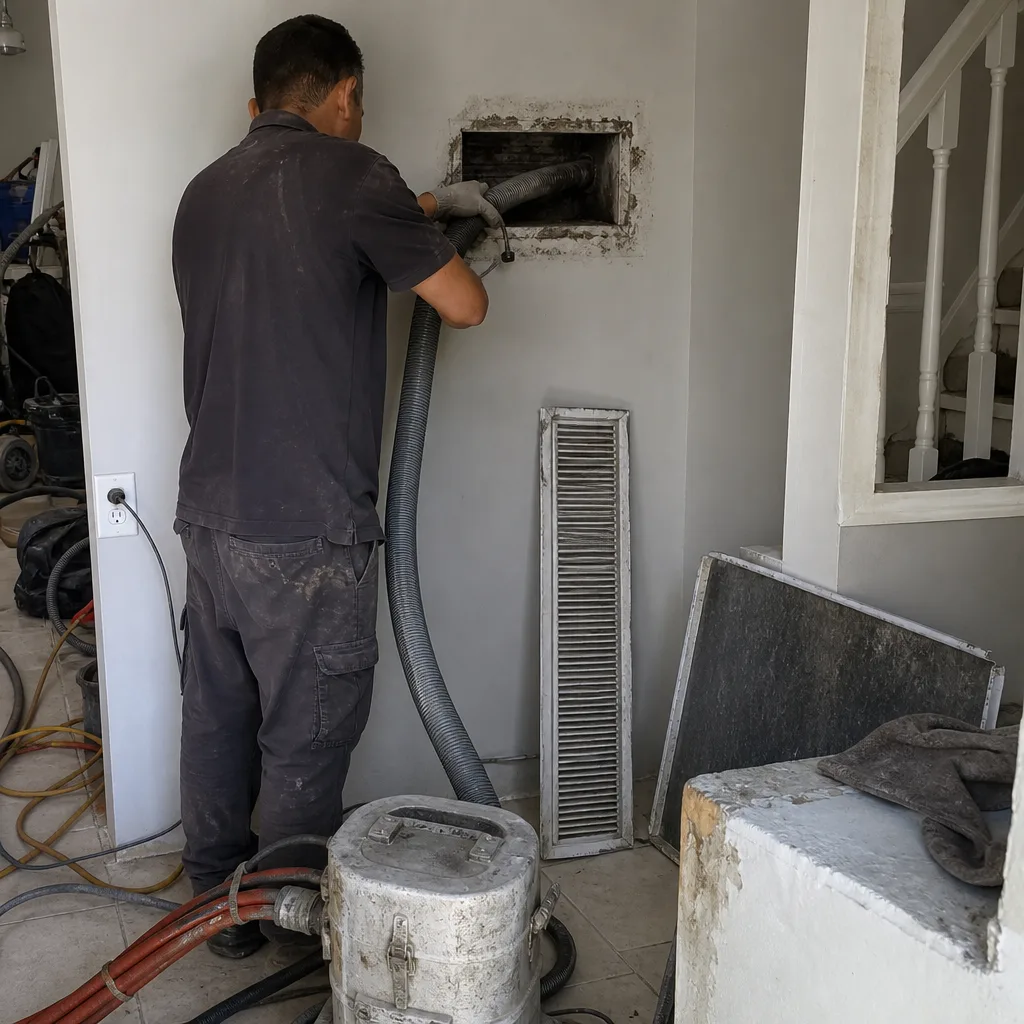 Before
 After
After