
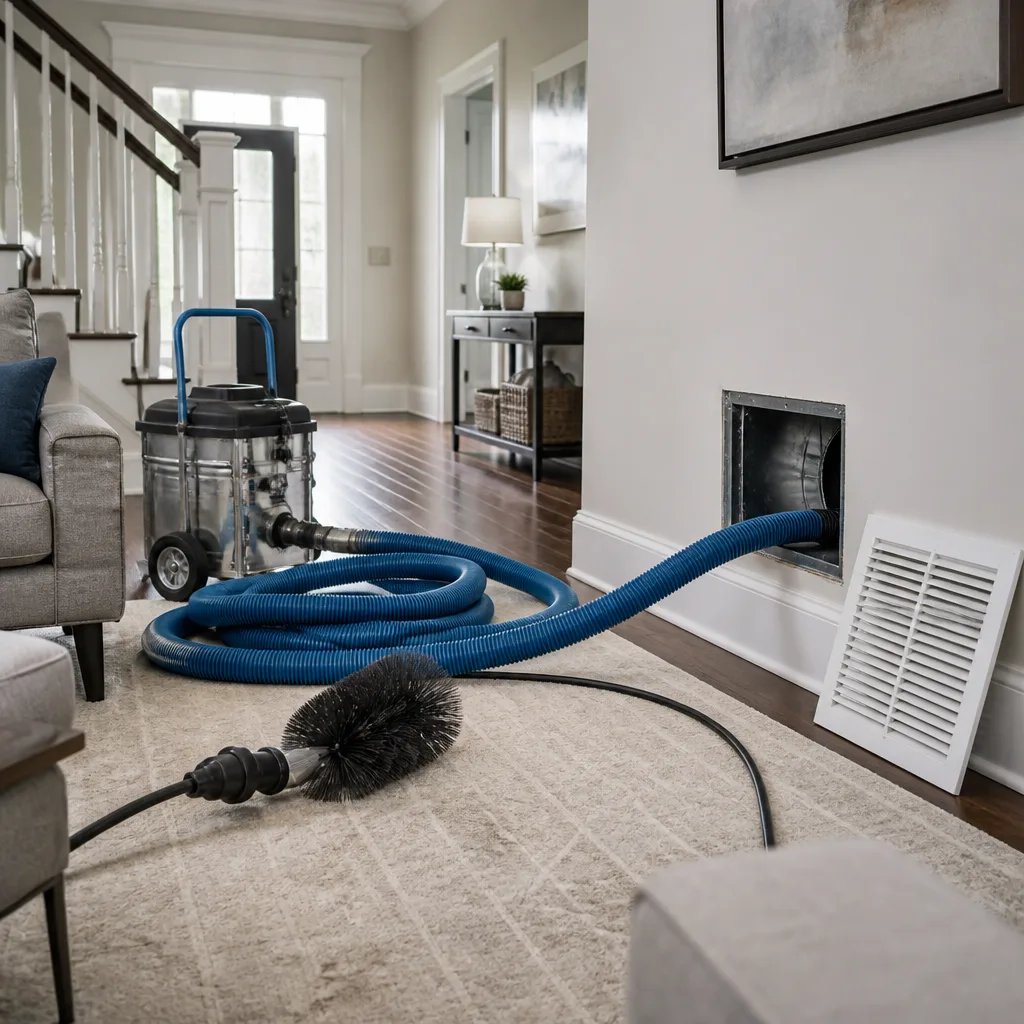
 Whole-home duct cleaning
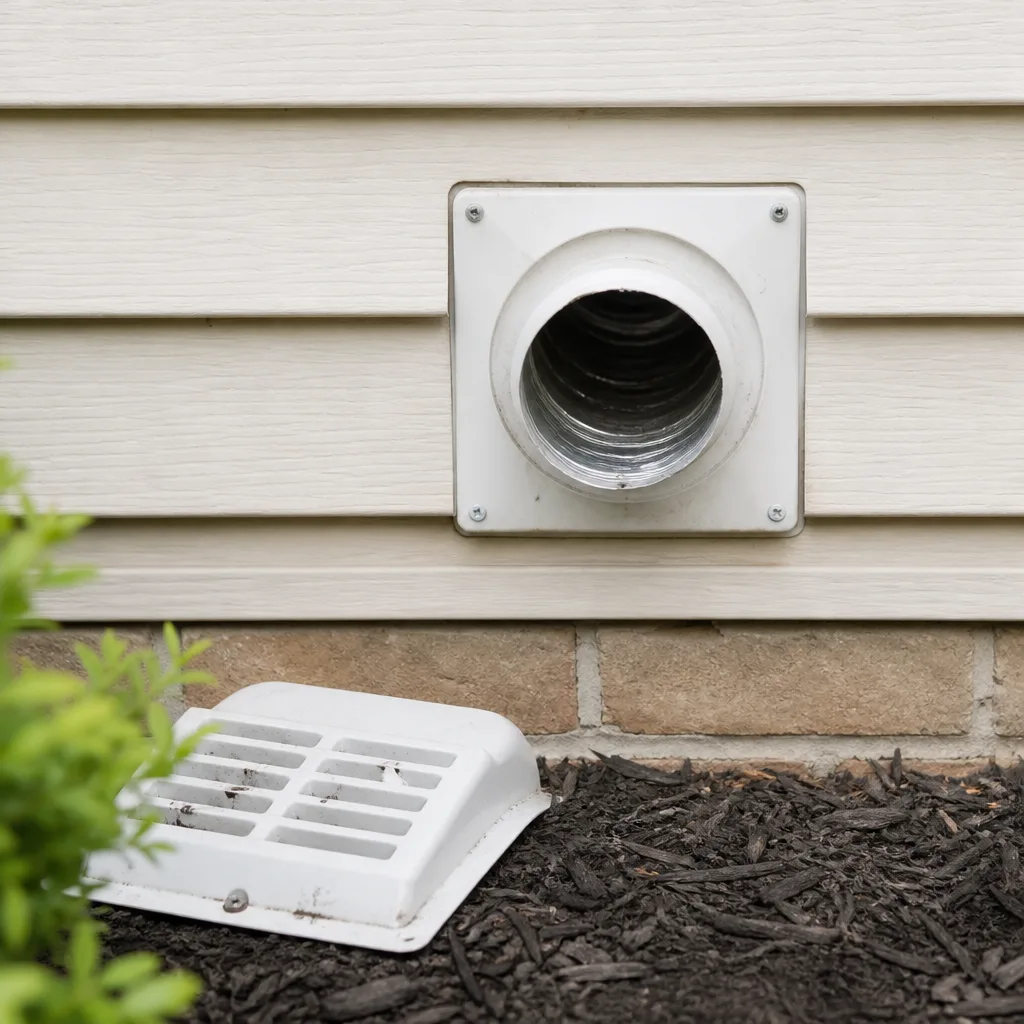 Dryer vent cleaning
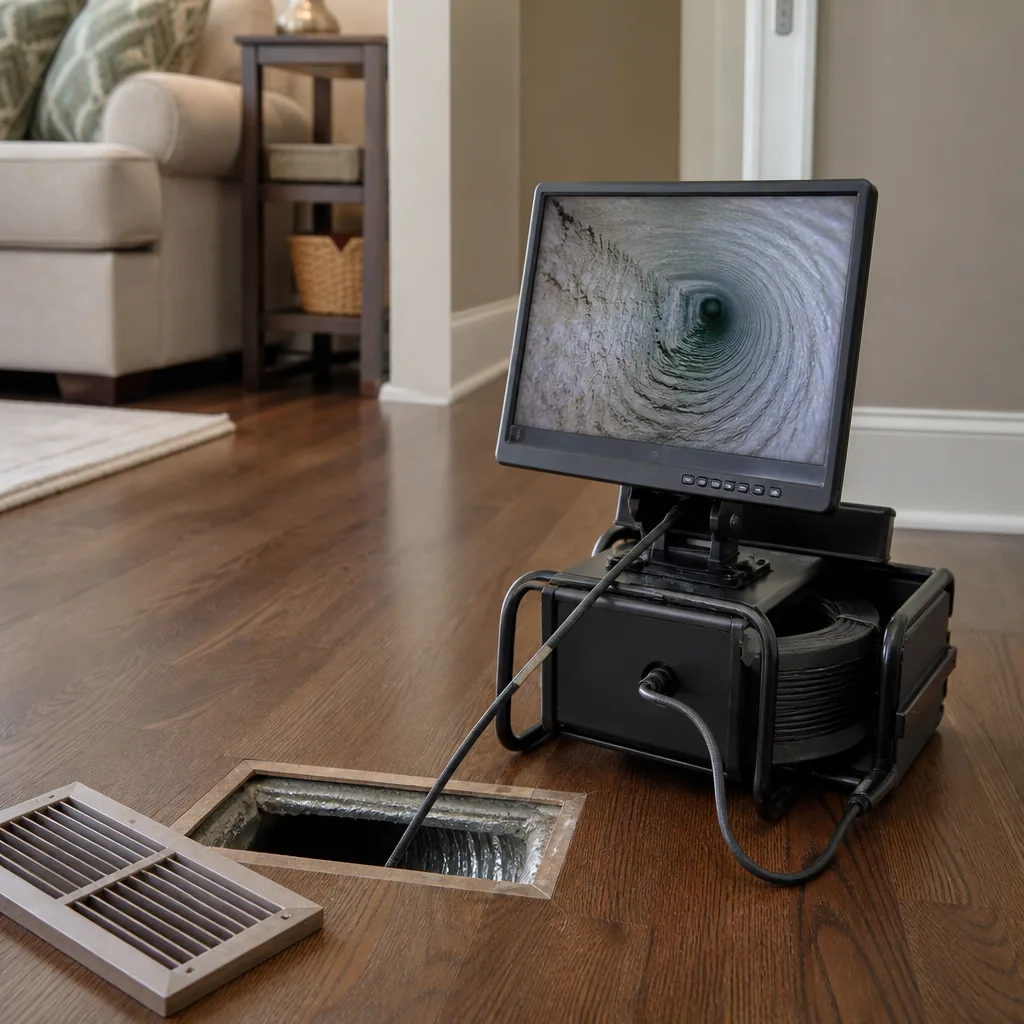 Camera inspection
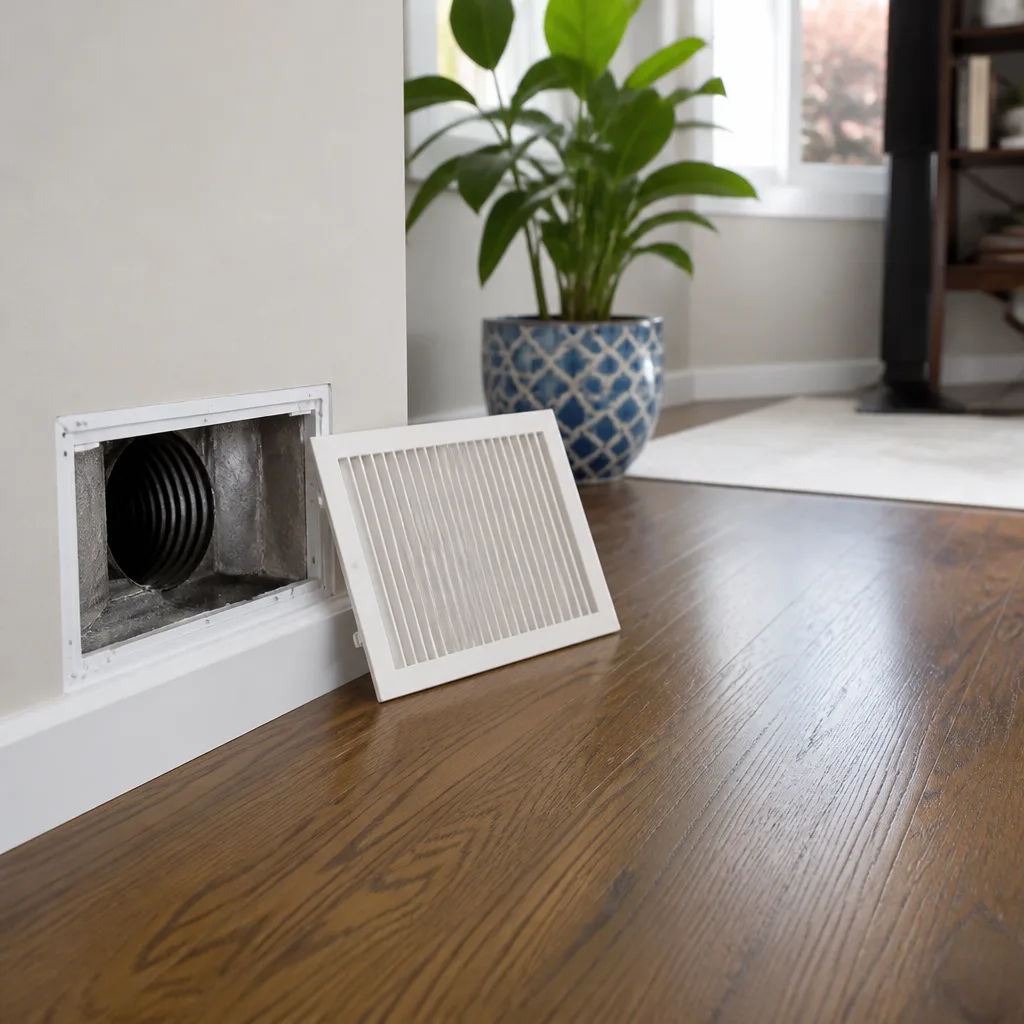 Sanitizing & deodorizing
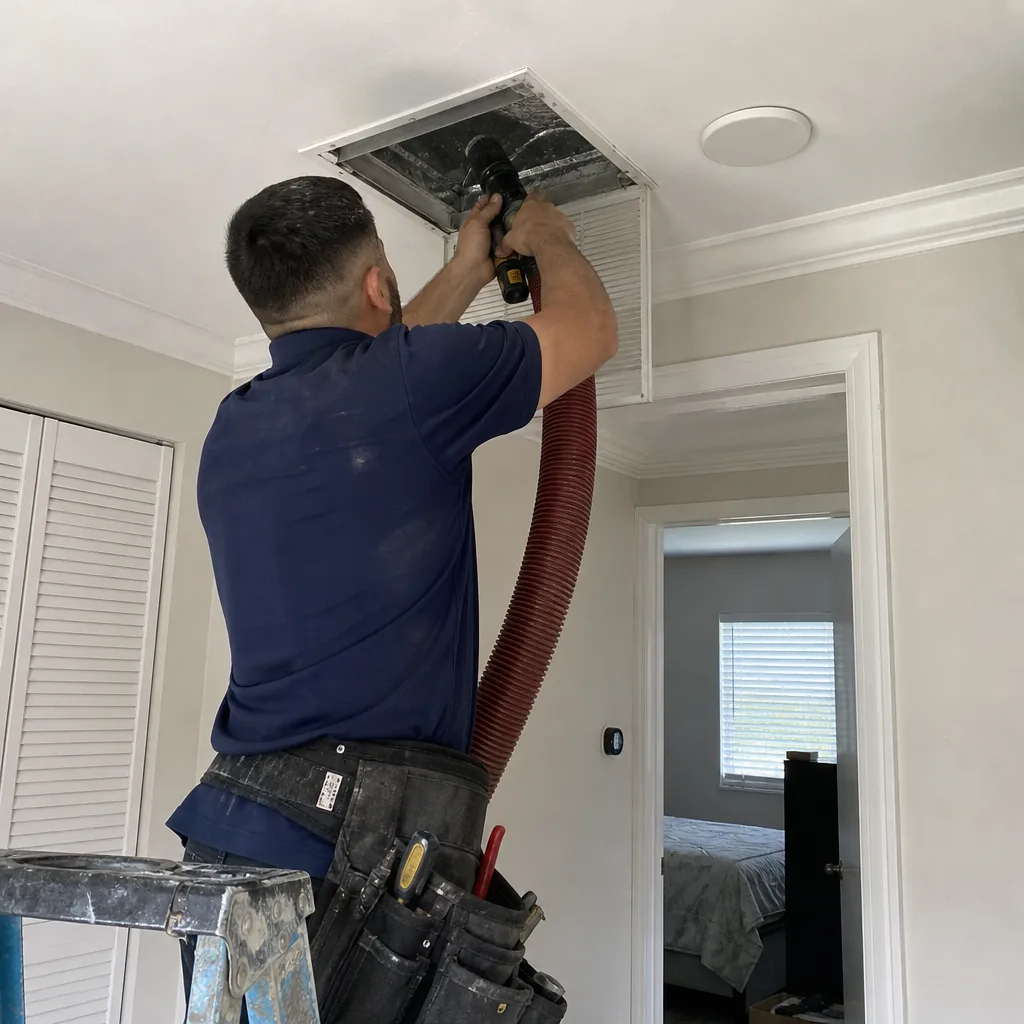
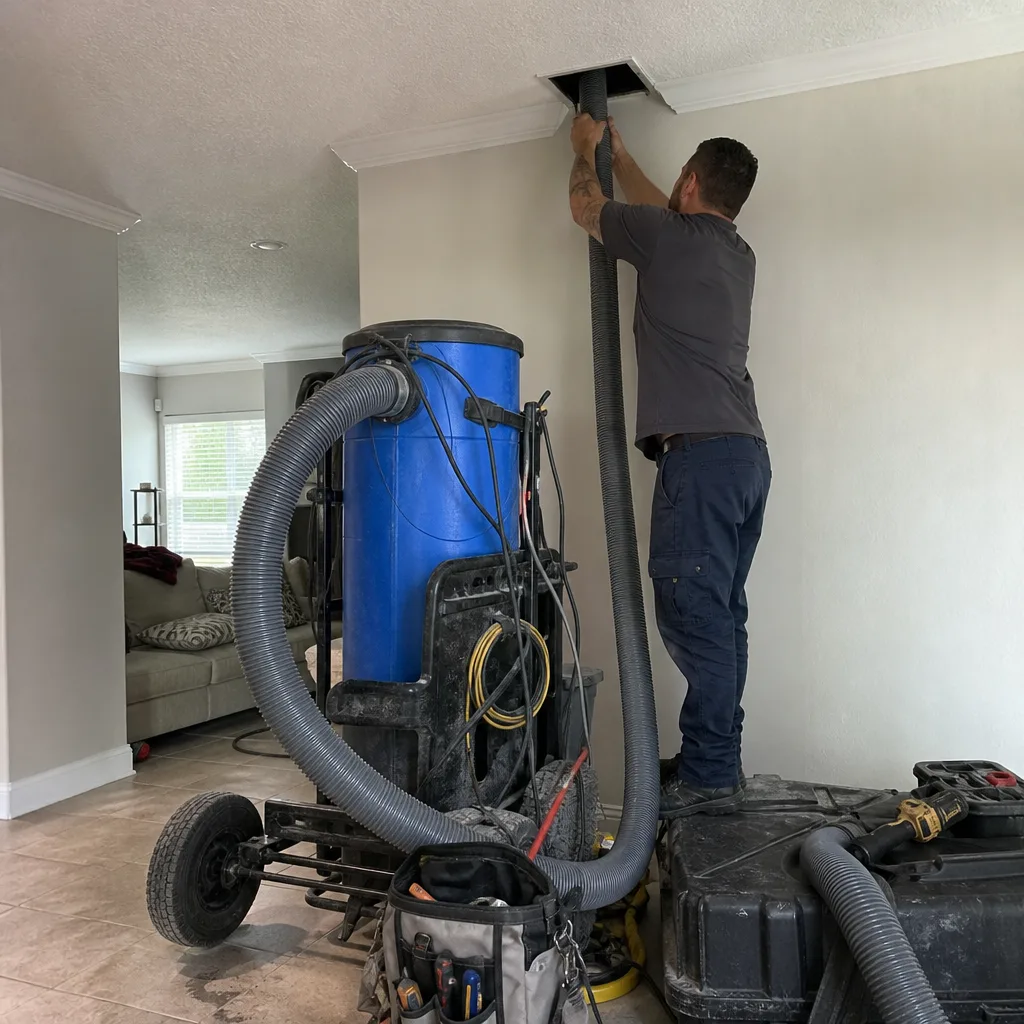
Whole-system duct and dryer vent check with before-and-after photos - you see exactly what came out of your vents
That "$99 whole-house special" is a bait ad - the real number appears once they are in your hallway, or the "clean" is a shop-vac at the register. We photograph the inside of your ducts before and after instead.
Rotobrush Duct Sealing in Miami: What to Know First
We’re an independent Rotobrush service provider in Miami, and we seal duct systems on Rotobrush-equipped homes all over Dade County. Most Rotobrush duct sealing jobs take a single visit, and the price is written down before we touch anything. If you’re seeing higher electric bills, weak airflow in the back rooms, or dust settling an hour after you clean, the ductwork itself is likely leaking, not the Rotobrush unit.
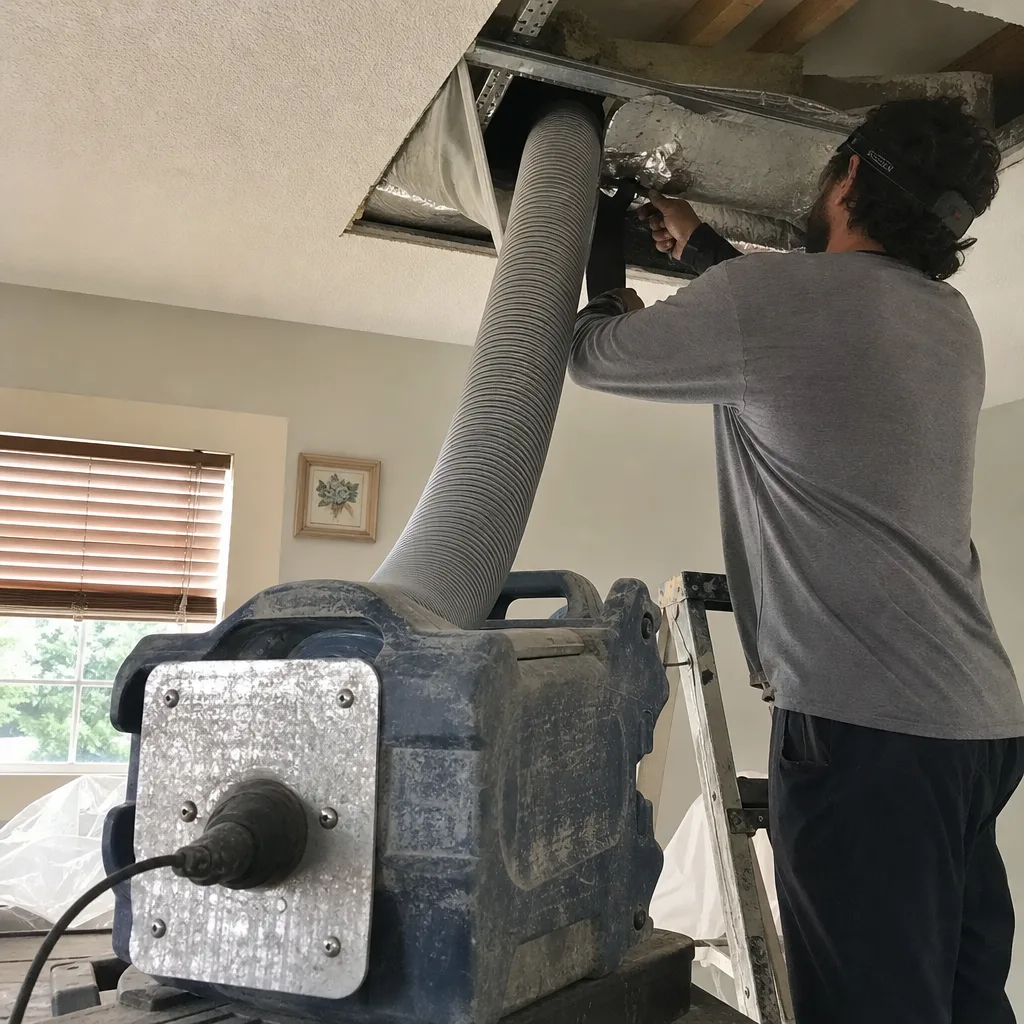
This page is for Miami homeowners who run a Rotobrush system and want the ductwork sealed right, without a low-ball teaser price that balloons once the tech is in the attic. Call (850) 660-3272 if you’d rather talk to Roy Castellanos and our crew directly. We answer the phone with a live person, every time.
How Rotobrush Products Fail – and How We Fix Them
Rotobrush builds solid machines, but the duct system around them takes a beating in South Florida. Here’s what we actually see on Rotobrush jobs in Miami.
- Rotobrush aiR+ units developing leaks at the cabinet connection. The aiR+ is a portable system with a flexible hose that connects to the duct at a register or plenum. In homes from Kendall to Hialeah, we find that the collars where that hose clamps on loosen over time, especially in attics that hit 130°F. Metal expands, clamps back off a quarter turn, and conditioned air starts spilling into fiberglass insulation. We re-clamp with stainless worm-gear bands and seal the joint with duct mastic, not tape.
- Leaking duct boots under Rotobrush-cleaned registers. Rotobrush systems work by agitating debris loose and pulling it back. That’s fine for cleaning, but repeated insertions at floor registers wear down the boot-to-sheetrock seal. We see it most in Miami homes built between 1995 and 2010, when builders used cheap zinc-plated boots. The fix is pulling the register, scraping the old caulk, and resealing with mastic that stays flexible in South Florida humidity.
- Return-side leaks pulling attic air into Rotobrush-cleaned duct runs. The return plenum is the biggest leak source on most systems, not the supply. After a Rotobrush cleaning, the return trunk often shows gaps at the S-cleat and drive-cleat seams, because contractors assembled them fast years ago and just taped the outside. Tape fails. We seal every longitudinal seam and joint with UL 181-rated mastic, then verify with a smoke puffer at the plenum.
- Insulated flex duct sagging and splitting on Rotobrush-compatible branch lines. Rotobrush aiR+ handles flex duct fine, but the outer jacket on cheap R-4.2 flex turns brittle after five or six Miami summers. Once the outer liner cracks, the inner core starts leaking, and you lose up to 20% of airflow per run. We cut out the damaged section and reattach with a rigid coupling, mastic-sealed and double-clamped, which satisfies the Florida energy code.
- Air handler cabinet leaks where the Rotobrush return connects. On systems paired with a Lennox, Trane, or Carrier air handler, the gap between the return connection and the unit cabinet is constantly in negative pressure. In Miami’s humidity, that pulls in air from garages, closets, and wall cavities. We remove the access panel, find the actual gap, and fill it with mastic or close it with a formed sheet-metal patch, depending on what shook loose.
Styles & brands we work with
Our Rotobrush Duct Sealing Process
- 1
You call and describe what’s happening. The phone rings at our Miami shop and a person answers. No voicemail tree. We ask about airflow, dust, rooms that run hot, and whether the Rotobrush system has been cleaned recently.
- 2
We schedule a written-price visit. A uniformed, background-checked tech arrives inside the quoted window. We walk the system with you, open key access spots, and write a price before any work begins. That number doesn’t move.
- 3
We locate every leak, not just the obvious one. We use a smoke puffer at the plenum, boots, collars, and return, watching how the smoke travels to find airflow paths that shouldn’t exist. On Rotobrush systems especially, the hose connection points need dedicated testing.
- 4
We decide on parts before glue comes out. For most sealing work, the correct material is UL 181-rated mastic, applied per manufacturer-adjacent practice. When a part is beyond sealing, like a collapsed return drop or split flex section, we quote OEM-compatible or quality aftermarket parts and tell you which we recommend and why.
- 5
We seal, test, and show you the work. Every joint gets mastic, every connection gets re-clamped, then we re-test with the smoke puffer and a pressure check. Before-and-after photos are part of the job, not an upsell.
- 6
You get a written 365-Day Done Right Promise. If a sealed joint fails within a year, we come back and make it right at no charge, including a free second visit. That’s the Garrison Standard, on paper.
See the difference
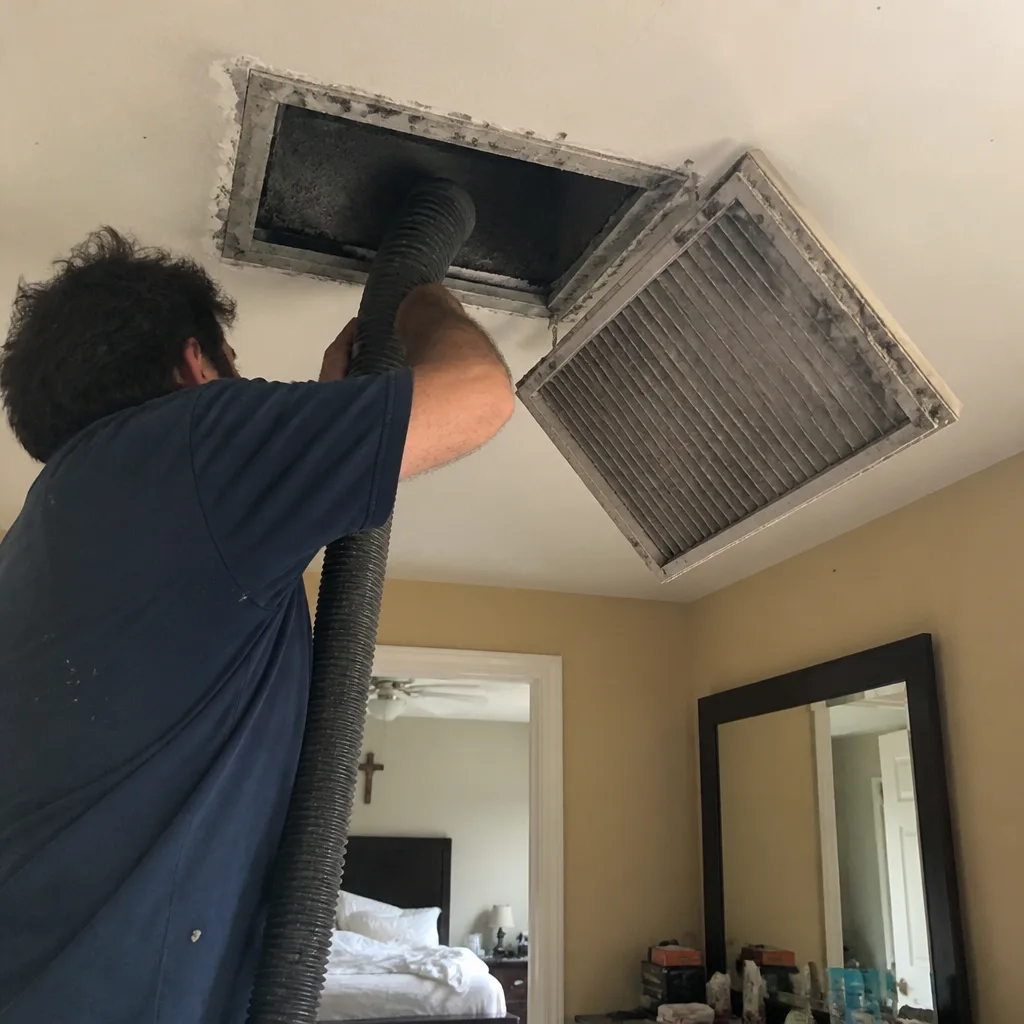 Before
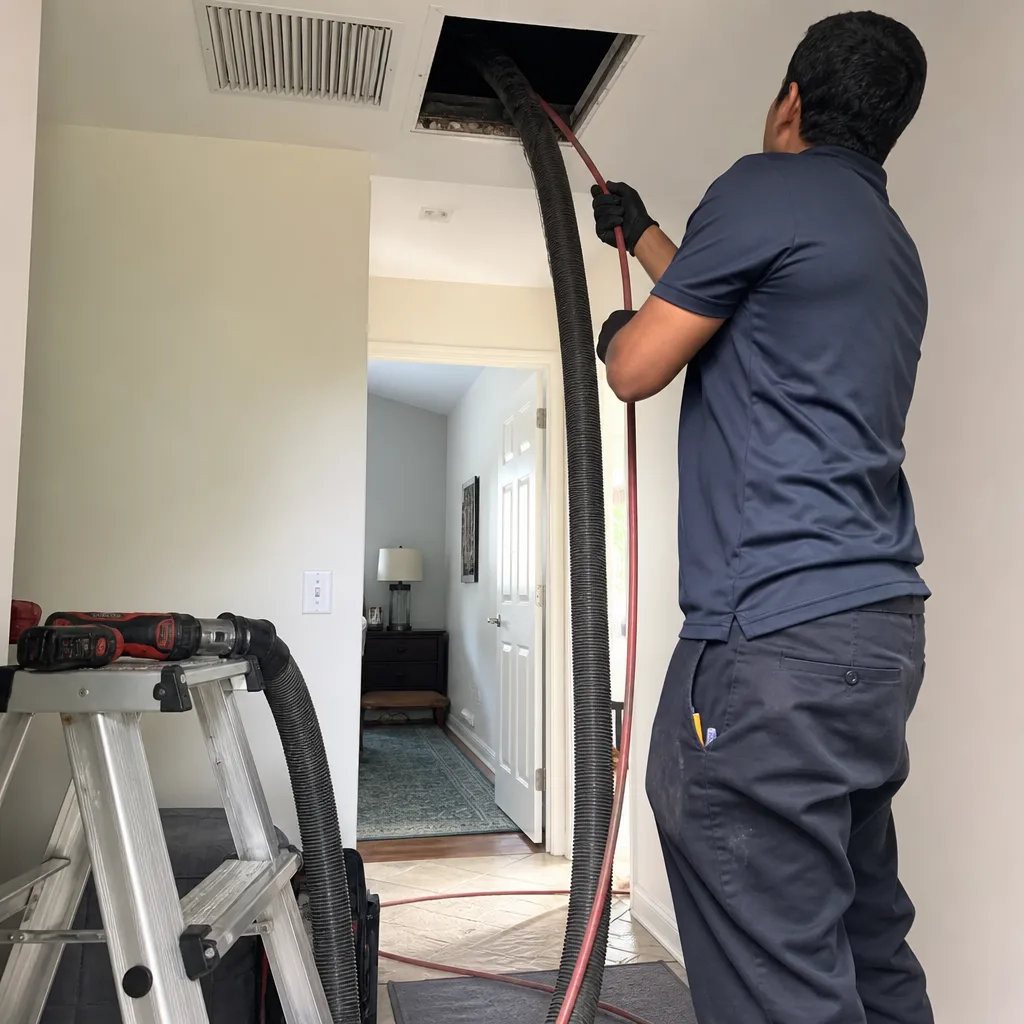 After
After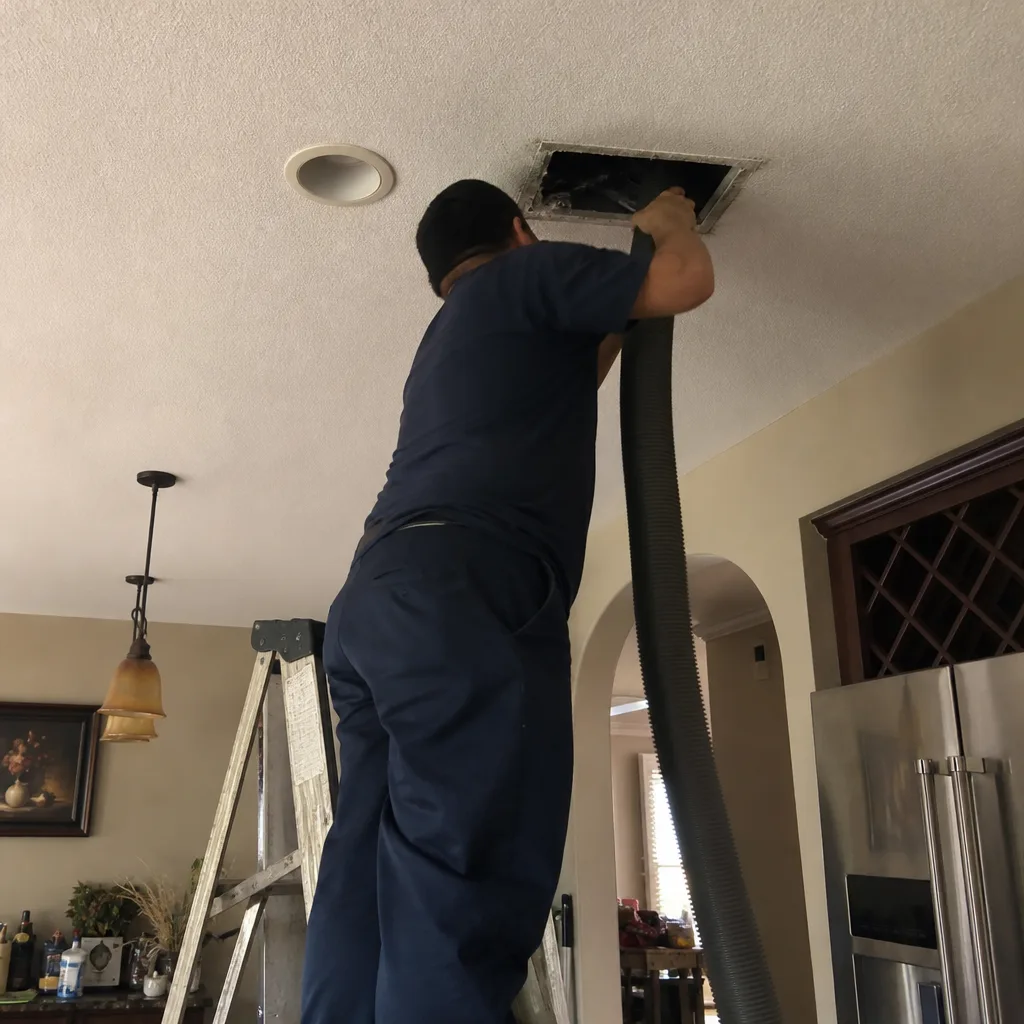 Before
 After
After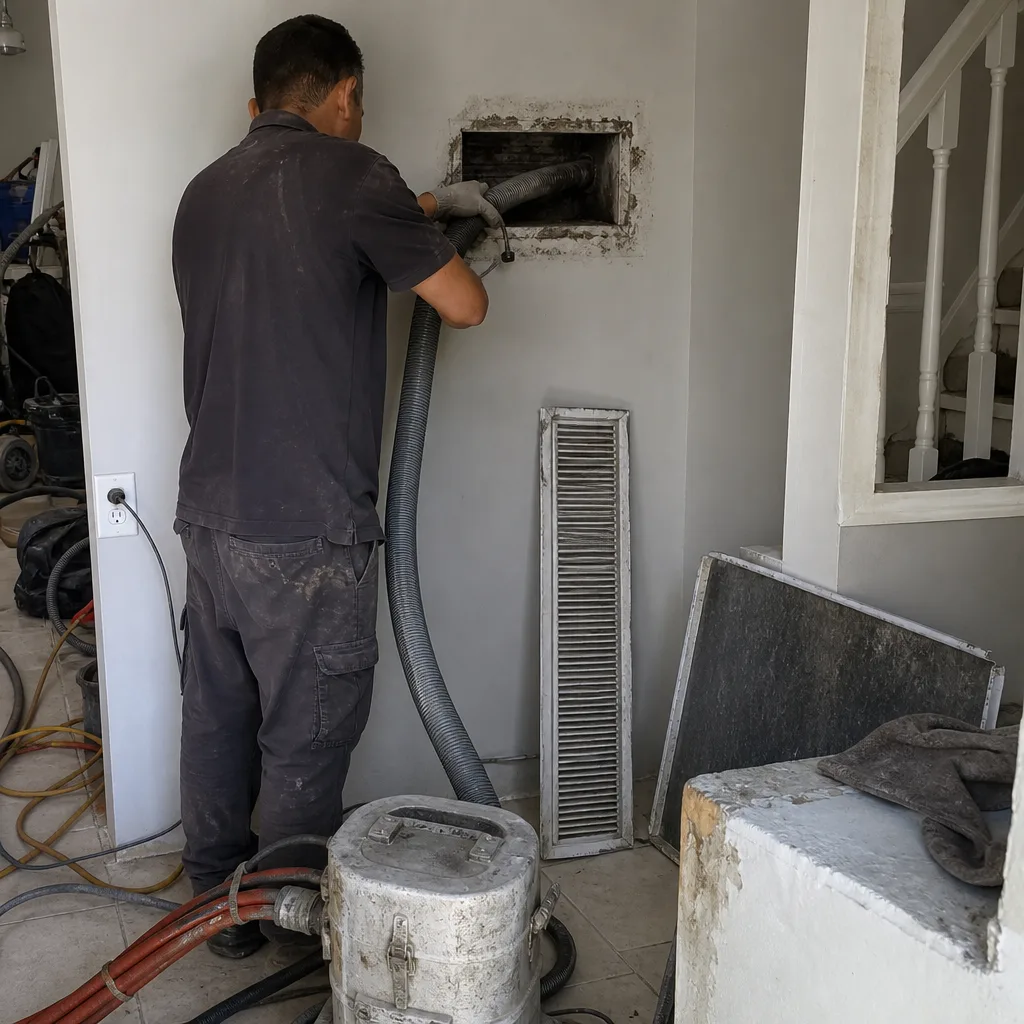 Before
 After
AfterWhat Rotobrush Duct Sealing Costs in Miami
Rotobrush duct sealing in Miami typically runs between $450 and $1,900 depending on how many leaks we find and where they are. A small job, like resealing three to six registers and boots, lands in the $450 to $800 range. A full system, including return plenum, trunk seams, multiple flex runs, and the air-handler connection, runs $1,200 to $1,900 on a typical 2,000-square-foot Miami home.
What moves the price: attic access and height, how much flex duct needs replacement versus just sealing, and whether the air handler is in a closet, a garage, or a vertical shaft in an older Coral Gables or Coconut Grove house. We write the number down before any work starts, and we don’t invent line items once the van is parked. Call (850) 660-3272 for a free estimate. Roy Castellanos will give you a straight number.
Why Miami Homeowners Call Hollis Air Duct Miami for Rotobrush Work
Most homeowners don’t think about duct sealing until the electric bill shows up or a bedroom stays ten degrees warmer than the living room. We know how Rotobrush systems behave in Miami’s climate, which is a different thing than knowing how they look in a catalog. Our techs work on Lennox, Trane, and Carrier air handlers every week, paired with Rotobrush-cleaned duct systems, and we understand how those pieces interact in a hot, humid attic.
Every Hollis job follows The Garrison Code: arrive inside the window, put a written price in your hand, do the work by the book, and leave the site cleaner than we found it. Roy Castellanos grew up in Los Angeles, learned the trade at LATTC, and has been running crews through Miami attics and high-rise mechanical closets for over a decade, from Brickell to Kendall. He’s the one answering when you call, because as he puts it: “If you can’t explain the job plainly, you probably shouldn’t be doing it.”
FAQs
Rotobrush is a duct cleaning system manufacturer, and they don’t send crews to homes for sealing. Duct sealing is separate work we perform on Rotobrush-cleaned systems, as an independent Rotobrush service provider in Miami. If your local cleaning tech used Rotobrush equipment and mentioned a sealing need, that’s where we come in. Call (850) 660-3272 and we’ll explain exactly what we found and what it costs.
No. Sealing the ductwork around a Rotobrush system never touches the Rotobrush unit itself. Most manufacturer warranties on Rotobrush equipment cover the machine, not the duct system, which is considered building infrastructure. We work on the ducts, boots, plenum, and air-handler connections, and we use UL 181-rated mastic and standard trade practice. If you’re concerned, we can photograph everything and walk you through the worksheet before we start.
Homes that need duct sealing show the same three signs in Miami: rooms that won’t hold temperature no matter how you set the thermostat, dust returning to furniture within two or three days of cleaning, and electric bills that keep climbing during months when your usage hasn’t changed. If you’ve already had Rotobrush cleaning done and the system still feels weak, the problem is probably in the ductwork, not the cleaning.
Yes, in most cases. If the job is straightforward, like register boots, plenum seams, and a handful of flex connections, our tech arrives with the materials needed and seals it during the same visit. If we find something bigger, like a collapsed return drop or widespread flex failure, we’ll document it with photos, write a price, and schedule the follow-up fast. We never start a repair without a written number first.
That depends on your situation. If you’re staying in the home for two or more years, sealing usually pays for itself through the cooling bill alone, because Miami air conditioners run nine months out of the year. If you’re selling, documented duct sealing with before-and-after photos can help a home inspection go smoother. Call (850) 660-3272 for a straight answer on what your system needs and what it costs.
Written by Roy Castellanos, Owner, Hollis Air Duct Miami at Hollis Air Duct Miami, serving Miami and nearby areas.